





Smartphone upgrade survey: foldables, AI trail price and battery
The smartphone industry's upgrade pitch for the past two years has leaned heavily on artificial intelligence and folding screens. Consumers, when surveyed directly, are largely unmoved by both. A smartphone upgrade survey covering foldables and AI features makes this gap between what gets marketed and what gets bought about as stark as data gets, and understanding it tells you more about the next upgrade cycle than any product launch keynote.
A CNET survey published this week found that 55% of smartphone owners rank price as their top purchase priority and 52% cite battery life. AI integrations motivated just 12% of respondents; new phone designs motivated only 13%, per 9to5Mac's summary. That's not a close race between basics and buzzy features. It's a rout.
The same disconnect surfaces in Morgan Stanley's AlphaWise Global Smartphone Survey from earlier this year: Apple Intelligence ranked seventh globally as a reason to upgrade an iPhone, with consumer perception of the feature falling year over year, most sharply in the U.S. Even so, overall iPhone upgrade intentions hit an all-time high, per the AlphaWise research. Demand and feature enthusiasm have decoupled. That's not a crisis for Apple, but it is a signal about which levers actually move buyers.
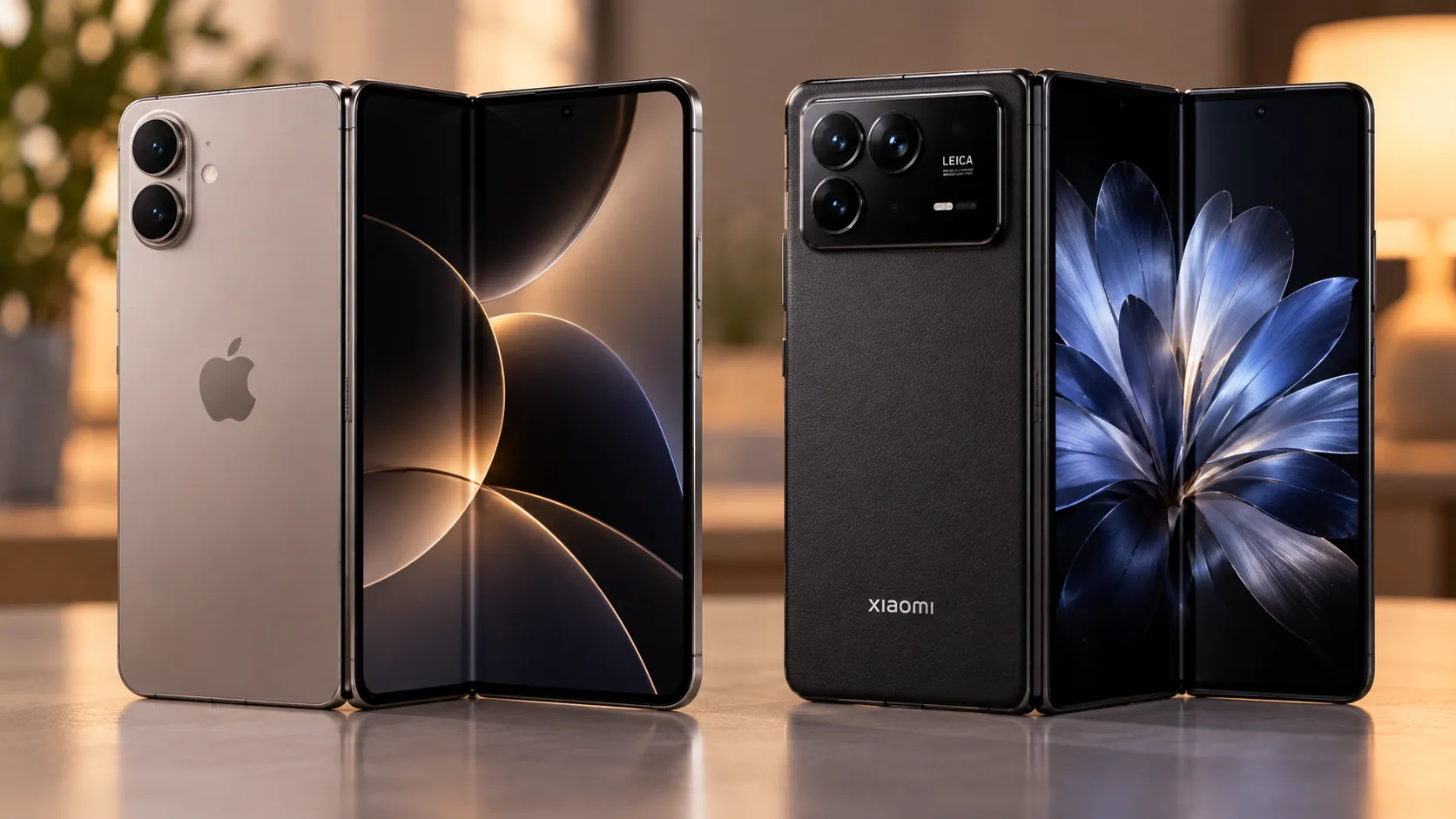
Two questions are worth working through: Why does foldable interest remain mostly aspirational rather than transactional? And, with Apple's foldable iPhone expected this fall, can the right brand change the conversion math, or will the same practical economics that have constrained the category apply regardless of who makes the device?
What actually drives smartphone upgrades: the hierarchy hasn't shifted
The most important finding in the current data is not that AI fails to excite people. It's that consumers are planning upgrades at record rates for reasons the surveys don't fully name, but clearly signal.
Global iPhone upgrade intent reached 37%, up two percentage points year over year and the highest recorded, with China alone jumping nine points to a survey high, per the AlphaWise research. Morgan Stanley's FY26 iPhone shipment forecast stands at roughly 260 million units, approximately 3% above analyst consensus. Strong upgrade intent and weak AI enthusiasm are coexisting in the same data, which means upgrade cycles are being driven by something else: aging hardware, carrier financing, replacement timelines, and incremental camera and performance improvements that consumers don't articulate as features but still act on.
The AI story is particularly striking given the marketing investment behind it. Apple Intelligence was the centerpiece of Apple's 2024 and 2025 product communications, yet it ranked seventh as an upgrade reason globally and declined year over year, with the steepest drop in the U.S., per the AlphaWise research. The CNET data reinforces this: only 12% of respondents cited AI integrations as an upgrade motivator, per 9to5Mac.
Price and battery life function as threshold requirements, not preferences. If a new phone doesn't offer a meaningful improvement on at least one of those dimensions relative to its cost, most buyers won't move. AI and novel form factors operate as tiebreakers at best, and only for roughly one in eight buyers who cite them as motivating at all. That's the lens through which foldables need to be evaluated.
Foldable phones: curiosity is real, but the economics resist conversion
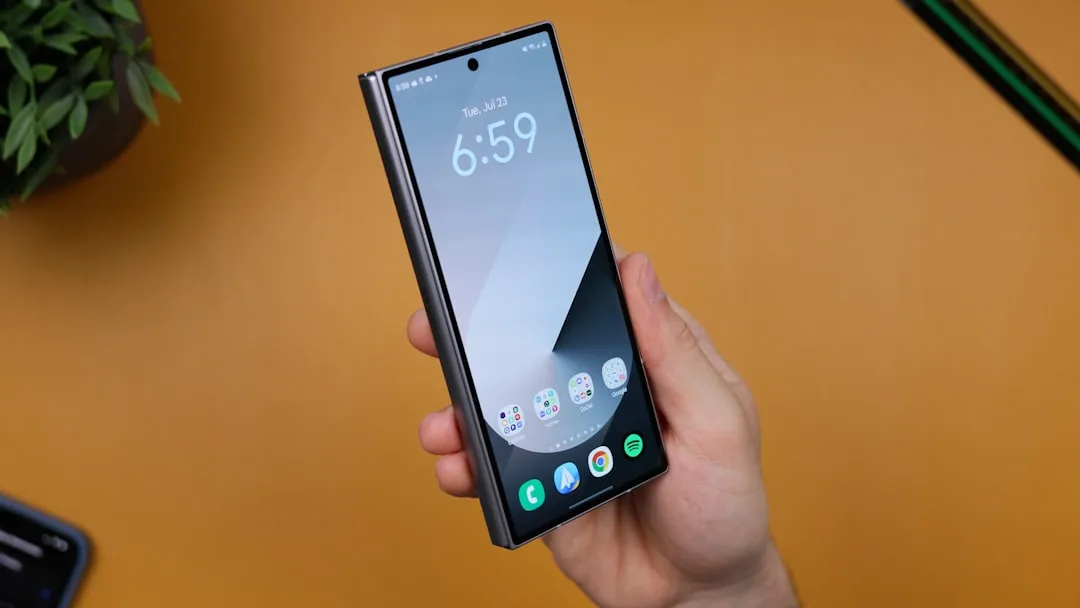
Foldable interest is not negligible. Around 10% of smartphone owners in the CNET survey were eyeing a foldable, with iPhone owners interested in folding phones at a slightly higher rate of 14%, per 9to5Mac. That's a real market segment. The problem is the gap between stated curiosity and the purchase calculus a buyer actually runs when facing the price tag.
Interest versus intent in the foldable phone interest survey data
Morgan Stanley's AlphaWise survey puts "extreme interest" in a foldable iPhone at 27% of global iPhone owners, rising to nearly 40% in China, per the AlphaWise research. That's roughly double the CNET figure for buyers "eyeing" a foldable. The divergence almost certainly reflects question framing: "extremely interested" and "eyeing" are not the same threshold, and neither is equivalent to "willing to buy at launch pricing."
The CNET survey captures upgrade motivation inside a broader set of competing priorities; the Morgan Stanley data captures product fascination somewhat in isolation. Both figures are useful, but treating them as comparable overstates actionable demand. The lower CNET range, 10% to 14%, is probably the better proxy for near-term mainstream purchase intent because it sits inside a broader purchase-priority question rather than asking about a single product in isolation.
Why the economics make conversion hard for price-sensitive buyers
For a buyer who already ranks price as the top upgrade criterion, foldables carry a compounding cost problem. The upfront price is higher than a standard flagship. The resale value falls faster and further.
Foldable phones lose an average of 62.3% of their value within six months, compared to 49.8% for standard flagships, a 12.5-percentage-point gap, based on SellCell's analysis of trade-in prices across more than 40 verified U.S. buyback companies. By 18 months, foldables have shed 71.1% of their value versus 60.7% for standard models, per the same data. For anyone who trades in regularly, that gap compounds. A foldable is not just a more expensive phone to buy; it is a worse financial trade at the back end of the ownership cycle.
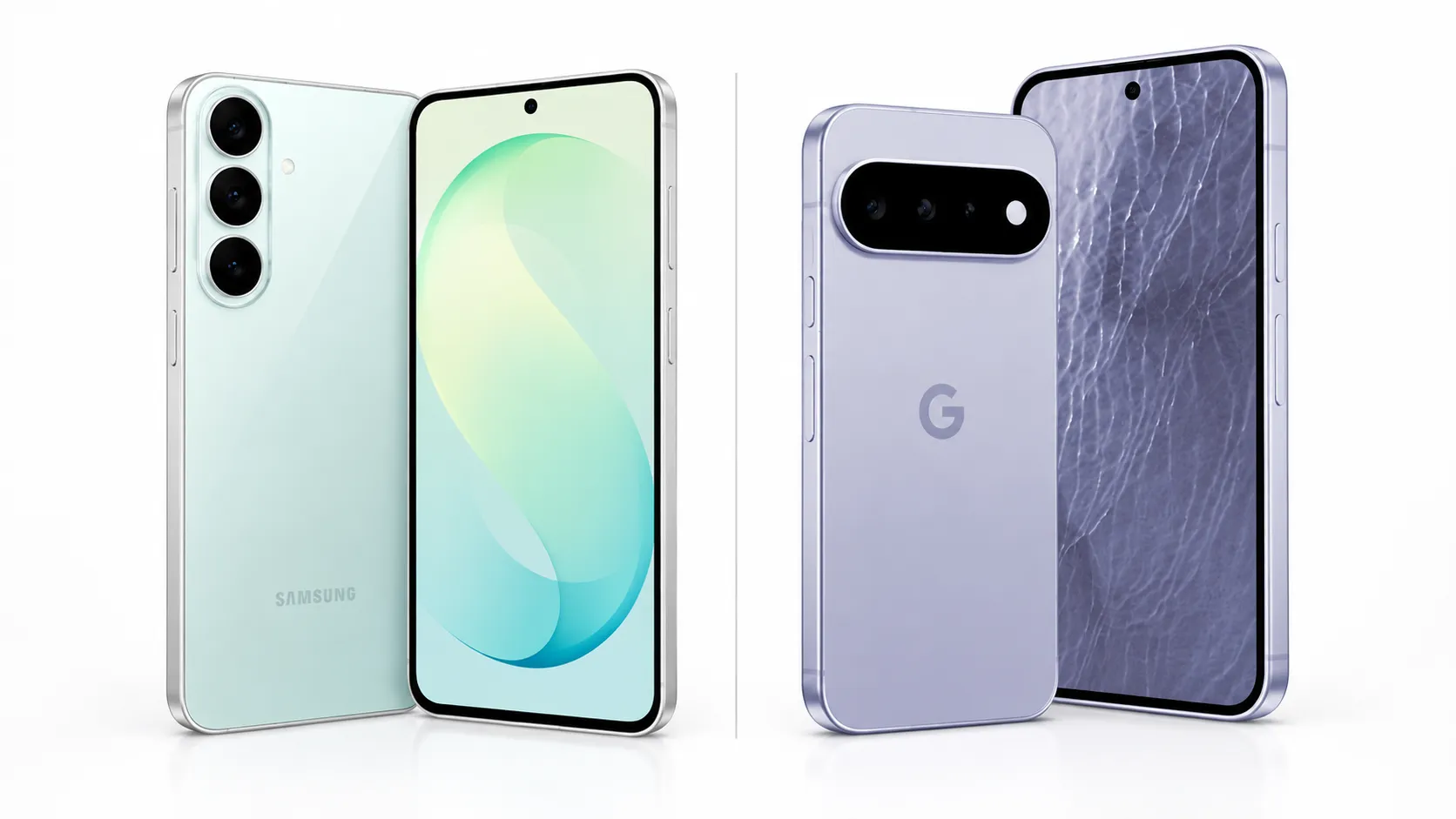
Samsung's lineup illustrates the penalty most sharply. Its Z Fold and Flip series lost 63.7% of their value in the first six months, against 48.3% for the Galaxy S line. At one year, Samsung foldables had depreciated 65.8% versus 54.4% for the Galaxy S, an 11.4-point gap, per SellCell's analysis.
The resale penalty is not uniform across the category, though. Google's Pixel Fold tracked just two percentage points worse than the Pixel Pro at six months, narrowing to 1.7% by month twelve. OnePlus showed the smallest brand-level divergence: by 18 months, the Open and the OnePlus 11 had depreciated at nearly identical rates, per SellCell. Samsung remains the clear outlier; Google and OnePlus are now close to parity with their non-folding flagships.
That matters for the forward-looking argument. If smaller brands with narrower ecosystems can close the resale gap, the question for Apple is whether it can do the same at a higher price point, where its historical trade-in strength becomes the relevant variable.
Can Apple change the conversion math? One test case, realistically framed
The foldable iPhone is anticipated to debut this fall alongside the iPhone 18 Pro lineup, per the AlphaWise research. It will be the most significant stress test yet of whether the right brand can move the foldable category beyond its premium ceiling. The answer probably depends less on Apple's brand power than on whether it can solve the same economic problems that have limited the category so far.
Apple enters with measurable structural advantages. Its net switching rate reached a five-year high of 11% in the AlphaWise survey, and it was the only major smartphone brand with a positive and improving switching rate; Samsung, Xiaomi, and Huawei all posted negative rates in the same period, per the AlphaWise research. A large, loyal installed base with demonstrated willingness to stay in the ecosystem gives Apple a different starting position than Samsung had at the Z Fold's launch.
Price alone is likely to make a foldable iPhone a niche product within Apple's lineup, as 9to5Mac noted, similar to the iPhone Pro Max: enthusiastically received, meaningfully profitable, but not where most iPhone volume sits. Morgan Stanley projects Apple could more than double the global foldable market within 18 months of launch, with a base case of roughly $40 billion in revenue, per the AlphaWise research. Those projections come from an institution holding an overweight position on Apple stock and should be read as investment-case optimism rather than neutral demand forecasting.
The more useful question is whether Apple can close the depreciation gap. Standard iPhones have historically held resale value better than most Android flagships. If that pattern extends to a foldable model, the total-cost-of-ownership argument weakens considerably, and the conversion problem becomes more tractable for the price-sensitive majority. That's speculative until trade-in data exists, but it's the mechanism that will determine whether the foldable iPhone becomes a durable product line or a profitable experiment.
The Google and OnePlus data suggests it's achievable. Neither brand commands Apple's ecosystem loyalty or retail infrastructure, yet both have narrowed the foldable resale penalty to near parity with their standard flagships. Apple would need to replicate that outcome at a higher price point, which is a harder ask, but not an implausible one given its resale track record.
Practical economics still govern the upgrade cycle
The survey data points to a durable pattern, not a temporary lag. Consumers planning smartphone upgrades are responding to price, battery life, and practical replacement needs. AI features and folding screens aren't moving them, regardless of how much marketing attention those things receive.
Foldables represent genuine aspirational interest, but the category carries a financial penalty that sits squarely against what most buyers prioritize. Losing over 62% of resale value in six months, compared to under 50% for standard flagships, per SellCell's data, is a structural problem for mainstream adoption. The gap is narrowing for some brands, but it hasn't closed at scale.
What would have to change for foldables to matter to the mainstream? The same things that govern every other upgrade decision. The price needs to come down, the battery tradeoffs need to shrink, and the resale economics need to catch up to standard flagships. Apple has a real shot at accelerating that last condition. The broader conversion problem, though, won't resolve until the device clears the same practical bar that buyers have been applying consistently for years.
The manufacturers most likely to drive the next upgrade cycle are the ones who make the price-and-battery calculation work. Apple's foldable entry may prove profitable in a premium niche. The headline story of smartphone demand in 2026 is quieter and more familiar than the industry's promotional narrative implies: buyers want cheaper phones that last longer, and they're upgrading when they get them.







Comments
Be the first, drop a comment!