





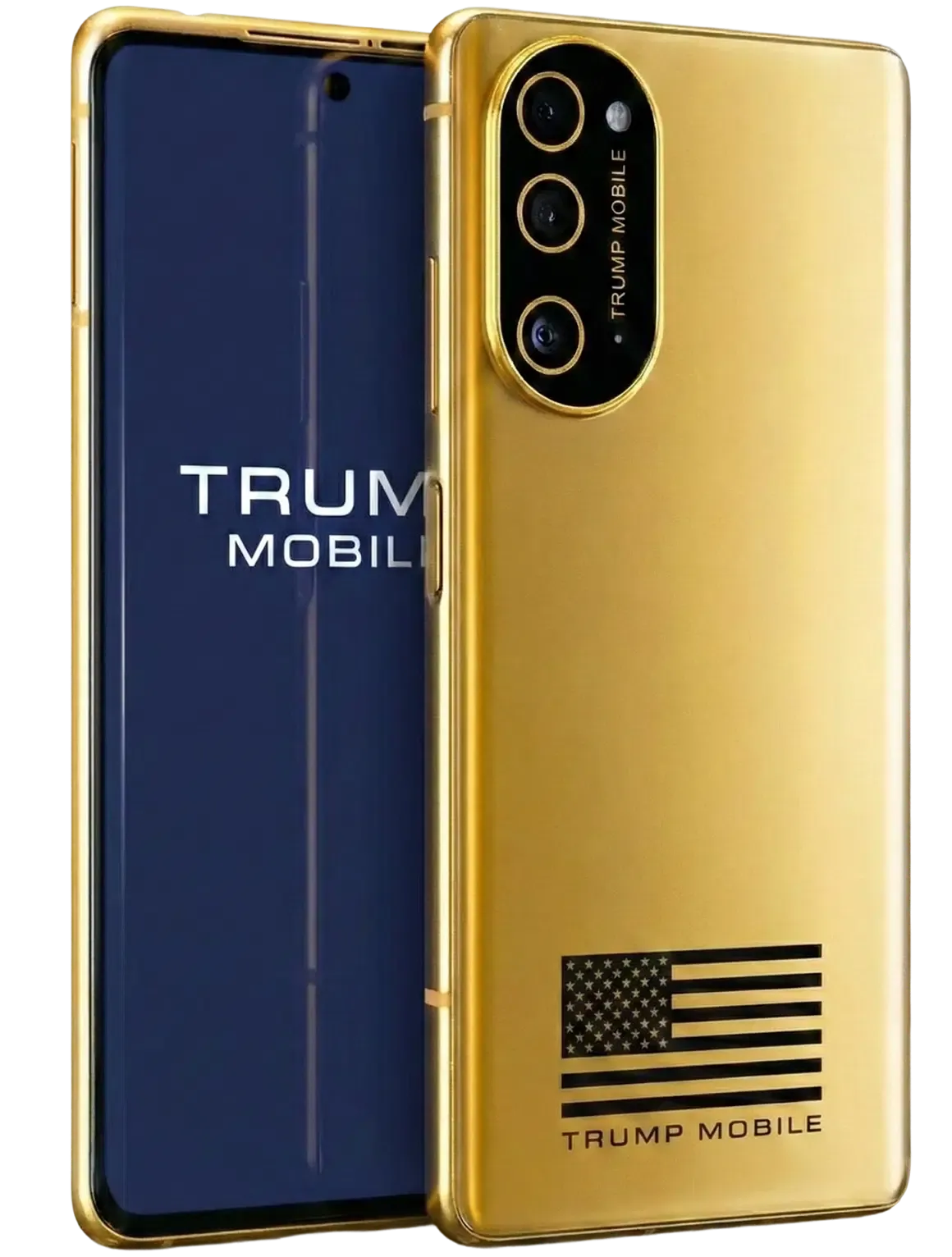
Poplar Group, the media relations firm that had handled Trump Mobile's T1 Phone press operation since at least June 2025, is no longer working with the company. Poplar founding partner Chris Walker told The Verge on June 19, 2026, that his team is "not assisting Trump Mobile any further" and said he did not know whether a replacement firm had been retained.
The exit comes as questions about the T1 Phone's manufacturing origins, shipping status, and preorder fulfillment remain publicly unresolved. Poplar had been one of the main channels through which Trump Mobile responded to reporters, including during the months after the company's original "made in America" messaging began to change. With that outside communications contact gone and no replacement publicly named, Trump Mobile has fewer clear channels for answering press questions about the phone.
Trump Mobile also needs a careful distinction up front: The brand uses the Trump name under a licensing agreement. Trump Mobile's own support page says its products and services are not designed, developed, manufactured, distributed, or sold by The Trump Organization or its affiliates, and that T1 Mobile LLC uses the Trump name and trademark under a limited license agreement.
"Designed and built in the United States" — and then it wasn't
When Donald Trump Jr. and Eric Trump helped launch Trump Mobile at Trump Tower on June 16, 2025, the T1 was promoted as a $499 gold Android phone that would be "proudly designed and built in the United States," according to the Trump Organization's original announcement. The same release said the phone would be available in August 2025.
That language did not last. Trump Mobile's website later replaced the stronger U.S.-built language with softer phrases such as "proudly American" and "American hands behind every device," as The Verge reported in its yearlong review of the T1 Phone's launch problems.
The legal distinction matters. Under the Federal Trade Commission's Made in USA guidance, an unqualified "Made in USA" claim generally means that "all or virtually all" of a product was made domestically. The FTC also says an "Assembled in USA" claim requires principal assembly in the U.S. that is substantial; a simple "screwdriver" operation usually does not qualify.
Public evidence so far does not show that the T1 meets the higher "Made in USA" bar. Trump Mobile executives told The Verge that the phone undergoes "final assembly" in Miami and arrives in roughly 10 parts, but they declined to detail exactly what that process includes. Whether that assembly process would satisfy FTC standards for an "assembled in the USA" claim has not been publicly confirmed by the FTC or another regulator.
The broader supply-chain context also works against the original claim. The U.S. has very limited smartphone manufacturing infrastructure compared with Asia, where most phone assembly and component sourcing takes place. The Verge noted that Purism's Liberty Phone, one of the rare phones marketed as being made in the U.S., costs $1,999 — roughly four times the T1's original $499 price.
The phone exists, but broad consumer availability is still unclear
The T1 Phone is not vaporware in the narrowest sense. A physical device exists, and reporters have handled units. The Verge has reported that the phone received FCC certification and Google certification for Play Store access.
The hardware, however, appears far less original than Trump Mobile's launch pitch suggested. After a teardown and CT scan comparison, iFixit and NBC News found that the T1 is an almost exact duplicate of the HTC U24 Pro; The Verge summarized the teardown as confirming that the T1 and HTC model are functionally nearly identical, with differences such as battery, flash placement, speaker grille design, and memory supplier.
That confirmation answers one question but leaves the bigger consumer question open. Certifications, media samples, and a small number of apparent buyer units show that a T1 Phone exists. They do not prove that Trump Mobile has shipped the phone broadly to customers who placed preorders.
The Verge reported on June 16, 2026, that more than a month after Trump Mobile said it had begun shipping, the outlet still could not identify a regular non-media buyer with a credible claim to have received the phone. In the June 19 update about Poplar Group's departure, The Verge added that a handful of media outlets had phones and that at least a couple of people on Truth Social and X appeared to be genuine buyers. That still falls short of evidence that the phone is widely available to preorder customers.
One customer case also raised support concerns. Quinn Nelson of Snazzy Labs, one of the rare non-media customers to document receiving a T1, described a messy experience in which Trump Mobile emails filtered to spam, the company's website did not work properly, and a customer support agent asked him for his account password over the phone. For buyers, that last detail is especially important: No legitimate support interaction should require a customer to disclose their account password over the phone.
Preorders, deposits, and customer data remain key risks
The preorder process has carried its own uncertainty. The T1 was originally promoted as a $499 phone with a $100 deposit, but Trump Mobile missed the August 2025 window in the Trump Organization announcement and the September 2025 window that appeared on Trump Mobile's site.
The scale of the preorder base is also unclear. In May 2026, The Guardian reported that a potential Trump Mobile website exposure appeared to include personal information for roughly 27,000 people who sought to buy the gold-colored smartphone. The report also noted an important caveat: A Columbia University professor who reviewed the issue said the number could include people who reached the final stage of the order process without completing payment, meaning the actual number of paying preorder customers could be lower.
For users who placed a deposit, the next steps are practical: save every order confirmation, payment receipt, email, and support transcript. Save every order confirmation, payment receipt, email, and support transcript. Do not share passwords with anyone claiming to represent Trump Mobile support. If the phone still has not shipped, customers should review the company's posted terms, contact official support channels directly, and keep records of any refund or delivery promises.
What the PR firm's departure means for customers
Poplar Group's exit does not prove that the T1 Phone is a scam, and it does not by itself prove anything about the phone's manufacturing or shipping status. It does matter because the company is already facing unresolved questions about what was promised, what changed, and how many customers have actually received devices.
Here is what is confirmed: The T1 is a real Android phone in limited circulation; its original U.S.-built marketing language was softened after launch; its hardware appears to closely match the HTC U24 Pro; and Trump Mobile has described at least some final assembly as taking place in Miami without publicly detailing the process.
Here is what remains unclear: how many units have shipped to paying customers, whether all preorder customers will receive phones or refunds, where most of the device and its components were manufactured, and whether Trump Mobile's current U.S.-assembly language would satisfy FTC standards if formally challenged.
For Gadget Hacks readers, the T1 story is not just political branding. It is a phone-buyer cautionary tale about preorder risk, hardware transparency, customer support hygiene, and the difference between patriotic marketing and verifiable manufacturing claims. Customers who paid a deposit and still do not have a phone are left with unresolved questions about shipping, refunds, manufacturing claims, and how Trump Mobile will answer press or customer inquiries now that its outside PR contact is gone.



Comments
Be the first, drop a comment!