



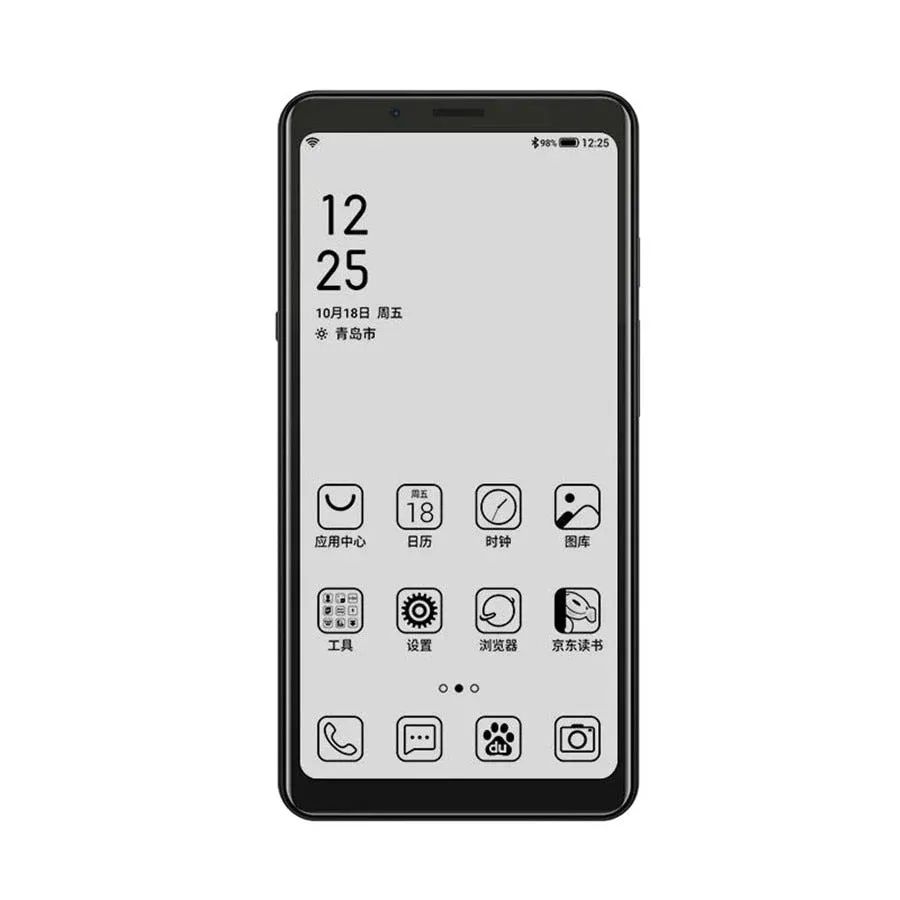
A Bigme HiBreak Dual 2 competitor arrived within days of Bigme's Kickstarter launch: a new Hisense e-paper phone with a detachable color LCD. Hisense had recently debuted its own E Ink phone with a fundamentally different design choice: its secondary color LCD detaches magnetically. That single difference defines the central question worth asking right now: should an E Ink display be a permanent part of a phone, or something users can choose when they want it?
The stakes extend beyond two niche products. Bigme's Kickstarter cleared its $12,758 funding goal within minutes and surpassed $75,000 in under two hours, per Android Authority evidence of real enthusiasm, even if it says more about early adopters than mass-market appetite. Notebookcheck also noted that Bigme faced competition before a single unit shipped, a development that would have seemed unlikely even a year ago.
What neither device has done is prove the formula works in practice. Hisense has not confirmed specs or pricing. Bigme's most important performance claims haven't been independently tested. The closest independently reviewed device in this space, the Boox Palma 2 Pro, offers the clearest available evidence of where E Ink mobile hardware stands today. All three together can answer the question that actually matters: which design philosophy gives E Ink a better shot at becoming a viable phone format, and for whom?
The problem these phones are trying to solve, and why it keeps resurging
E Ink displays have been appealing for mobile use for years: easier on the eyes, readable in sunlight, far less power-hungry than LCD or OLED. The YotaPhone, which put an E Ink panel on the back of an Android smartphone, was the most prominent attempt to act on that appeal. It launched to genuine interest and quiet failure, never cracking mainstream adoption.
Bigme's HiBreak Dual 2 even draws an explicit YotaPhone comparison. The idea keeps resurging because the problem it addresses — screen fatigue, battery anxiety, and the desire for a device that handles both focused reading and general smartphone tasks — remains genuinely unsolved.
What's different now is that E Ink technology has improved enough to make hybrid devices less obviously compromised. Bigme's front display is a 6.13-inch panel available in monochrome or color, and the company claims it can reach 80 frames per second via a proprietary refresh mode, per Android Authority.
The Boox Palma 2 Pro, reviewed by Pocket-lint last November, showed that color E Ink with 5G and stylus input can function as a credible partial smartphone substitute for most daily tasks short of gaming.
Software and usability remain the category's hardest problem, harder than any spec on a sheet. App compatibility, E Ink-optimized interfaces, and the practical question of whether users will actually switch between two screens or mostly ignore one of them are all unresolved. That's exactly why independent review of the HiBreak Dual 2's actual performance will matter more than anything its Kickstarter page claims.
Bigme HiBreak Dual 2 vs. Hisense: fixed dual-screen or detachable secondary display?
The two devices represent distinct bets on what buyers actually want, and the hardware choices reflect that clearly.
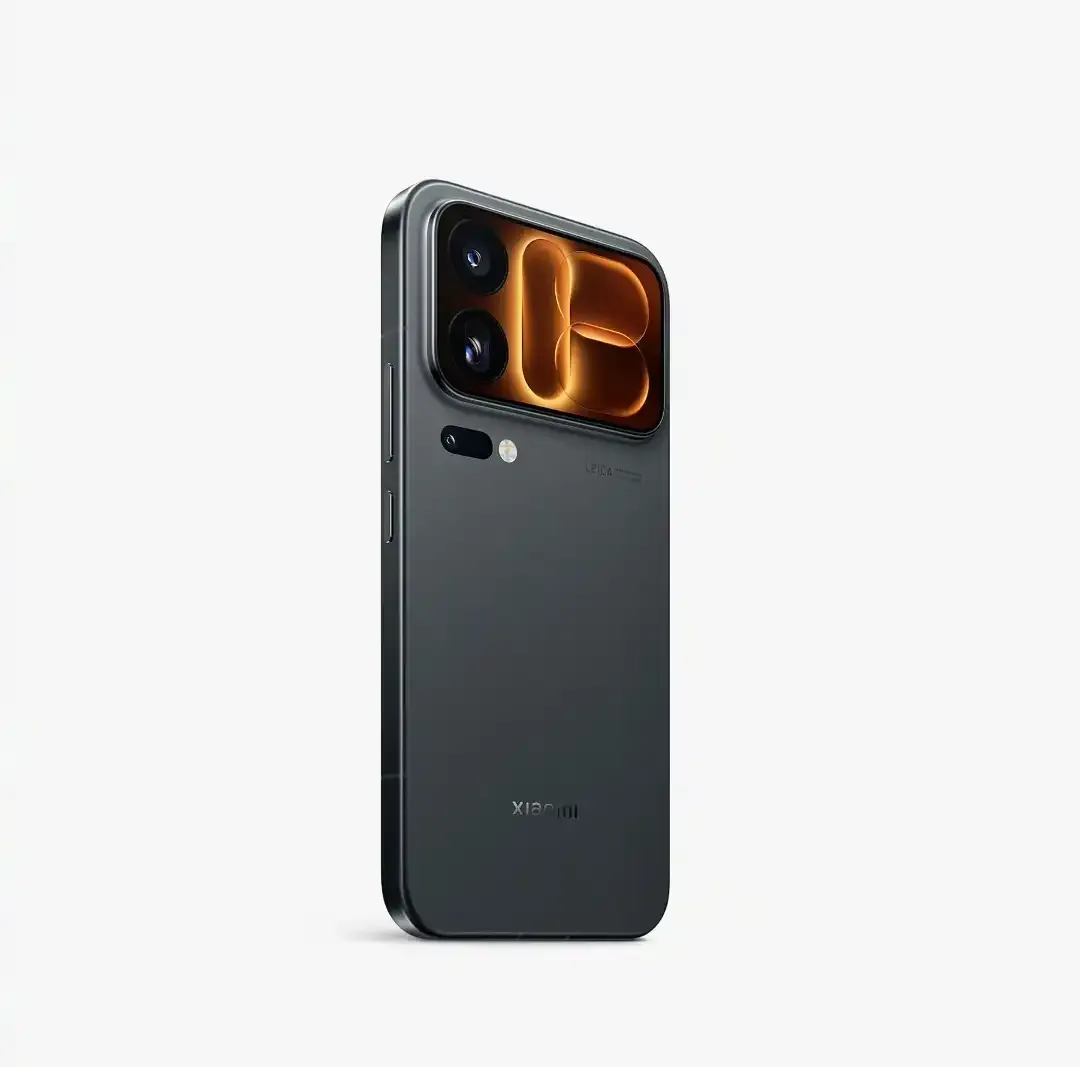
Bigme's design commits fully to two displays coexisting at all times: the 6.13-inch E Ink front and a 5-inch, 1280 x 720 LCD on the rear. The internal specs are aggressive for an E Ink-centric device: Dimensity 8300 processor, up to 16GB of RAM, up to 512GB of storage, and a 4,450mAh battery with 30W wired charging.
All of that suggests Bigme is trying to eliminate the "slow companion device" objection that limits products like the Palma 2 Pro. The cameras, at 50MP and 5MP, are a visible concession.
The 80fps E Ink claim and stylus support are the most interesting and most unverified features. If they hold up under testing, Bigme will have meaningfully closed the gap between E Ink's traditional sluggishness and what smartphone users expect from a daily driver. If they don't, the device reverts to a familiar pattern: a fascinating concept that's harder to use than it looks on a spec sheet.
Hisense's design answers the fixed-screen trade-off directly. Its secondary E Ink screen detaches magnetically, as reported by Notebookcheck, meaning users carry an e-paper phone by default and attach the color LCD when they need a conventional smartphone display. Rather than asking buyers to accept permanent hardware bulk, Hisense is betting that optional E Ink solves more problems than always-on E Ink.
The caveat is significant. Hisense has revealed only partial specifications, and international pricing and availability remain unclear. When the device was first teased about five weeks ago, Notebookcheck cautioned that circulating details hadn't come from Hisense itself and should be treated accordingly. The detachable-screen architecture is established, but the full specification sheet and international launch details remain incomplete. That limits any direct comparison to design philosophy rather than hardware capability.
The risk with a detachable accessory is straightforward: if users don't carry it regularly, the design loses much of its appeal. A magnetic E Ink screen sitting in a bag rather than on the phone doesn't deliver the always-available reading and note-taking experience that the category promises. Whether users actually attach it routinely or treat it as an occasional add-on is a question no spec sheet can resolve.
Reduced to essentials, the comparison looks like this: Bigme permanently integrates both its E Ink and LCD displays, while Hisense keeps the e-paper display fixed and makes the color LCD removable. A single-screen E Ink device like the Palma 2 Pro offers a simpler form factor but functions less fully as a standalone phone. Each trade-off targets a different kind of user.
What the Boox Palma 2 Pro tells us about real-world E Ink limits
The Boox Palma 2 Pro is the most useful available evidence for judging this category's realistic ceiling. It's been independently reviewed, it carries a color E Ink display with 5G connectivity and stylus support, and Pocket-lint's assessment from last November is specific: for most daily smartphone tasks outside of gaming, it can do the job. The tipping point was adding a data SIM that single-step transformed it from a Wi-Fi-dependent companion into a genuinely portable device.
But the Palma 2 Pro also defines where the category still struggles. Its color E Ink display renders text noticeably less crisp and often grayer than a conventional e-reader, improving only when the backlight is pushed up. It accepts data SIMs only; there's no native calling, which caps how fully it can substitute for a smartphone regardless of user intent. Those aren't Boox-specific failures; they're constraints that apply to the category.
Against those constraints, the fixed-vs-detachable comparison sharpens. A fixed dual-screen device like the HiBreak Dual 2 only justifies its permanent bulk if the E Ink panel is genuinely good enough to use daily, which requires the 80fps refresh claim to hold and the software experience to stay smooth.
A detachable design like Hisense's sidesteps that burden but introduces a different one: it only delivers value if users actually attach it. The Palma 2 Pro, at $399.99 versus Bigme's $599 Kickstarter price, also anchors the pricing conversation buyers choosing between these devices are navigating trade-offs across price, form factor, modularity, and full phone functionality simultaneously.
Who these devices are actually for
Each device targets a different kind of buyer, and the distinctions are fairly clean. A fixed dual-screen phone like the HiBreak Dual 2 suits someone who wants E Ink reading and note-taking available at all times, is willing to carry a heavier device to get it, and won't miss a serious camera.
A detachable design like Hisense's suits someone who wants an e-paper phone as the default but values an attachable color LCD for conventional apps and media. The Boox Palma 2 Pro, per Pocket-lint, already works for the reader or distraction-reducer who wants 5G connectivity and can accept internet-only calling.
None of these devices is chasing the same buyer, which is probably what keeps the category alive. It also means E Ink phones are still solving several different problems at once rather than one problem well. Crowdfunding enthusiasm for Bigme is real, but it reflects early-adopter appetite, not evidence of mainstream demand.
The next credible test is an independent review of the HiBreak Dual 2, specifically its E Ink refresh performance, battery drain under mixed-display use, and day-to-day software experience. If those hold up, Bigme will have made the most complete argument yet for the fixed dual-screen approach. If Hisense follows with a full spec reveal and competitive pricing, the modular case gets its first real hearing. Until then, the design question at the center of this category is still being argued by hardware that no one has properly tested.






Comments
Be the first, drop a comment!