



How much RAM do you need in a phone: 8GB vs 12GB in 2026
RAM used to be a straightforward performance purchase. More meant smoother multitasking, faster app switching, fewer cold reloads when you returned to a backgrounded app. That calculus has shifted in a specific and practical way: RAM is now a feature-gating purchase. According to Android Authority last month, current flagship AI implementations on both Android and iOS require 12GB as a hard minimum the point below which those tools simply won't run. Meanwhile, the memory inside most mid-range and budget phones just went through its steepest price spike in nearly a decade. Paying for more RAM no longer just buys headroom. It buys access.
For most people, 8GB is enough in 2026. If you want the newest on-device AI features or plan to keep a phone for four or more years, aim for 12GB. Consider 16GB only if the price jump is small or bundled with storage you'll actually use.
That's the short answer. The longer one explains why the gap between 8GB and 12GB has become the most consequential spec decision on a phone purchase, and how manufacturers are making it harder to see clearly.
Some numbers to anchor the discussion. Global average smartphone DRAM reached 8.4GB in December 2025, up from 7.4GB a year earlier, with premium-tier phones averaging roughly 11GB a jump driven primarily by the iPhone 17 Pro series moving to 12GB, per Counterpoint Research via EE Times Asia earlier this year. LPDDR4X contract prices, the memory standard in most affordable phones, saw their largest single-quarter surge in nearly a decade during Q3 2025, per TrendForce last year.
What RAM does in a phone, and why AI models behave differently
RAM is your phone's active workspace where the operating system, running apps, and their data all live simultaneously. Think of it as desk space: the more you have, the more stays spread out without needing to be shuffled away. When Android runs low, it compresses inactive apps through a technique called zRAM; if that's still not enough, it terminates background processes entirely. Return to a killed app and it reloads from scratch. More RAM means more stays alive, and switching between apps feels instantaneous rather than like a fresh load, as Android Authority explained last year.
To put concrete numbers on it: the most demanding mobile games can occupy up to 1.5GB of RAM each; 12 Chrome tabs consume roughly 2.2GB; simple messaging apps run on a few hundred megabytes. At 8GB, a phone handles several active apps and a browser session with app-culling rarely noticeable in typical use. Testing by Android Authority conducted on 2021 devices but illustrative of general scale showed an 8GB phone sustaining three concurrent games without dropping any, while a 4GB device struggled with average multitasking. These figures reflect conventional app behavior, though. AI workloads are a different problem entirely.
On-device AI models can't load on demand the way a regular app can. A large language model takes too long to initialize from storage for real-time use; it must stay resident in RAM permanently, parked there whether you're actively using it or not. Google's Gemma model variants weigh 4.2GB and 5.9GB respectively, meaning a phone running Gemini Intelligence with 12GB of RAM is closer to having around 7GB free for everything else. That permanent reservation isn't a performance difference between 8GB and 12GB phones. It's a platform-access difference.
Is 8GB RAM enough for a phone in 2026?
For daily use, yes. For current flagship AI implementations on either platform, no and that distinction now has hard edges.
According to Android Authority last month, Gemini Intelligence specifies 12GB as its hard minimum, alongside chipset and software prerequisites. iOS 27 raised Apple's on-device AI threshold from 8GB to 12GB, restricting advanced features including Expressive Voices and enhanced dictation to only the iPhone 17 Pro, 17 Pro Max, and iPhone Air. Phones below 12GB don't receive lighter versions of these features; they receive none. Mid-range devices and some higher-end phones with 8GB shipped as recently as last year are already locked out.
One important caveat: 12GB doesn't automatically guarantee AI-feature access. Both platforms tie eligibility to specific chipsets and software versions in addition to memory. RAM is the condition most visible on a spec sheet and most often the binding constraint, but it's one requirement among several. Verify device-specific compatibility rather than assuming the RAM number alone is sufficient.
For routine use messaging, browsing, streaming, moderate gaming Android Authority recommends 8GB as the practical baseline for mid-range and upper-mid-range buyers not prioritizing on-device AI. Those workloads don't demand 12GB. The case for upgrading is specifically about feature access and ownership horizon, not everyday performance.
The longer-term concern is that AI model requirements aren't stable. Google's on-device models grew from under 4GB to the 4–6GB range within a single generation. Android Authority warns that even 12GB may face pressure within two to three years at this pace. That trajectory makes RAM the spec most directly tied to how long a premium phone stays feature-eligible more so than processor speed or camera hardware. An 8GB phone bought today at premium prices isn't starting from the same runway as a 12GB device, and that gap widens rather than closes.
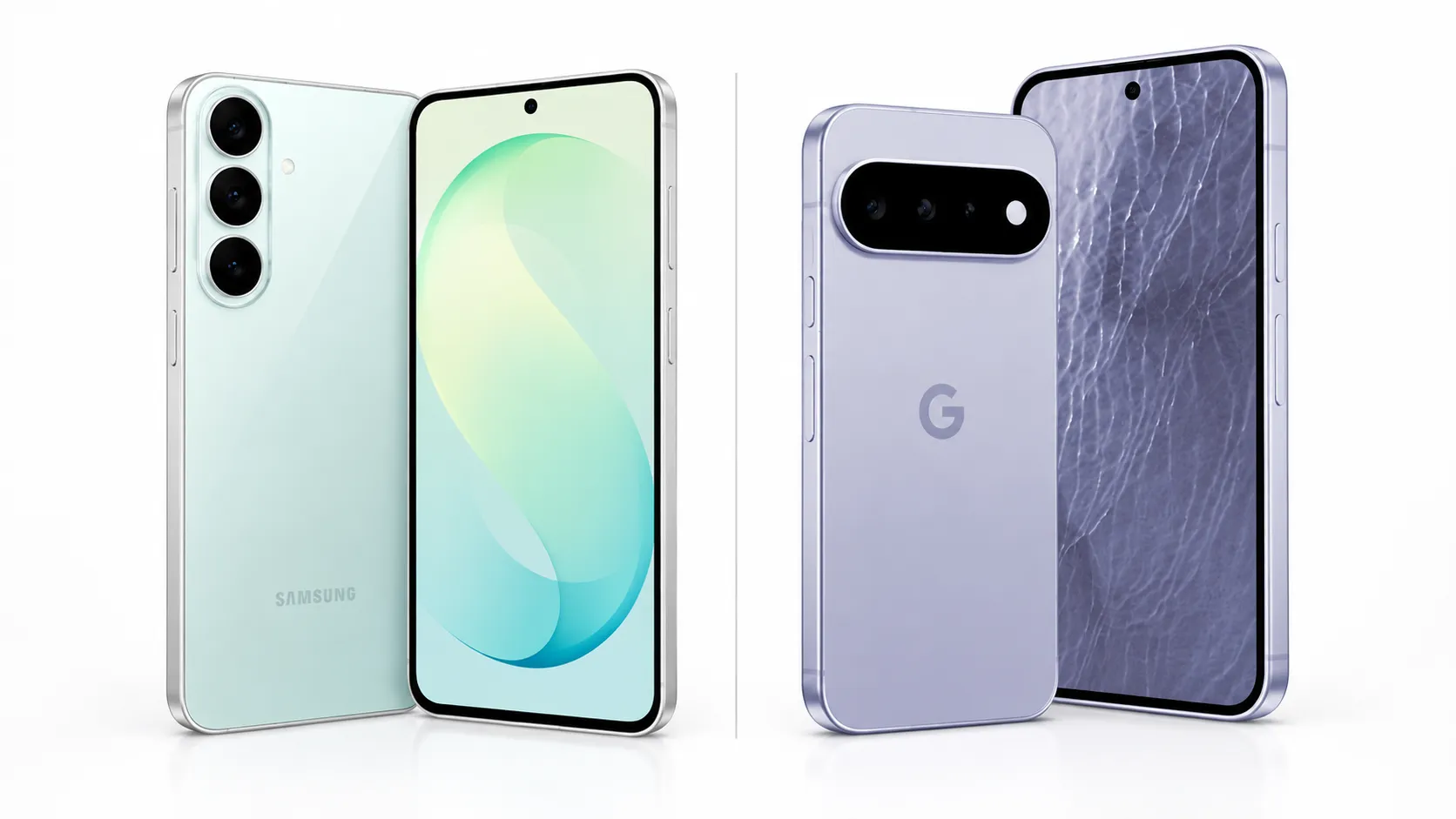
The market has already converged on this at the high end. Counterpoint Research via EE Times Asia confirmed earlier this year that 12GB DRAM is becoming standard for high-end smartphones in 2026. The Galaxy S26, S26 Plus, and Z Flip 7 all ship with 12GB as standard; the iPhone 17 Pro series made the same jump, per Android Authority. That convergence is real and almost entirely confined to the premium tier.
Why more RAM costs more now, and how buyers actually pay for it
Two different price shocks are hitting two different parts of the market.
LPDDR4X the memory standard in most mid-range and budget phones saw its largest single-quarter contract price surge in nearly a decade during Q3 2025, driven by Korean and US suppliers winding down production and triggering panic buying in the market. Low-end smartphone makers bore the worst of it: sharply higher component costs combined with buyers reluctant to absorb the difference. LPDDR5X, used in premium devices, rose more moderately, with supply and demand better balanced. Even under that strain, budget phones aren't standing completely still the sub-$100 tier recorded the second-highest year-over-year growth in average DRAM in 2025, rising 8%, while mid- and high-end segments grew just 3% and 2% respectively, per Counterpoint Research via EE Times Asia. Some upward movement at the market's floor, but driven by financial pressure rather than deliberate upgrade cycles.
Those component costs reach buyers, though rarely labeled as memory charges. Memory now accounts for more than 10% of the iPhone 17 Pro Max's total component cost, up from 8% for the iPhone 12 Pro Max in 2020. In flagship configurations with 16–24GB LPDDR5X RAM and 512GB–1TB of storage, memory can exceed 20% of total manufacturing cost at current prices, per Counterpoint Research via EE Times Asia.
The markup arrives in three forms worth knowing before you buy:
- Eliminated entry tiers: By removing the 128GB base variant, Samsung raised the effective starting price to $899 a price increase that doesn't describe itself as one, per Counterpoint Research via EE Times Asia.
- Storage-bundled RAM upgrades: Reaching 16GB on many premium Android phones requires purchasing the 512GB or 1TB storage configuration, per Android Authority. Buyers who genuinely need 128GB of storage end up paying for capacity they won't use in order to reach the RAM tier they want.
- Flat or reduced configurations: With memory cost and supply constraints shifting OEMs' focus from specification upgrades to margin protection in 2026, most flagship portfolios are maintaining their 2025 memory configurations, with significant increases limited to ultra-premium tiers, per Counterpoint Research via EE Times Asia.
Reading RAM and storage tiers together matters now in a way it didn't a few years ago. Memory has become a pricing lever as much as a capability gate and the disguise is usually a storage SKU.
How much phone RAM for AI features and everyday use: a decision framework
The organizing question isn't what you use your phone for today. It's how long you're keeping it.
| Replace in 2–3 years | Keep 4+ years | |
|---|---|---|
| Everyday use, no on-device AI | 8GB is fine | 12GB for longer support runway |
| Want on-device AI features | 12GB minimum | 12GB; push to 16GB only if the storage tier is useful |
Under $300: target 8GB; treat 6GB as the floor. Current flagship AI features aren't realistically in scope at this price point regardless of RAM chipset and software prerequisites extend well beyond memory. The goal is smooth daily multitasking for a two-to-three-year cycle. At 4GB, even modest multitasking strains. At 6GB, the experience is acceptable if it represents meaningful savings; at 8GB, the phone handles its workload without friction and absorbs routine software growth. LPDDR4X supply tightening makes this the hardest tier to find good value compare carefully across specific models, per Android Authority and TrendForce.
$300–$600: 8GB works, but 12GB is worth the premium if the gap is small. In this range, 8GB handles daily workloads without friction and is a sound choice for buyers on two-year cycles not prioritizing on-device AI. The honest trade-off: an 8GB phone ages out of new AI platform capabilities faster than a 12GB equivalent, and that exclusion compounds over time. Even mainstream options like the Galaxy S26 and S26 Plus ship with 12GB as standard, per Android Authority, meaning the step up from 8GB to 12GB within a product line is often a storage-tier increment rather than a full product jump. When the gap is that small, take the 12GB. A significant price difference makes 8GB a defensible choice but a deliberate one, not an equivalent one.
$600 and above: 12GB is the baseline, not the upgrade. At premium prices with a three-to-five-year horizon, buying 8GB means paying flagship prices for mid-range feature longevity. AI exclusions that are active today will deepen, not narrow, over the ownership period. The S26 Plus carries pricing increases of $100 to $180 across storage options relative to its predecessor memory cost pressure already embedded in the price, per Counterpoint Research via EE Times Asia. Buying below 12GB at this price tier is a choice that will feel worse each year.
On 16GB: useful runway, not a current necessity for most. 16GB is present at the very top end of the Android market, though reaching it often requires purchasing 512GB or 1TB of storage. It makes practical sense for buyers keeping a phone five years or longer, foldable users where multitasking and AI demands compound, or anyone who reaches it without paying for storage capacity they won't use. For most premium buyers, 12GB is the better-calibrated spend. 16GB bundled with mandatory 512GB storage is expensive insurance against a future that's approaching but hasn't fully arrived.
Four checks before buying any phone:
- What RAM tier is standard on this model, and what does stepping up within the same product line actually cost?
- Does reaching a higher RAM tier require buying storage capacity you don't need?
- Does the device meet AI feature prerequisites beyond RAM including chipset generation and software version for the features you want?
- What's the phone's expected software support window, and does the RAM tier you're considering stay above platform minimums for that full period?
Where this leaves the purchase decision
The spec sheet line that used to matter least has become the one most worth reading carefully and reading alongside the storage tier it's attached to.
8GB is a capable phone for the tasks that represent the majority of daily use. What it isn't, per Android Authority, is eligible for current flagship AI implementations on either platform. That gap will grow rather than close over a typical ownership period. Buying 8GB is a deliberate trade-off; it stops being a reasonable one at premium prices or long ownership horizons.
Getting to 12GB costs more than it did, and the markup is mostly indirect eliminated entry variants, storage-bundled RAM tiers, and flat configurations dressed as unchanged products. Budget buyers face the sharpest pressure, with LPDDR4X supply contracting while demand holds, per TrendForce and Counterpoint Research via EE Times Asia.
Google's on-device models grew from under 4GB to 4–6GB in a single generation. At that pace, Android Authority notes that 12GB may face its own pressure within a few years. 16GB is already common at the very top of Android flagships. The direction is clear even if the timeline isn't: treat RAM as the spec that determines how long a premium phone stays relevant, and buy accordingly.







Comments
Be the first, drop a comment!