





iPhone Duo vs Galaxy Z Fold 8 Thermal Test: What It Means
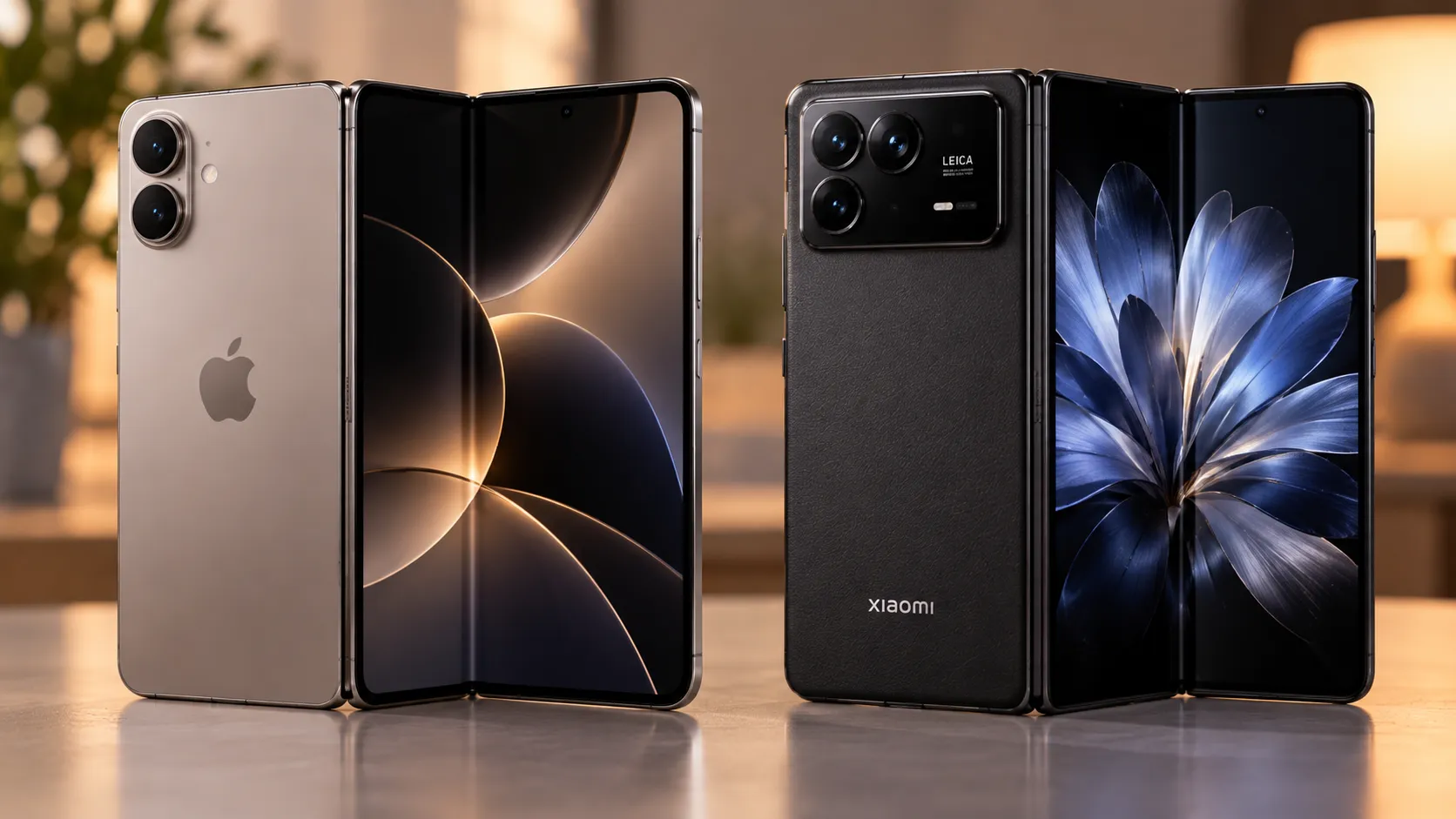
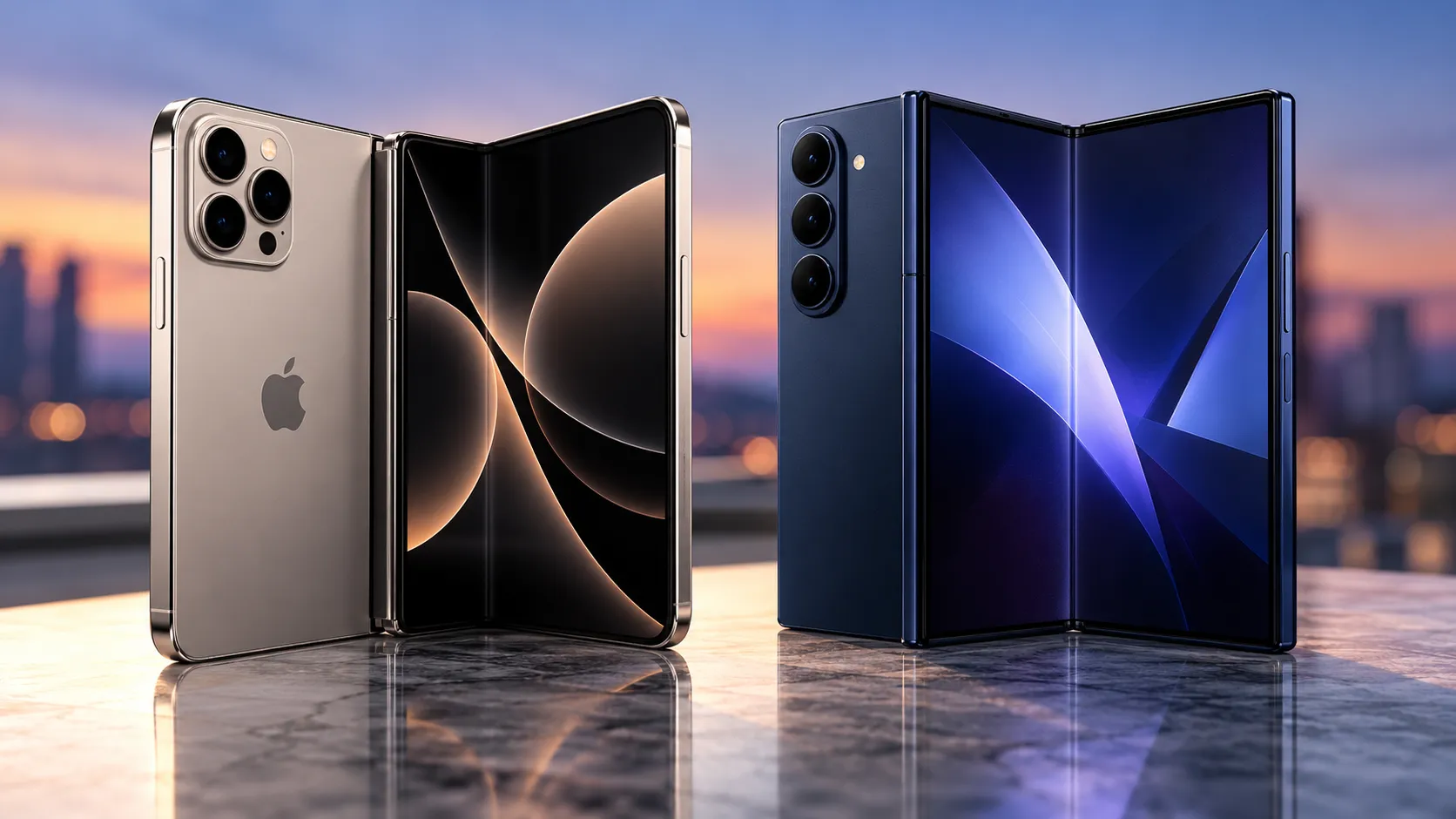
Tom's Guide put the iPhone Duo and the Galaxy Z Fold 8 through a 20-minute 3DMark Wild Life Extreme stress test earlier this week, and the result reads backwards at first glance. The phone that ran hotter to the touch also posted the stronger sustained performance. The Duo measured 103°F at a fixed spot on its back panel, while the Z Fold 8 stayed cooler at roughly 96°F at the same spot, according to Tom's Guide.
That single iPhone Duo vs Galaxy Z Fold 8 thermal test doesn't settle the comparison by itself. A review roundup published last week found reviewers split on how the Duo feels in hand, with some calling it merely warm and others describing it as uncomfortably hot during ordinary tasks like FaceTime calls and gaming (MacRumors). This piece breaks down what Tom's Guide's benchmark actually measured, how Apple's cooling hardware is proposed to explain the gap, and why a phone can win a stress test while still running hot enough to bother the person holding it.
What the iPhone Duo vs Galaxy Z Fold 8 thermal test actually measured
Tom's Guide kept both foldables unfolded and running at default refresh rates, then looped the 3DMark Wild Life Extreme benchmark for 20 straight minutes while a FLIR One thermal camera tracked surface temperature at matching points on each phone. A writeup from BYTERMINAL, published the same day, describes that same methodology in nearly identical language, which suggests it's reproducing Tom's Guide's account rather than running an independent test of its own.
Three numbers from that run define the result, and each measures something different. The stability score shows how consistently a phone held its performance across all 20 loops. The best-loop score captures peak output before throttling set in. The lowest score reveals how far performance fell once the chip started pulling back power to manage heat. On all three, the Duo came out ahead: a 67.9% stability score against the Z Fold 8's 51.4%, a best loop of 7,639 versus 7,047, and a throttled floor of 5,184 compared to 3,626, Tom's Guide reported.
Worth keeping in mind: this is a GPU stress benchmark run in a lab setting, not a complete picture of gaming comfort, battery drain, call-time heat, or how either phone handles being folded shut. Those scenarios get their own look further down.
The published stability figures don't match once a second outlet enters the picture. In its review roundup from last week, MacRumors cited Tom's Guide heat-test numbers putting the Duo's stability score at 75.9%, the Z Fold 8's at 72%, and the iPhone 18 Pro Max's at 79%, figures that don't line up with the 67.9%/51.4% split Tom's Guide published in its direct benchmark article four days later. The supplied reports do not explain why the figures differ, so readers should not combine them or treat either set as a universal score. Both number sets trace back to Tom's Guide's testing as reported in separate articles, not to a second, independent lab.
Galaxy Z Fold 8 thermal performance vs Apple's vapor chamber design
Apple's own explanation for the gap points to hardware the company already uses across its flagship line. According to Apple's launch announcement from two months ago, the Duo runs the same A20 Pro chip found in the iPhone 18 Pro models, connected directly to a custom vapor chamber through what Apple calls a "metal over foam" path, which the company says gives heat a direct route away from the chip. Tom's Guide reported two weeks ago, after speaking with Apple's silicon and thermal engineering leads, that the Duo's vapor chamber is thinner than the version in the standard Pro models to fit the foldable's slimmer body. That's the proposed mechanism behind the benchmark result, not an independently verified explanation of it.
The foldable-specific addition is a flexible graphite pipe running through the hinge. Tom's Guide reports that Apple co-engineered the pipe with its thermal team so it could survive "many hinge cycles" without losing conductivity, which is a design goal, not a durability result anyone outside Apple has tested over time. Tom's Guide describes the effect as roughly doubling the usable surface area available for heat dissipation, since both halves of the phone can act as a single heat sink instead of two isolated ones, according to the outlet's reporting.
Tom's Guide reports that the Z Fold 8 lacks a vapor chamber, relying instead on more basic thermal materials, and its internal sensor logged a jump from 95°F to 113°F over the same stress run. The outlet frames this carefully, noting that heat "appears" to stay concentrated near the processor rather than spreading, which may help explain the Z Fold 8's lower stability score and steeper performance drop in that test.
Apple's marketing adds a separate number worth flagging on its own terms. The company says the Duo delivers "up to 35 percent better sustained performance" than the iPhone 17 Pro, per its announcement. That's a company-sourced figure with no disclosed workload or test conditions attached, and it compares the Duo against Apple's prior-generation phone, not the Z Fold 8, so it shouldn't be read as confirmation of anything measured in Tom's Guide's test.
iPhone Duo overheating test: what reviewers felt in daily use
A synthetic benchmark measures one kind of stress. Daily use is another, and last week's review roundup from MacRumors found reviewers split on where the Duo lands. Some called it simply warm under load; others said it ran hot enough to notice during routine tasks.
The Wall Street Journal's Joanna Stern reported that the back of her review unit warmed up during FaceTime calls and photography, and she cut one FaceTime test short because of the heat, per MacRumors' account of her review. Apple reportedly told her the warmth reflected the thermal system working as designed, moving heat away from the chip to preserve performance, but Stern said that from her hands, it simply felt like a hot phone. That's one reviewer's experience, not a measured average across units.
A separate comparison from HTX Studio, also cited in the MacRumors roundup, ran a 30-minute gaming session pitting the Duo against the iPhone 18 Pro and Pro Max, not the Galaxy Z Fold 8. The Duo reached 46.5°C, compared to 43.8°C and 43.2°C for the two Pro models, and it posted a 20% lower frame rate during that session while its screen brightness dropped to 185 nits instead of holding 300, MacRumors reported. That test says something real about iPhone Duo sustained gaming performance next to Apple's own non-foldable flagships, but it says nothing about how the Duo compares to Samsung's foldable under the same load.
Tech reviewer Mrwhosetheboss ran his own 20-minute stress comparison against the iPhone 18 Pro Max, also referenced in the MacRumors piece, and found the Duo trapped heat when folded shut, with performance trailing the Pro Max in that closed state. He reportedly described the day-to-day difference as not "massively" noticeable once the phone is open and in regular use, a more measured take than the gaming numbers above might suggest on their own.
iPhone Duo vs Galaxy Z Fold 8 benchmark: what buyers should check before choosing
None of this settles which foldable is objectively better at managing heat. It settles something narrower: in the one direct comparison available, the Duo won the three reported metrics in that specific 20-minute run while running warmer on the outside. Whether that tradeoff matters to a given buyer depends on what the phone gets used for; a long gaming session and a phone pressed against an ear for calls are different kinds of stress with different stakes.
BYTERMINAL's writeup covering the same test reproduces Tom's Guide's figures and phrasing closely enough that it shouldn't be counted as a second, independent data point confirming the result. Until another outlet runs its own stress test on fresh units under its own conditions, the Duo's sustained-performance edge rests on numbers from a single testing session.
Several practical questions also remain unanswered in the sources reviewed here: ambient room temperature during testing, battery condition on the review units, whether repeated stress-test loops produce consistent results run after run, and how the graphite hinge pipe holds up after months of folding rather than one 20-minute session. None of that means those factors are a problem. It just means nobody has published data on them yet.
For buyers comparing the iPhone Duo and Galaxy Z Fold 8, the decision depends on which tradeoff matters more:
- Choose the Duo if: sustained GPU performance in long gaming or benchmark sessions matters more than surface warmth, and early-test uncertainty doesn't bother you.
- Choose the Z Fold 8 if: a cooler measured exterior and Samsung's software ecosystem matter more, and you're willing to accept that this test showed a steeper performance decline under sustained load.
The Duo went on sale October 23, so the pool of independent reviewers putting it through their own stress tests is still thin.
The verdict: a stronger test result, not yet a stronger foldable
The Duo has the better result in Tom's Guide's direct 20-minute test, winning stability score, peak output, and throttled floor while running warmer to the touch. That's a real advantage worth taking seriously, but it isn't proof that the Duo manages heat better than the Z Fold 8 in every situation a buyer cares about. One test session, one lab, and a set of MacRumors-reported figures that don't match Tom's Guide's own published numbers are reasons to treat this as an early data point rather than a settled verdict.
Buyers prioritizing sustained gaming or GPU-heavy workloads should watch for another outlet to run its own 3DMark or equivalent stress test before treating the Duo's edge as fully proven. Buyers sensitive to how warm a phone gets in the hand during calls, photography, or dual-display camera use should handle both devices directly, since reviewer reactions to the Duo's warmth varied across the reviews summarized by MacRumors. Additional independent tests are needed to determine whether these results hold across more units and conditions. Until then, treat the 3DMark numbers as one publication's benchmark, not a final answer on which foldable runs cooler where it counts.








Comments
Be the first, drop a comment!