






Sony Semiconductor Solutions just announced the LYTIA L910, a 50-megapixel smartphone camera sensor that Sony claims can deliver 100 dB of dynamic range from a single exposure, with no multi-frame synthesis required. It is the first sensor in Sony's LYTIA lineup to feature LOFIC, a structural change to the pixel itself. Mass production is scheduled for this summer.
The announcement targets a specific, stubborn failure in smartphone photography. Multi-frame HDR, the current standard approach, captures several exposures in rapid succession and merges them. Sony says that the process introduces motion blur, merge artifacts, and light-source flicker whenever subjects move or lighting pulses between frames, and that post-processing cannot reliably fix any of it. The L910 is Sony's hardware answer: capture everything the sensor needs in one moment rather than assembling an approximation from several.
Sony LYTIA L910 specs: what changes from the LYT-828
On paper, the L910 looks like a lateral move from Sony's current premium sensor. Both share the same physical class: a 1/1.28-inch stacked CMOS design, 50 effective megapixels, 1.22µm pixel pitch, according to Sony. Same size, same resolution.
The distinction is how each reaches its dynamic range ceiling. Sony's prior comparable premium LYTIA sensor also touts over 100 dB, but requires multiple exposures to get there. The L910 claims the same figure from a single shot, Android Authority reported. That difference in method is the whole reason for a separate announcement.
One caveat on the 100 dB headline: using the standard conversion of 6.02 dB per stop, it translates to roughly 16.6 stops. This is a useful orientation figure, but should not be read as a direct equivalent to lab-measured cinema camera dynamic range. The methodologies differ.
Three hardware layers behind the LYTIA L910 dynamic range claim
The structural foundation is LOFIC, short for Lateral Overflow Integration Capacitor. Each pixel gains a small overflow reservoir: when the photodiode collects more light than it can hold, the excess charge spills into the capacitor rather than clipping to featureless white. Sony says this expands saturation capacity and preserves highlight detail that would otherwise be gone, per the official announcement. Think of it as upgrading the bucket before the water overflows, rather than trying to reconstruct the spill afterward.
Layered on top is Triple Conversion Gain HDR (TCG-HDR). It reads the charge from that single exposure at three different conversion gains, one tuned for highlights, one for midtones, one for shadows, then combines them into a full-range image without a separate capture event, per Sony's announcement. Sony says the L910 supports 4K/60fps HDR video recording in both DCG-HDR and TCG-HDR with LOFIC modes.
At the shadow end, Ultra High Conversion Gain (UHCG) circuits improve how efficiently the sensor converts charge to a readable voltage signal. Sony claims this cuts random noise in dark image areas by approximately 30% compared to the LYT-828, per the official announcement.
Taken together, these three layers are designed to handle the full tonal range from a single moment. A longer single exposure also improves signal-to-noise ratio and suppresses light-source flicker, two problems that multi-frame HDR cannot sidestep because the capture process itself introduces them, Sony notes. Sony specifically cites night scenes with bright LED lighting as a target use case, a harder test than a clean sunset, and a more practically relevant one for how people actually shoot.
What Sony claims in practice, and what remains unverified
Sony says the LOFIC smartphone camera sensor approach suppresses motion blur and flicker in scenes where multi-frame HDR most visibly breaks down: a subject walking through a backlit doorway, neon signs cycling on and off, HDR video on a street at night, per the announcement. Because there is no frame synthesis, the artifacts that synthesis introduces cannot appear.
The sensor supports 4K/60fps HDR video recording and real-time HDR preview on the phone display while shooting, through a proprietary circuit design that reduces analog-to-digital conversion time and lowers battery consumption, according to Sony. The 30% noise reduction claim over the LYT-828 is specific enough to matter in practice. In low-light portraits and city-night scenes, shadow grain is frequently the line between a usable shot and a discarded one.
Every claim above, though, comes from Sony's own announcement. No independent lab tests, third-party image samples, or side-by-side comparisons with the LYT-828 exist yet. The 100 dB figure has not been verified by any external methodology.
When L910-equipped phones do reach reviewers, the tests that will matter most are backlit portraits in mixed light, moving subjects against neon or LED sources, and fast-action HDR video. Equally important is whether the phone manufacturer's image processing pipeline preserves or undermines what the hardware provides.
OEM tuning has historically been as consequential as the sensor itself. Single-exposure capture also leaves other variables untouched: color accuracy, rolling shutter behavior, autofocus performance, and how the sensor handles ordinary scenes outside demanding HDR conditions are all open questions this announcement does not address.
Sony enters a field already in motion
Sony positions it as the first LYTIA sensor with LOFIC in this announced product class, but LOFIC itself is not new to mobile imaging. OmniVision has already promoted its TheiaCel technology, which uses LOFIC for high dynamic range mobile sensors. OmniVision's OV50X was specifically positioned at flagship devices requiring single-exposure HDR video and preview.
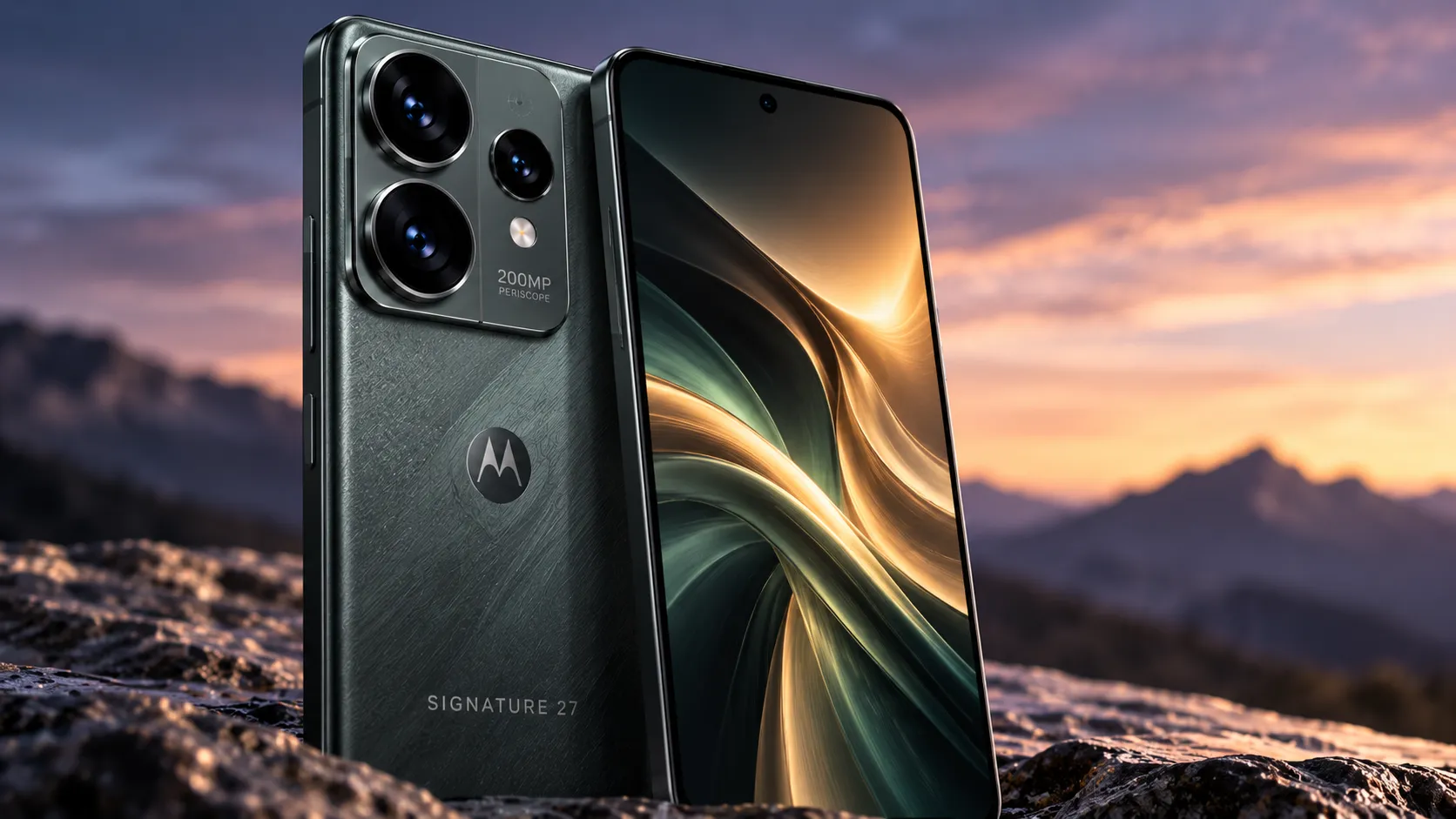
The approach is already shipping in consumer phones: the Motorola Razr Ultra 2026 uses a Sony LOFIC-enabled main camera, so buyers can compare LOFIC-style HDR against conventional HDR before any L910 device arrives.
No phone manufacturers have been confirmed as L910 partners. Leaker Smart Pikachu has attributed the vivo X500 series as a likely early adopter, but Sony has named no device partners, and reports explicitly note no smartphone models are confirmed. Treat any specific device reporting as speculative until a manufacturer confirms it.
The competitive picture is clear regardless. Both Sony and OmniVision are now pushing hardware-level single-exposure HDR as the primary differentiator for flagship sensors. The question for flagship smartphones is no longer only who has the largest sensor or the most megapixels. The contest has shifted to which architecture handles difficult light most cleanly at the pixel level.
Promising architecture, proof pending
The L910's case is coherent at the hardware level: LOFIC plus TCG-HDR plus UHCG working together to capture what one exposure actually contains, rather than stitching together what several exposures approximate. If Sony's claimed 30% noise reduction and 100 dB single-exposure figure hold up under independent testing, it would represent a genuine step beyond the LYT-828 and current multi-frame approaches, specifically for the high-contrast scenes where smartphones most visibly struggle, according to Sony.
The real test arrives this summer, when mass production begins, and L910-equipped phones reach reviewers. Side-by-side comparisons with OmniVision TheiaCel devices and current multi-frame flagships will either validate Sony's claims or put limits on them. Whether the hardware advantage survives OEM image processing in real-world conditions remains, at this point, the only question that matters.
For now, the L910 is a well-constructed promise. A hardware answer to a problem that software has been managing imperfectly for years. Whether it translates to better photos of backlit faces, neon streets, and moving subjects in your pocket depends on evidence that does not yet exist.








Comments
Be the first, drop a comment!