





iPhone 17 Pro vs Google Pixel 11 Pro: Which One to Buy?
Google unveiled the Pixel 11 Pro today, and the detail that stands out first has nothing to do with cameras or chips. It costs exactly $1,099 in the U.S., the same starting price as Apple's iPhone 17 Pro. Comparing iPhone 17 Pro vs Google Pixel 11 Pro means comparing two phones that match dollar for dollar, which pushes the real argument toward what each company actually means by "pro" (Trusted Reviews, today).
The overlap doesn't stop at price. Both phones pack a 6.3-inch display, 12GB of RAM, an IP68 rating, and a 256GB entry tier. Google's answer is the Tensor G6 chip paired with Gemini Nano; Apple counters with the A19 Pro and Apple Intelligence (Trusted Reviews, today; Google, today).
But there's a more important asymmetry underneath all that parity, and it's worth stating plainly before going further. This is a comparison between a phone that's been on the market long enough to be tested, priced, and lived with, and a phone whose most consequential claims, on cameras, battery, and performance, exist only as Google's own marketing until reviewers get hands-on time. The iPhone 17 Pro has been available since September 2025 and has already received hands-on reviews. The Pixel 11 Pro is still taking pre-orders, with its official launch set for August 20, 2026 (Trusted Reviews, today). Every section below runs into that same gap in a different way, and it should factor into how much weight any reader puts on Google's numbers before independent testing arrives.
iPhone 17 Pro vs Google Pixel 11 Pro specs and design
Price parity is nearly total, but small gaps show up once you look at regional pricing and storage ceilings. In the UK, the Pixel 11 Pro runs £1,079 against the iPhone 17 Pro's £1,099, and while both start at 256GB, Apple offers a 1TB tier that Google's 512GB maximum doesn't match (Trusted Reviews, today).
The display numbers favor Google, but the durability claims aren't directly comparable. The Pixel 11 Pro's Super Actua panel is rated for up to 3,600 nits of brightness, brighter than the iPhone 17 Pro's 3,000-nit Super Retina XDR display. On scratch resistance, though, each company is measuring against its own prior generation: Google says its new coating is more than double the scratch resistance of the last Pixel, while Apple says Ceramic Shield 2 delivers 3x better scratch resistance than the previous iPhone glass and, for the first time, extends that protection to the back of the phone (Google, today; Apple, Sept. 2025). Those are two different baselines, not a head-to-head result, so brightness is the only figure here that translates into a clean comparison.
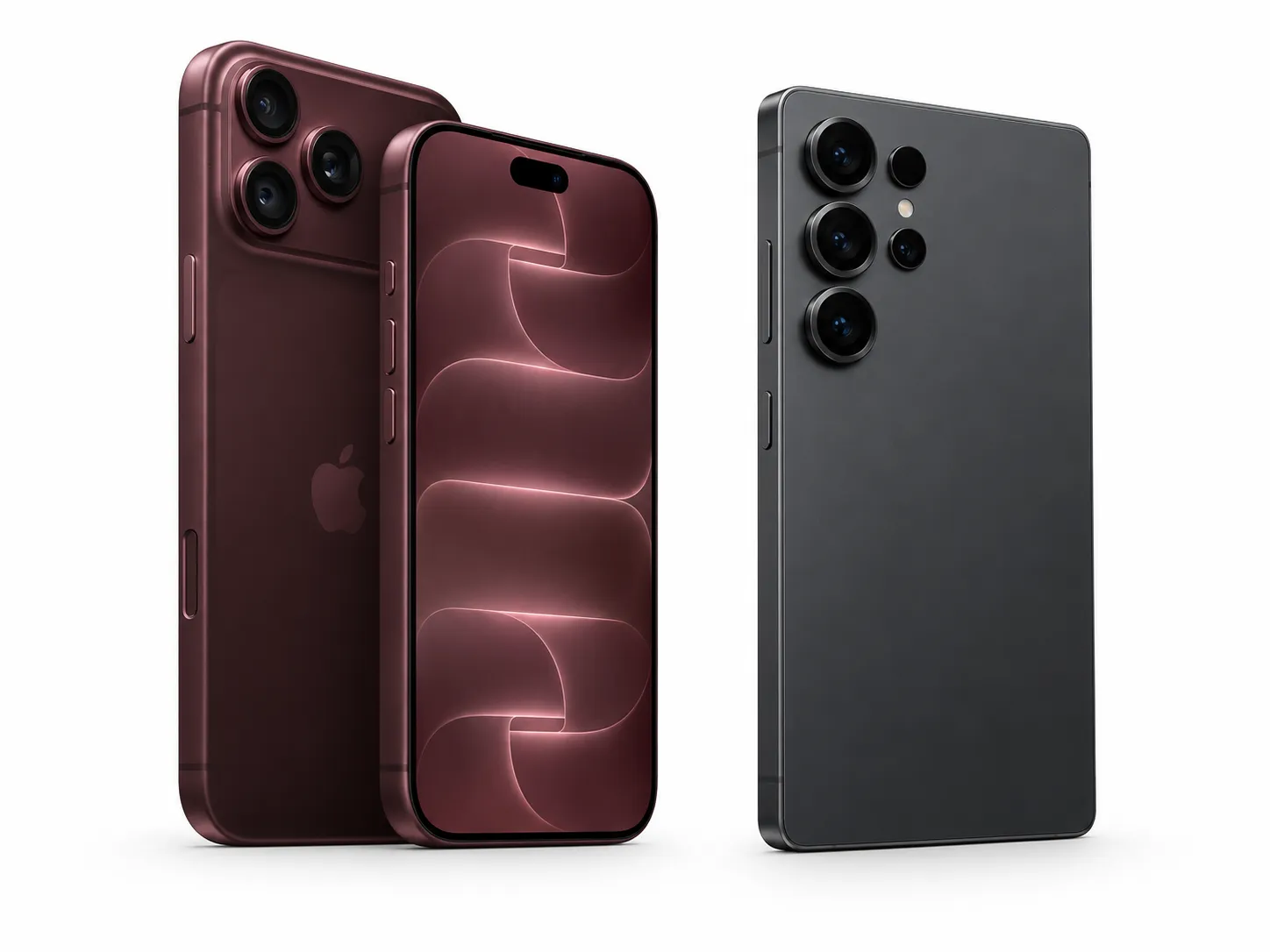
The design philosophies diverge more than the numbers suggest. Apple moved the 17 Pro away from titanium entirely, adopting a laser-welded aluminum unibody built around a vapor chamber for better heat management. Google went the other direction visually, cutting the Pixel's camera bar thickness by 40%, which the company says makes the phone virtually bumpless when paired with a Made by Google case, and adding Qi 2.2 25W wireless charging compatibility, new to the Pixel 11 and Pixel 11 Pro (Android Authority, Nov. 2025; Google, today).
On paper, this is about as close as Apple and Google have come on price and core specs. That parity pushes the real decision downstream, toward cameras, software, and ecosystem, where the two phones actually start to pull apart.
iPhone 17 Pro vs Pixel 11 Pro camera comparison
Google is positioning the Pixel 11 Pro around zoom range and computational processing. Its rear array pairs a 50MP main sensor with two 48MP cameras, including a redesigned telephoto lens with 30% more light sensitivity than its predecessor. Google's own figures claim 120x Pro Zoom, Portrait Mode now available at 5x, and Night Sight capturing images up to 4.5 times faster than before (Google, today).
Apple is positioning the iPhone 17 Pro around what it calls optical-quality zoom, though it's worth being precise about what that term covers. The three 48MP Fusion cameras (main, ultrawide, telephoto) reach what Apple calls 8x optical-quality zoom by cropping into the higher-resolution telephoto sensor rather than through a longer physical lens, topping out at 40x digital zoom overall. The telephoto lens itself was rebuilt around a shorter, more portrait-friendly 100mm focal length, down from the previous generation's 120mm-equivalent lens (Apple, Sept. 2025; Android Authority, Nov. 2025).
The two companies are also pitching different front-camera priorities. Apple emphasizes professional video formats: ProRes RAW, Apple Log 2, and genlock support, paired with a new 18MP square-sensor Center Stage front camera built for wider framing. Google emphasizes automated shooting guidance and editing tools, backed by a 42MP front camera, aimed at getting a good photo without digging into settings (Apple, Sept. 2025; Trusted Reviews, today).
None of this settles which camera actually takes better photos. Megapixel counts and zoom ceilings describe range, not image quality, and the supplied research includes no independent comparison of the Pixel 11 Pro's detail retention, shutter speed, skin tones, video stabilization, or usable zoom range against the iPhone 17 Pro. Until that testing exists, the camera verdict stays open.
iPhone 17 Pro vs Pixel 11 Pro performance and AI features
Google frames Tensor G6 as its fastest chip to date, built specifically to run the latest Gemini Nano model with what the company describes as more proactive Gemini support. That underpins a set of Pixel-exclusive tools: Camera Coach for framing advice, Circle to Search, and a voice transcription feature that strips filler words like "um" from notes automatically (Google, today; Trusted Reviews, today).
Apple says its A19 Pro chip delivers up to 40% better sustained performance than the previous generation. That chip runs alongside a 16-core Neural Engine, and together they power Apple Intelligence features including Live Translation across Messages, FaceTime, and Phone (Apple, Sept. 2025).
Marketing claims and lived experience don't always line up, and the iPhone 17 Pro is a case in point. In Android Authority's testing, the A19 Pro chip ran hot enough to drain the battery faster and cause slight slowdowns during use, and the reviewer described the phone's charging curve, 50% in 20 minutes followed by a full hour for the rest, as merely average (Android Authority, Nov. 2025). That's one reviewer's experience rather than a broad pattern, but it's a useful check against Apple's headline performance numbers.
The supplied research includes no independent benchmark pitting Tensor G6 against A19 Pro directly. Google's eye-catching claim of 15 hours of battery in 15 minutes of charging also applies specifically to the larger Pixel 11 Pro XL, not the standard Pro model compared here. Both companies' performance claims deserve some patience until third-party testing arrives after the Pixel's launch.
Ecosystem, software, and ownership considerations
For a large share of buyers, the decision was made years ago and has little to do with this year's spec sheet. Apple's ecosystem lock-in is structural rather than just habitual: an Apple Watch cannot pair with an Android phone, and anyone with AirPods or a MacBook already may face more switching friction leaving iOS than joining it (Trusted Reviews, today).
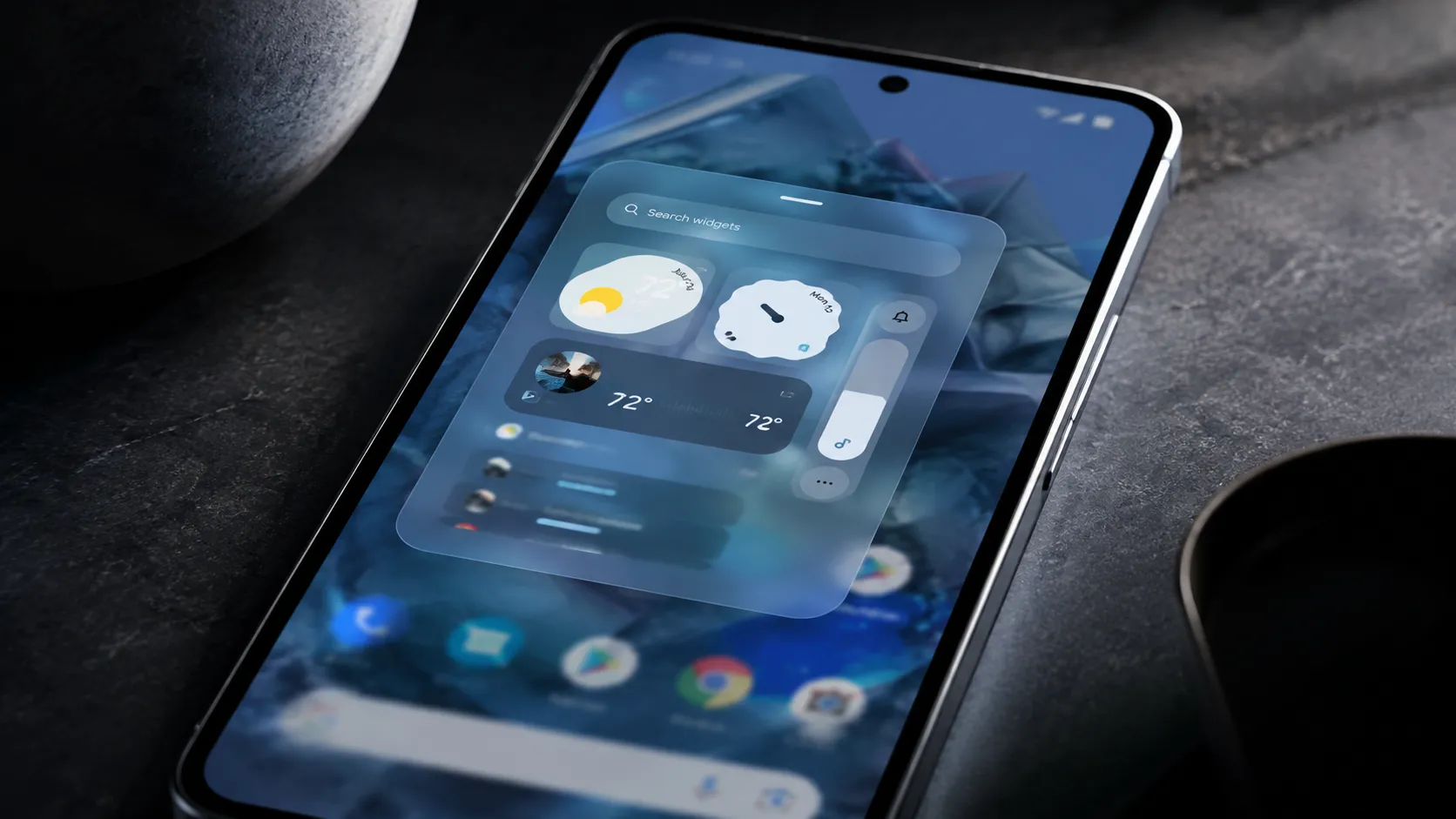
The two operating systems also reflect different bets about what a phone should do for its owner. iOS 26 introduced Apple's Liquid Glass interface, a transparent design language built around a polished presentation. Android 17 on the Pixel 11 Pro leans the other way; Google describes Gemini's role on the new phones as more proactive support, built to surface useful information before the user goes looking for it (Trusted Reviews, today).
Repairability adds a caveat rather than a verdict. iFixit's most recent teardown scores are for a previous Pixel generation, which earned a 7/10 for modular components and a straightforward screen swap, while the iPhone 17 Pro's five different screwhead types and reliance on adhesives complicate DIY repairs, even though Apple supplies official parts and instructions (iFixit, 2026; iFixit, 2026). Neither score has been confirmed to cover the exact Pixel 11 Pro model, so it's a general trend for the Pixel line rather than a model-specific answer, and it shouldn't be read as settling the repairability question for this specific phone.
Add it up, and the pattern holds across every category examined here: the iPhone 17 Pro comes with a documented track record, while the Pixel 11 Pro's most attractive claims, on brightness, zoom, and charging speed, are still waiting on someone outside Google to check them.
Who should buy which phone
Some of this decision is easy to make in advance, without waiting for a single review. Anyone who owns an Apple Watch has no real choice, since it won't pair with an Android phone at all, and households already running AirPods or a MacBook alongside their phone have a genuine, structural reason to stay on iOS rather than a merely sentimental one (Trusted Reviews, today).
Mobile video creators have a similarly clear answer, at least for now. The iPhone 17 Pro's ProRes RAW, Apple Log 2, and genlock support are documented, shipping features that professional and semi-professional shooters can rely on today, with a year of real-world use behind them. Nothing in Google's Pixel 11 Pro announcement targets that same production workflow (Apple, Sept. 2025).
Buyers drawn to the Pixel 11 Pro's Gemini-first AI tools, its brighter display, or its zoom claims are making a more speculative bet. That's not a reason to dismiss the phone, but it is a reason to wait. Pre-ordering before August 20 means buying entirely on Google's word, with no outside camera testing, no independent battery benchmarks, and no third-party performance comparison against the A19 Pro to check those claims against.
Anyone who isn't locked into either ecosystem and isn't in a hurry has the least risky option of all: wait two or three weeks. Independent reviews of the Pixel 11 Pro should land shortly after its launch, and at that point the comparison stops being marketing copy versus marketing copy and becomes an actual, testable choice.
Which is better: iPhone 17 Pro or Pixel 11 Pro?
The identical $1,099 price, matching 6.3-inch displays, and shared IP68 rating make one thing clear: this isn't a premium-versus-budget question. It's a choice between two different definitions of what "pro" means on a phone (Trusted Reviews, today).
Right now, the iPhone 17 Pro is the safer recommendation simply because it's the known quantity. Its camera system, chip performance, and even its flaws, like the heat-related battery drain one reviewer documented, have already been tested in the real world. The Pixel 11 Pro's claimed 3,600-nit display, its 120x Pro Zoom, and its Gemini-first approach to on-device AI make it the more interesting phone on paper. But "interesting on paper" and "confirmed to work as advertised" are different things, and only one of these two phones has closed that gap.
Independent testing after the Pixel 11 Pro's August 20 release should make this comparison considerably more conclusive. Until then, buyers with a clear reason to pick one platform, an Apple Watch, a video production workflow, a preference for Gemini, already have enough information to decide. Everyone else is better off waiting for someone outside Google's marketing team to check the numbers first.



Comments
Be the first, drop a comment!