





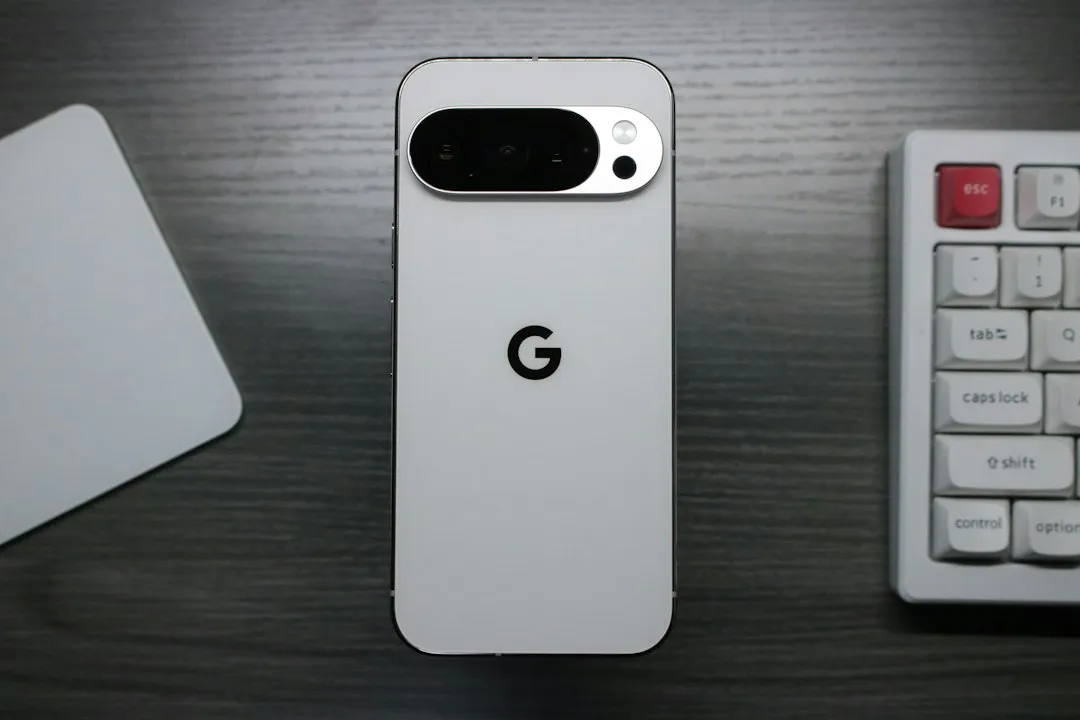
Pixel 11 Pro XL vs iPhone 18 Pro Max: Which to Buy?
Picking between the Pixel 11 Pro XL vs iPhone 18 Pro Max usually comes down to three different kinds of buyers, and a widely cited reader poll crowning the Galaxy S26 Ultra the top Android alternative doesn't settle much on its own. PhoneArena reported that its readers picked Samsung's flagship as the best iPhone 18 Pro Max alternative, but the piece includes no vote count, no poll question, and nothing showing anyone actually choosing between the Galaxy and the Pixel. Treat it as a signal worth checking, not a verdict.
This article checks that sentiment against the testing that actually exists across all three phones: benchmarks, battery drain, camera output, and the software extras each company builds in. The short version: the iPhone 18 Pro Max holds the clearest tested edge in raw speed and in one real-world battery scenario, the Pixel 11 Pro XL has the longer zoom reach and the longer support runway, and the Galaxy's reputation rests on workflow tools that only matter if you'll actually use them.
Pricing sets up the real matchup. The iPhone 18 Pro Max and Pixel 11 Pro XL both start at $1,299 for 256GB, which makes them the closer spec-for-spec rivals here (BGR, ~3 weeks ago). Current sourcing doesn't establish a confirmed U.S. starting price for the Galaxy S26 Ultra, so this piece weighs it on capability rather than value. Verify current regional pricing directly before assuming cost parity.
Pixel 11 Pro XL vs iPhone 18 Pro Max: performance, battery, and camera trade-offs
BGR ran Geekbench 6 testing after a month of daily use and recorded these scores on the iPhone 18 Pro, which shares the same A20 Pro chip as the Pro Max: 4,735 single-core and 12,545 multi-core. The Pixel 11 Pro XL's Tensor G6 came in well behind at 2,691 and 7,203 (BGR, ~3 weeks ago). BGR's reviewer said the gap lined up with real use, describing the Pixel struggling when Google Maps, Google Photos, and email ran at once alongside music playback.
PhoneArena separately found the iPhone 18 Pro Max ahead of the Galaxy S26 Ultra in both single- and multi-core Geekbench 7 testing, in a comparison run months earlier (PhoneArena, ~5 months ago). That's a different benchmark, a different Android rival, and a different test window than the BGR numbers above. No single run puts all three phones through the same benchmark, so the Apple lead is confirmed over each rival on its own, not as one combined three-way ranking.
Battery tells a similar story, but it rests on one specific test rather than a blanket verdict. PhoneArena ran continuous YouTube streaming on the iPhone 18 Pro Max, Galaxy S26 Ultra, and Pixel 11 Pro XL together, the only three-way battery test available here. After five hours, the iPhone held 61%, the Pixel 57%, and the Galaxy 50%. After seven hours it was 42%, 37%, and 27% respectively (PhoneArena, ~1 month ago). That's a video-playback stress test, not a measure of gaming, camera-heavy days, or standby drain, so don't read it as a universal battery ranking. PhoneArena also flagged a hardware shift behind those numbers: this is the first year the iPhone's battery capacity, 5,391mAh in the global model tested, has actually surpassed both Android rivals, which carried 5,115mAh and 5,000mAh batteries respectively.
Camera comparison: where the Pixel and iPhone actually differ
Apple's headline camera change is a variable-aperture main lens that switches among f/1.4, f/1.8, f/2.8, and f/4.0, built around a new Sony sensor (PhoneArena, ~5 months ago). Its telephoto reaches 4x optical zoom, with image quality BGR compares to 8x optical, topping out at 40x digital, though detail starts to decline past roughly 20x (BGR, ~3 weeks ago). The Pixel 11 Pro XL's 48MP telephoto reaches 5x optically and stretches to 120x using AI-assisted Pro Zoom, a reach Google credits to the Tensor G6 chip (BGR, ~3 weeks ago; Google, ~2 months ago). That 120x figure is a spec Google promotes, not an independently tested result.
BGR's hands-on testing found the Pixel's night mode faster and more consistent than the iPhone's in mixed lighting, like a street lit by several different streetlamps. The same reviewer stopped trusting Pro Zoom past about 80x after it started hallucinating detail, and reported a camera bug recurring several times a day during the review period (BGR, ~3 weeks ago). That's one reviewer's experience over roughly two weeks of testing, not a confirmed device-wide defect, so check current software notes before assuming either issue still applies.
The Galaxy S26 Ultra's camera case is harder to judge, not because it's weak but because the available research only covers its spec sheet: a 200MP main sensor paired with a 50MP ultrawide, a 10MP telephoto, and a 50MP periscope lens (PhoneArena, ~5 months ago). No independent test data here pits it against either rival, which makes its camera standing genuinely unresolved rather than a quiet loss to the Pixel or iPhone.
Is the Galaxy S26 Ultra the best Android alternative to iPhone 18 Pro Max?
If there's a real explanation for why the Galaxy draws loyal readers, it's the software extras built into One UI. The sources here don't point to an equivalent combination on the iPhone or Pixel. These are the clearest documented differentiators for a prospective switcher, not proof of what any specific voter was actually thinking.
The S Pen's Screen Off Memo lets you jot a note without waking the display, handy for anyone who regularly scribbles down a number or reminder on the move. The tradeoff: since the Galaxy S25 Ultra, the stylus hasn't supported Bluetooth, so gesture controls like Air Actions are gone (Android Authority, ~1 month ago).
Samsung also offers a desktop-style DeX experience with no exact iPhone equivalent. Apple's closest comparison is Continuity and Handoff, which link an iPhone and Mac more closely together (Android Authority, ~1 month ago).
Good Lock extends the customization further, letting you dig deeper into One UI than Apple's built-in settings allow (Android Authority, ~1 month ago). That's useful if you like tailoring how your phone behaves, and beside the point if you've never opened a settings menu beyond wallpaper.
Privacy Display narrows viewing angles for a specific app, like a banking app, password entry, or a sensitive notification, while leaving the rest of the screen visible (Android Authority, ~1 month ago; PhoneArena, ~5 months ago). It covers only what you've enabled it for, not the whole screen, so it fits people who regularly handle sensitive info in public rather than everyone.
Each of these solves a narrow, specific problem. None of them matter to a buyer who won't use a stylus, won't dock to a monitor, won't dig into interface settings, or doesn't need to hide a screen in public.
Which phone fits your workflow?
Apple ecosystem users get the most out of the iPhone 18 Pro Max when they already own a Mac, Apple Watch, or iPad. Continuity and Handoff only work across Apple hardware, so switching away from an iPhone means giving up that integration, not just the phone itself (Android Authority, ~1 month ago).
Buyers who travel often or shoot distant subjects, concerts, wildlife, a sign across a street, lean toward the Pixel 11 Pro XL for its 120x Pro Zoom and faster night mode, provided they treat extreme zoom shots as a rough preview rather than a reliable record (BGR, ~3 weeks ago). Anyone planning to keep a phone for five years or more should also weigh Google's seven-year update commitment, longer than what the sources establish for the other two phones (Google, ~2 months ago).
Buyers who take handwritten notes on the go, want a phone that can drive an external monitor, or regularly view sensitive screens in public are the clearest fit for the Galaxy S26 Ultra's S Pen, DeX, and Privacy Display features. Those same buyers should skip the Galaxy if none of those scenarios come up in a normal week, since neither its price nor its camera standing is established well enough here to justify it on spec alone.
Price-sensitive buyers who want most of the Pixel experience without the $1,299 outlay should look at the $899 Pixel 11 first. BGR says it covers most of the Pro XL experience for $400 less, aside from some camera capabilities (BGR, ~3 weeks ago).
What to verify before switching: price, charging, and support
Pricing parity between the iPhone and Pixel makes those two easier to compare than the Galaxy. Its U.S. starting price and storage tier aren't nailed down in this research, so check current regional pricing directly rather than assuming it matches the $1,299/256GB floor the other two share (BGR, ~3 weeks ago).
Charging speeds look identical on paper but aren't in practice. The Galaxy hits 50% in 14 minutes using the increasingly common USB PD PPS standard, and also charges at 45W or 27W with compatible lower-power adapters. The iPhone's matching 60W speed requires a rarer USB PD 3.2 charger with Adjustable Voltage Supply support, and falls back to 35W with a last-generation AVS/PD charger (Android Authority, ~1 month ago). The Pixel's BGR-tested result, about 75% in 30 minutes with a 45W adapter, used different test conditions and shouldn't be read as a direct ranking against the Galaxy's figure (BGR, ~3 weeks ago).
On SIM support, the U.S. iPhone and Pixel are both confirmed eSIM-only with no physical tray, so anyone switching from an older handset needs a carrier that supports eSIM (BGR, ~3 weeks ago). The Galaxy's SIM configuration isn't confirmed across every region in this research, so check the specific model before assuming the same setup applies.
Long-term support splits clearly between the two Android options and Apple's unstated policy here. Google commits to seven years of OS, security, and Pixel Drop updates on the Pixel 11 series, a Google-stated commitment rather than an independently verified track record (Google, ~2 months ago). Samsung Care+ offers extended warranty coverage and accidental-damage repair, confirmed to exist, though no pricing, deductible, or regional terms appear in this research to weigh it against AppleCare (Samsung Global Newsroom, ~7 months ago).
Should you buy Pixel 11 Pro XL or iPhone 18 Pro Max, or wait on the Galaxy?
For most buyers choosing strictly between the Pixel and iPhone, buy the iPhone 18 Pro Max if performance, battery testing, and other Apple devices dominate your day. Buy the Pixel 11 Pro XL if zoom reach, night photography, and a longer update runway matter more, and check whether current software has addressed the Pro Zoom hallucination and camera bug BGR flagged before buying.
Add the Galaxy S26 Ultra to the shortlist only after confirming you'll actually use at least one Samsung-exclusive feature, whether that's the stylus, the desktop docking, or the screen privacy trick. A reader poll naming it the top alternative doesn't change what the phone does for someone who won't touch any of those.
Before buying any of the three, confirm your region's exact pricing and SIM setup, check whether your existing charger actually supports PPS or AVS rather than trusting a bare "60W" label on the box, and compare current camera-software notes against the testing cited here. Software behavior shifts between an early review unit and general release, and that's the one variable none of this research can settle for you.




Comments
Be the first, drop a comment!