





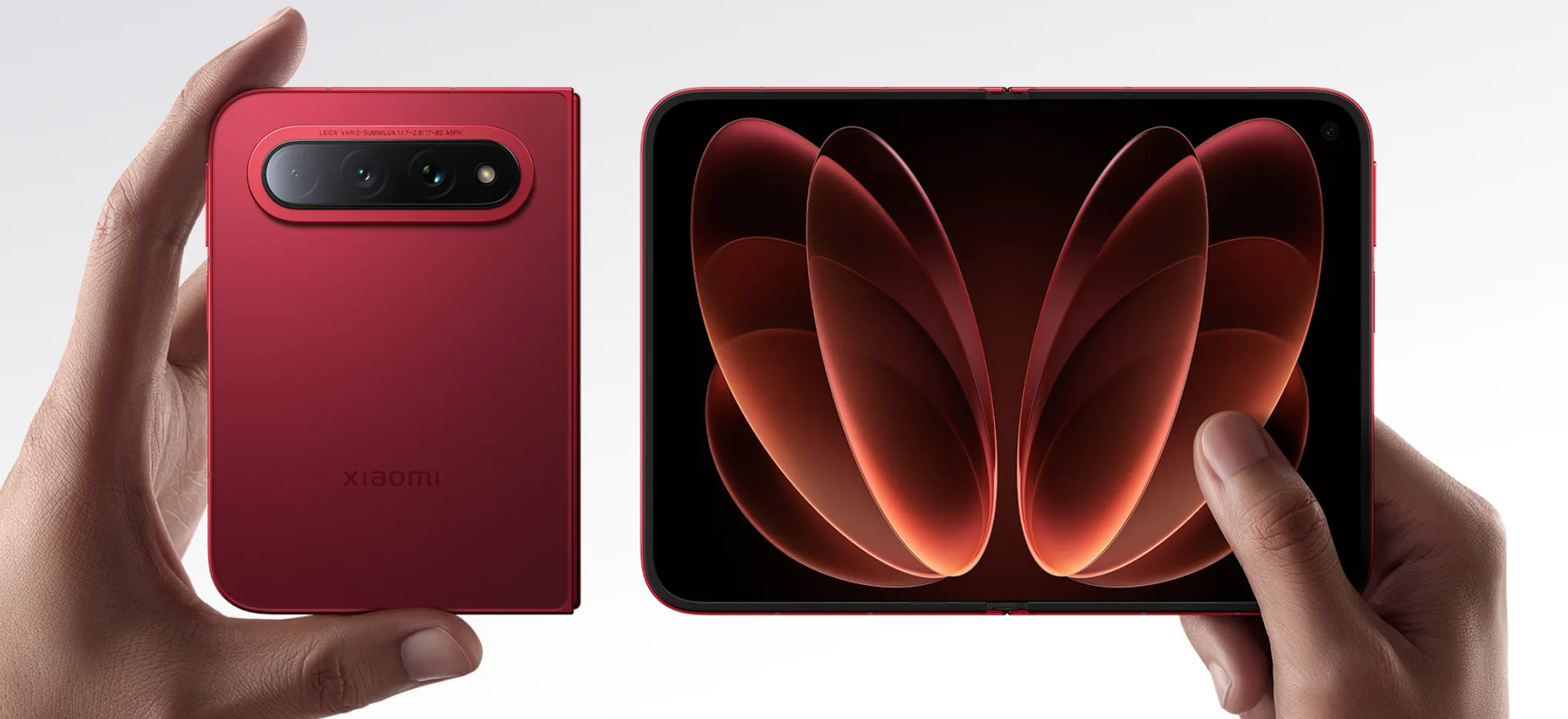
Xiaomi is taking a different approach to the book-style foldable with the Xiaomi 18 Fold, a shorter, wider flagship that starts at ¥10,999, or roughly $1,640, in mainland China. Xiaomi unveiled the phone and opened preorders on Sept. 7, with general sales scheduled to begin Sept. 10 at 10 a.m. local time.
The 18 Fold combines that wider design with Xiaomi's in-house XRING O3 processor, a 6,000mAh battery, and a Leica-branded 200MP camera system. For now, however, it remains a China-only release. Xiaomi has not announced international pricing or availability, leaving buyers elsewhere without a confirmed launch date, regional model, or official support path.
Xiaomi 18 Fold starts at ¥10,999 in China
The base 12GB/256GB model starts at ¥10,999, or roughly $1,640 at current exchange rates, with configurations offering up to 16GB of RAM and 1TB of storage. Xiaomi also offers a limited ceramic special edition priced at ¥15,999, or about $2,380.
At that starting price, the 18 Fold sits firmly in premium-flagship territory. Xiaomi is not positioning it as a budget alternative to established foldables; instead, the company is leaning on distinctive hardware and its growing control over the components inside the phone.
The China pricing does not indicate what a global model might cost if Xiaomi eventually releases one. Regional prices can differ substantially because of taxes, distribution costs, and market positioning.
Wide screens, a 6,000mAh battery, and XRING O3
The biggest visual difference is the shape. The 18 Fold uses a 5.38-inch cover display and a 7.58-inch inner OLED display, both with adaptive 1–120Hz refresh rates and peak brightness of up to 4,000 nits. The inner screen's 2,364 × 1,672 resolution gives it a roughly 1.4:1 aspect ratio, producing a noticeably shorter and wider layout than conventional book-style foldables.
That wider format could make documents, video, multitasking, and side-by-side apps feel more natural, but unconventional dimensions also create their own software challenges. In a hands-on with the phone, The Verge found the cover display comfortable to use one-handed while noting that some apps may fit awkwardly on its unusually short, wide screen.
Battery capacity is another standout. The 18 Fold carries a 6,000mAh silicon-carbon battery with 67W wired and 50W wireless charging. Xiaomi claims an energy density of 920Wh/L using 20% silicon content, though that figure comes from the company's own testing rather than independent battery analysis.
The rear camera system is similarly ambitious for a thin foldable. It includes a Leica-branded 200MP main camera, a 50MP periscope telephoto camera with 3.5x optical zoom, and a 50MP ultrawide camera. That gives Xiaomi more focal-length flexibility than many foldables offer, though independent reviews will be needed to determine how well the three cameras perform beyond the specification sheet.
The processor may be even more significant. The 18 Fold is the first phone to use Xiaomi's in-house XRING O3 flagship chip, built on a 3nm process and paired with Arm's new Mali G2-Ultra NX GPU.
Arm describes the Mali G2-Ultra NX as its first AI-native Mali GPU, with dedicated neural hardware for graphics workloads. Supported techniques include AI-assisted image reconstruction, intermediate-frame generation, and denoising for ray-traced graphics.
Those capabilities could make the 18 Fold especially interesting for mobile gaming, where higher-quality visuals must be balanced against heat and battery consumption. Real-world performance will still depend on software support, sustained thermals, and how aggressively Xiaomi tunes the XRING O3 under load.
The 1TB configurations also introduce CXMT's LPDDR6 memory to a flagship smartphone. CXMT says its 16GB LPDDR6 package supports speeds of up to 12,800 Mbps, or 10,667 Mbps when paired with the phone's system-on-chip. Its performance and power-efficiency figures are based on the manufacturer's own testing, so independent benchmarking will be important here as well.
Where Xiaomi has an edge over Samsung
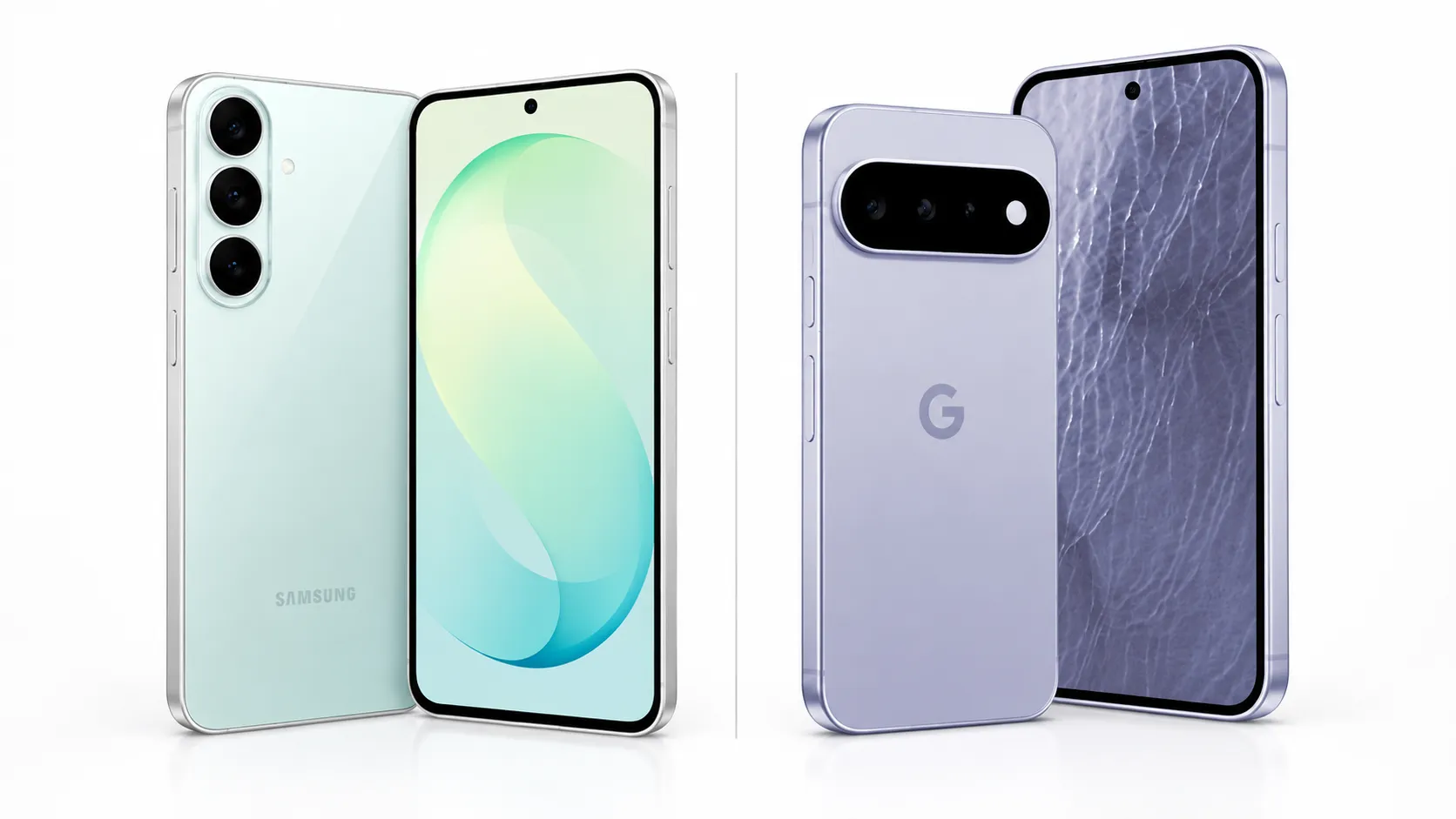
Samsung's Galaxy Z Fold8 remains one of the most obvious points of comparison, particularly for buyers outside China who can purchase it through official channels.
Xiaomi has the stronger camera specification in at least one important respect. The 18 Fold includes a 50MP periscope telephoto camera with 3.5x optical zoom, while the standard Fold8 has no dedicated telephoto camera. That gives Xiaomi greater optical flexibility on paper, although its camera system still needs broader independent testing before it can be called better in practice.
The battery gap is more straightforward. Xiaomi packs 6,000mAh into the 18 Fold versus the Galaxy Z Fold8's 4,800mAh capacity. Capacity alone does not determine endurance, but the difference gives Xiaomi considerably more room to work with before software efficiency, display behavior, and processor tuning enter the equation.
Samsung still holds advantages that are harder to capture in a specification table. Its Fold8 is already sold across multiple international markets, comes with established regional warranty and repair support, and has undergone much broader independent testing. The Verge's hands-on also found Samsung's Fold8 more polished in overall build quality, even though Xiaomi offers the larger battery and more versatile rear camera hardware.
That leaves the 18 Fold in an unusual position: competitive on hardware, but much less proven as a complete ownership experience.
Why importing the Xiaomi 18 Fold is still a gamble
For buyers outside China, the biggest unanswered questions are less glamorous than megapixels or processor architecture. Battery life, sustained performance, camera quality, app scaling, modem compatibility, and day-to-day software behavior will determine whether the phone is actually practical to import.
Early hands-on impressions cannot establish how the 18 Fold behaves after days of regular use. Nor can a specification sheet reveal whether apps consistently take advantage of the wide inner display or whether the XRING O3 maintains its performance during longer gaming, camera, or multitasking sessions.
Xiaomi also makes aggressive durability claims. The company says the display is 178% stronger and 29% more impact-resistant than the 2024 Mix Fold 4. Those figures come from Xiaomi's own comparisons rather than independent durability testing against competing foldables.
More practical import concerns remain unresolved. Xiaomi has not announced an international model, leaving uncertainty around supported cellular bands, warranty coverage, repair options, and how the China-market version of HyperOS 4 behaves with apps and services commonly used outside China.
That uncertainty does not make the 18 Fold a bad device. It simply means buyers outside China would be taking on considerably more risk than they would with a foldable officially sold and supported in their region.
For now, the Xiaomi 18 Fold is most compelling as a preview of where Xiaomi wants the category to go. The company is pushing toward wider displays, larger batteries, more flexible cameras, custom silicon, and increasingly sophisticated graphics hardware while keeping the device relatively thin and portable.
Whether that combination becomes a serious buying option beyond China depends on what Xiaomi does next. If a global version follows, the 18 Fold could become one of the more distinctive alternatives to Samsung's foldable lineup. Until then, it remains an intriguing piece of hardware with one important limitation: most of the world still cannot buy it through official channels.






Comments
Be the first, drop a comment!