



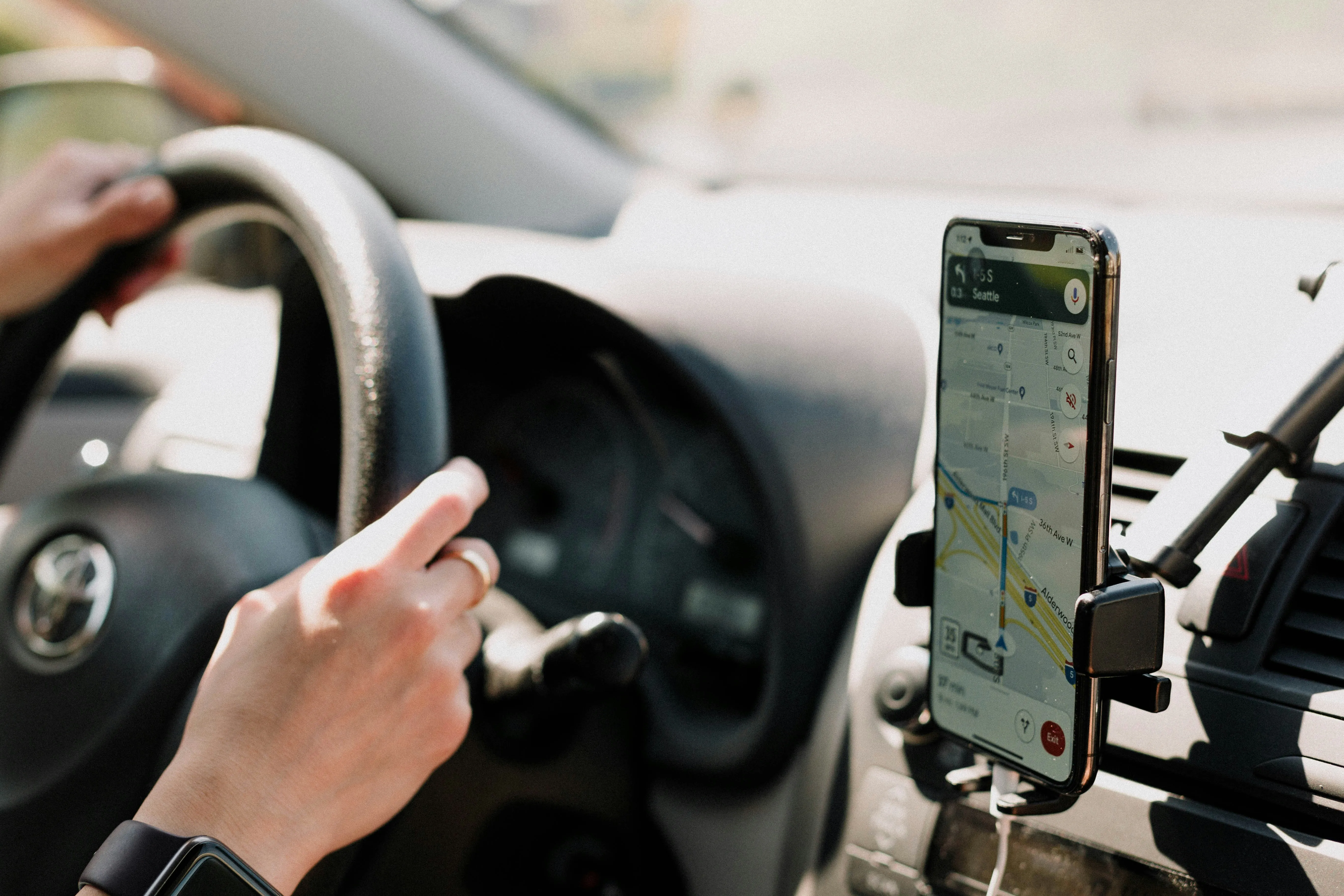
Type "use phone as a tape measure" into a search bar and dozens of apps promise to do exactly that. Android Authority decided to test the appetite behind that search: it asked readers which of four sensor-based toolbox jobs they'd actually hand to their phone.
The tape measure won by a wide margin. More than half of respondents, 53% of almost 3,000 votes, said they'd use their phone as a tape measure, compared with 27% for a metal detector, Android Authority reported on August 19.
That's a clear preference. It isn't proof that a smartphone tape measure is replacing anything in anyone's actual toolbox.
A fifth option, thermometer, never made the ballot. It's a Pixel-exclusive feature that Google has now removed from the Pixel 11 series, so Android Authority left it out of the vote.
The spirit level and sound/light meter were the only ones left.
What the poll found, and where it stops
The four options came from a broader Android Authority roundup on how people use phone sensors as tools: tape measure, metal detector, spirit level, and sound/light meter.
Thousands of readers voted, and the outlet frames the tape measure's win as decisive, the clear winner among the four.
What the write-up doesn't include is any breakdown of who actually voted. No demographics, no geography, no detail on how the poll was structured or promoted.
That absence matters. A poll's shape often depends on who shows up to answer it, and the published information doesn't let readers judge how representative this crowd was of phone owners generally.
There's a second gap. The question asked what people would "actually use," and Android Authority describes respondents as saying they "might actually use" the functions.
That measures stated interest rather than tracked behavior. Nothing in the reporting shows how often anyone actually opens a measuring app once the poll closes, or whether they ever do.
The poll demonstrates a preference among four options. It's tempting to turn that into something bigger: that phones are becoming reliable substitutes for the tools sitting in a drawer.
Those are different claims, and only the first one has evidence behind it.
A plausible explanation for the split
Reading the four options side by side, a pattern suggests itself, though it's speculation, not something the poll measured.
A rough fit check, will the couch clear the doorway, probably comes up often and tolerates a small error just fine. Locating something hidden and precise, a buried pipe or a wall stud, comes up less often and punishes a bad reading more.
That's one possible reason the metal detector landed at a more modest 27%.
The spirit level and sound/light meter shared the remaining vote, but Android Authority doesn't report their individual percentages. Treat that as the remainder of the poll rather than evidence that the two finished in an exact tie.
None of this comes with a follow-up on how often people need each function or what a wrong reading would cost them.
What the pattern does suggest, cautiously, is that the poll's real value may lie less in phones replacing physical tools than in which sensor tricks map onto low-stakes, everyday problems.
That's the frame worth carrying into a closer look at what phone measuring apps can actually do.
Use phone as a tape measure: when it works and when it doesn't
The research available here doesn't establish how most consumer measuring apps calculate distance, or how they perform in dim light, on cluttered surfaces, or across different phone models.
That's a gap in what's been tested and reported, not a finding about the entire market, and it's worth saying plainly rather than guessing at a mechanism.
What is documented is a narrower case: some phones pair a camera with a dedicated depth sensor.
Pix4D notes that recent iPhone Pro models combine high-resolution cameras with built-in LiDAR that its PIX4Dcatch app uses to collect data for 3D models.
That's one specific, hardware-assisted workflow, not a description of how the free measuring app on an ordinary phone works.
Given that gap, a phone estimate may be adequate for low-stakes questions: whether a couch will clear a doorway, roughly how much shelf space is free, or whether a box will fit before buying packing material.
Money and materials change the calculation. Before cutting materials, mounting hardware, or ordering fitted furniture or flooring, a physical tape measure is worth the extra minute, since a small error there turns into an expensive one.
What the Pix4D test actually measured
The closest thing to a professional comparison here comes from Pix4D, a company that builds photogrammetry and surveying software, and it's worth being precise about what its test did and didn't cover.
Pix4D compared its PIX4Dcatch software against a traditional GNSS surveying setup, the kind that fixes coordinates using a leveled antenna on a pole.
Pix4D's own write-up names the phone as an iPhone 15 in one section and an iPhone 15 Pro in another, an inconsistency the published post never resolves.
Either way, the evaluation section says the phone was paired with an Emlid REACH RX RTK receiver over Bluetooth and tested across two sites with excellent satellite visibility and no significant signal obstructions.
Pix4D describes combining mobile tracking, GNSS signals, and photogrammetric triangulation, with the final results processed through PIX4Dmatic software.
The traditional method relied on a leveled survey pole holding a GNSS antenna at a fixed two-meter height, with each point surveyed for 30 seconds.
At one site, six points were surveyed three times using the traditional method and six times with the handheld scanner on the same day. At the second site, five points were surveyed with both methods over three different days.
Across 11 points total, Pix4D calculated the RMS difference between the average positions produced by each method and found the coordinates agreed to within roughly half a centimeter.
That's separate from the standard deviation Pix4D also reported, which measured how consistent repeat readings were within each method. Those values were around one centimeter in the X, Y, and Z directions.
That distinction matters more than it looks. Agreement between two methods means the phone-based setup and survey pole landed in roughly the same place.
It doesn't by itself establish absolute accuracy against an independent, higher-precision reference. Eleven points across two sites is also a small sample for such a specific claim.
That's enough to show the two methods tracked each other closely under the conditions tested, not enough to generalize to every job Pix4D's customers might throw at the system.
Why that test doesn't settle the question for consumer apps
None of this describes the free app most people would open to check whether a dresser fits against a wall.
The setup Pix4D tested included an external RTK receiver, specialized survey software, and specific Apple hardware, run under open-sky conditions with no significant signal obstructions.
The described test didn't include furniture dimensions, room-scale measurements, or how the software performs on an ordinary Android phone without added hardware.
If the receiver, software, phone hardware, or sky conditions change, this test gives no basis for assuming the result would hold with the same confidence.
It's a specialized surveying workflow tested by the vendor that built it, not independent evidence about how ordinary consumer measuring apps perform, and it shouldn't be read as validating them.
The external RTK receiver is doing real work here too. It's additional hardware most phone owners don't own, and most measuring apps don't use, which is another reason this describes a professional workflow rather than an everyday one.
The takeaway
Buried in the comments under Android Authority's poll is a different kind of data point. Reader Justin Wilhelm said he uses his Pixel's thermometer "fairly often."
Android Authority also notes that an earlier poll and reader discussion found thousands of people using the Pixel thermometer for tasks ranging from checking body temperature to checking food temperature.
That's a useful contrast to sit with: a feature people report actually using doesn't always win a head-to-head vote against options people simply say they'd try.
The more useful next step isn't another poll. It's someone testing how these apps perform outside a controlled setup, across ordinary phones, ordinary lighting, and the cluttered rooms that can make camera-based measurements harder.
Until that testing exists, the sensible approach hasn't changed. Use the phone for a fast, rough estimate, and reach for a physical tape measure before you cut, drill, or pay for anything.



Comments
Be the first, drop a comment!