





Redmi K90 Max Gaming Phone: Active Cooling Meets IP69 Waterproofing
The Redmi K90 Max gaming phone launched in China today with a claim that shouldn't hold up on paper: a built-in spinning cooling fan paired with IP66, IP68, and IP69 water and dust resistance ratings. Phones with active airflow openings aren't supposed to be waterproof. Redmi says it engineered around that. Open sales began today, with the base 12GB/256GB model starting at CNY 3,199 (approximately $469), per GSMArena. No international launch has been announced.
Redmi K90 Max built-in fan: why the waterproofing is the bigger story
Active cooling in smartphones isn't new as a concept. External clip-on fans are a cottage industry for mobile gamers. Built-in fans have stayed rare for a structural reason: phones are sealed against water ingress, and fans need airflow. The two goals pull in opposite directions.
Most high-performance phones manage heat passively, using vapor chambers, graphene layers, and thermal paste to spread heat from the processor to the frame. These systems work up to a point. Under sustained loads, like a long gaming session, passive cooling hits a ceiling, throttling kicks in, and performance drops.
Redmi's solution is to cut intentional openings into the chassis. Where the K90 Pro Max has a speaker grille, the K90 Max has a larger intake grille for the fan; a secondary exhaust vent sits below the camera module, as GSMArena reported when the design was officially revealed two weeks ago. The 18.1mm rotor, which Redmi claims is 6% larger in diameter than mainstream smartphone fans, forces air across a 6,000mm² vapor chamber, according to FoneArena. Xiaomi's own test data puts the high-speed cooling mode at a 10°C temperature drop in 100 seconds. That figure is manufacturer-supplied; no independent thermal testing exists as of launch day.
The IP69 rating is the part that requires scrutiny. IP69 covers resistance to high-pressure, high-temperature water jets at close range, and achieving that alongside active airflow openings would be a genuine sealing engineering achievement, not just a line item on a spec sheet. Whether the rating holds after months of real use, with a moving mechanical part inside the chassis, is a question only long-term testing will answer. That caveat belongs with every thermal performance claim made about this device.
Redmi K90 Max specs: what holds up the gaming case
The Redmi K90 Max Dimensity 9500 pairing comes with a dedicated Xiaomi D2 graphics chip and up to 16GB LPDDR5X RAM with 1TB UFS 4.1 storage, per GSMArena. Redmi claims an AnTuTu v11 score of 4,161,374. A pre-launch prototype running the same chipset posted 3,513 single-core and 10,711 multi-core in Geekbench 6.6, GSMArena reported a week ago.
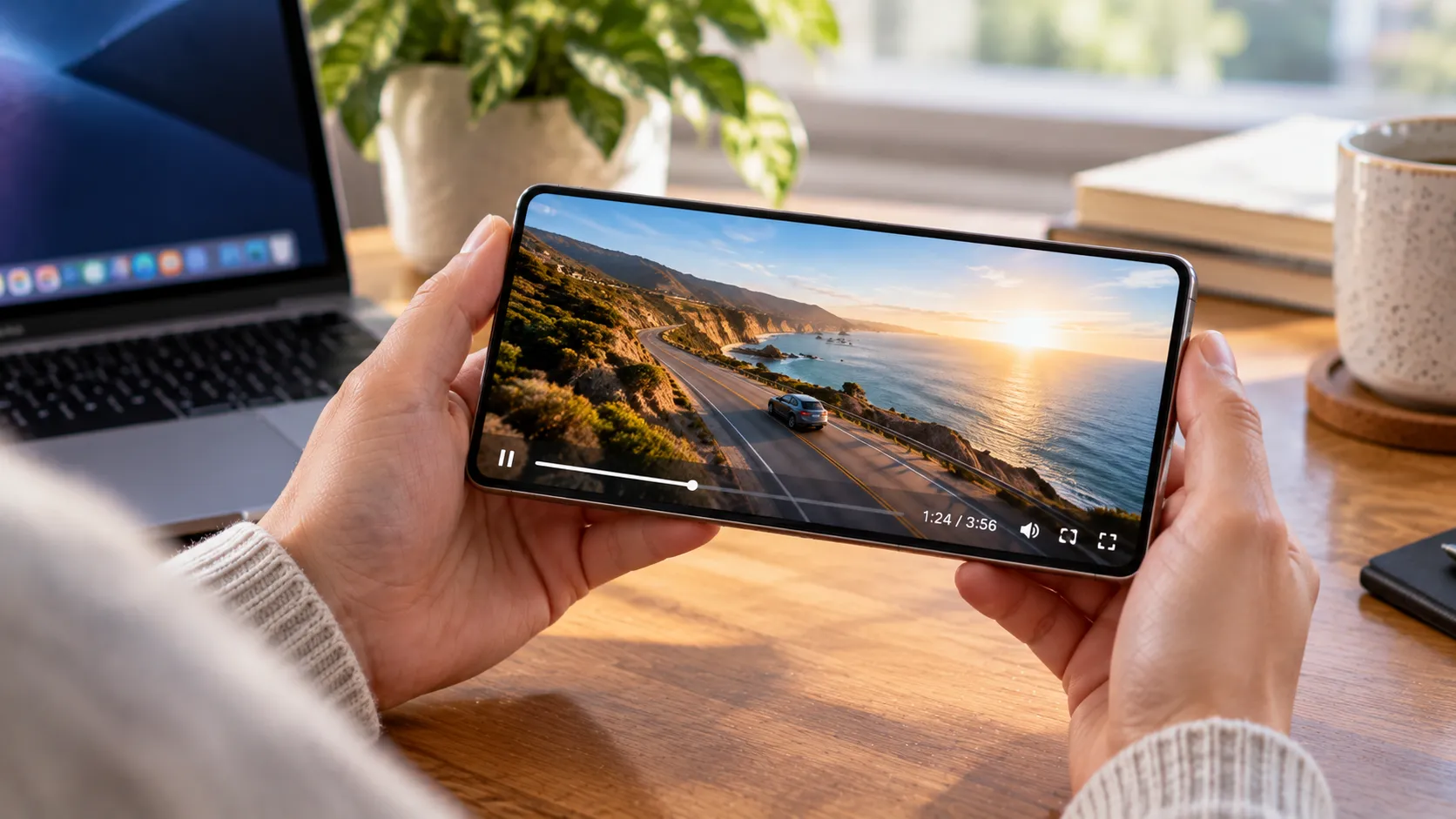
The display backs up the performance hardware: a 6.83-inch AMOLED at 2,722 × 1,280 (1.5K), 165Hz refresh rate, 12-bit color, and up to 3,500 nits peak local brightness, built by TCL using M10 luminous technology, per GSMArena. For gaming, the 165Hz refresh rate and brightness are the numbers that matter; the resolution is sharp without being overkill. Bose-tuned stereo speakers complete what is, taken together, a credible multimedia and gaming package.
The rear camera setup is a 50MP 1/1.55-inch main sensor with OIS and an 8MP ultrawide, but Xiaomi's launch materials focus on cooling and performance rather than imaging. The software is Android 16 under Xiaomi HyperOS 3.0. Neither item moves the gaming-phone needle in either direction.
What launch-day specs still don't tell us
Absent from the launch materials: device thickness, weight, fan noise levels, and any detail on gaming-specific software features like trigger controls or frame interpolation. Those gaps matter for anyone trying to place this against a dedicated gaming phone from ASUS ROG or RedMagic. Without sourced competitor data, that comparison can't be made here.
The Redmi K90 Max 8550mAh battery: size, chemistry, and bypass charging
The 8,550mAh typical capacity figure is unusually large by current standards. FoneArena lists 8,550mAh as the typical rating, while GSMArena uses 8,500mAh; the discrepancy likely reflects the difference between rated and typical capacity. Either way, the capacity is the same physical cell. What makes it relevant to the gaming argument isn't the number alone; it's the combination of chemistry and charging design.
The silicon-carbon cell carries 16% silicon content, per GSMArena's pre-launch coverage last week, which enables greater energy density relative to battery size. Charging comes in at 100W wired and 22.5W reverse wired, per GSMArena.
The feature with the most practical impact for sustained gaming is bypass charging. When enabled, the phone draws power from the charger rather than cycling through the battery simultaneously, which reduces the thermal load that comes from charging and discharging at the same time. The fan handles heat from the SoC; bypass charging handles heat from the battery side of the equation. Two systems, same problem, different angles. That's a coherent thermal design, not just a list of specs stacked together.
Pricing, availability, and what this launch signals
The K90 Max starts at CNY 3,199 (approximately $469) for 12GB RAM and 256GB storage, rising to CNY 4,699 (around $690) for the 16GB/1TB configuration. A 300 yuan discount applies across all variants during the first sale, FoneArena noted. Xiaomi has not announced plans for a global launch, per GSMArena.
For readers outside China, the immediate practical value is limited. The design choices are still worth tracking. Gaming-phone features, active cooling, large batteries, sustained-performance hardware, have historically lived inside niche, visually aggressive devices at premium prices. The K90 Max tests whether that hardware can travel into more mainstream packaging at prices that don't require full commitment to a gamer identity.
If the device sells well and a global version follows, that's a meaningful shift in how the category works. If it stays China-only, it still functions as a useful data point about Xiaomi's hardware ambitions and a preview of specifications that may surface elsewhere in the lineup later.
The central question the K90 Max raises, whether you can engineer a phone that actively moves air and still reliably keeps water out over time, won't be settled by launch-day materials. That's what the reviews are for.









Comments
Be the first, drop a comment!