





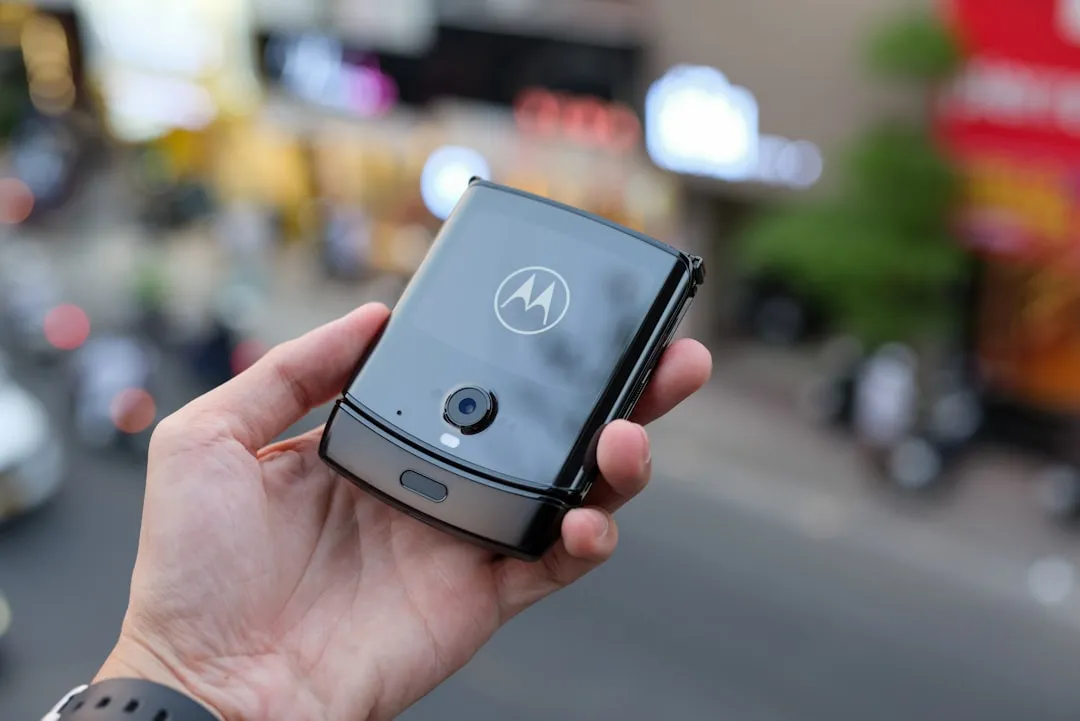
Motorola Razr Plus 2026 vs Razr Plus 2025: Is the 0 Gap Worth It?
Place the Motorola Razr Plus 2026 and the Razr Plus 2025 side by side and you genuinely cannot tell them apart. Same 6.9-inch internal display, same 4-inch cover screen, same 73.99 x 171.42 x 7.09mm open dimensions, same 189g weight, per the spec table at Android Central. Yet the Motorola Razr Plus 2026 vs Razr Plus 2025 decision is not the same purchase at all, and the reason comes down to one number: $400. When CNET's first-impressions piece ran in late April, the 2025 model was selling for $700 while the 2026 launched at $1,100. That gap, not the $100 MSRP difference you'll see in press materials, is the central fact this comparison has to answer for.
The 2026 model is a genuine but incremental upgrade. Whether the premium makes sense depends on three things: how much battery life frustrates you on a daily basis, which camera setup actually matches how you shoot, and how long you're planning to keep the phone. Each of those deserves a real answer.
What stayed the same
Both phones run the Snapdragon 8s Gen 3, 12GB of RAM, and 256GB of storage. Android Authority noted in late April that the chip is already over two years old and represents a pared-down version of the full Snapdragon 8 Gen 3 from late 2023, calling the lack of an upgrade "especially frustrating." Charging speeds are identical at 45W wired and 15W wireless. Connectivity, audio hardware (three mics, dual stereo speakers, Dolby Atmos), and the IP48 water-resistance rating with Gorilla Glass Victus are unchanged across both generations, per Android Central's spec comparison. The 32MP selfie camera carries over without modification.
This matters for current 2025 owners in particular. If performance, connectivity, or the fundamental form factor is what you care about, the 2026 model offers nothing new.
Battery, hinge, and display: the upgrades you can't see
The 2026 Razr Plus carries a 4,500mAh battery, up from 4,000mAh, a 12.5% increase. Motorola achieved this without adding weight by switching to silicon-carbon battery chemistry, which packs more capacity into the same physical space, as CNET explained when describing the technology across the entire 2026 Razr lineup. On a flip phone form factor that has historically been battery-constrained, that's the most meaningful daily-use improvement in the 2026 spec sheet.
One important caveat: Consumer Reports clocked the 2025 model at 34.5 hours in battery life testing earlier this year. No equivalent independent benchmark exists yet for the 2026. The spec improvement is real; what it translates to in actual daily use remains unconfirmed until those tests land.
The hinge swap is more subtle. Motorola replaced the aluminum hinge with titanium. The phone stays at 189g because the lighter hinge offsets the heavier battery, something Android Central calls "an impressive feat of engineering." The 2026 model also adds MIL-STD 810H certification specifically covering the titanium hinge, a rating absent from the 2025 spec sheet. Android Central notes that titanium also improves overall durability over the long haul, though no third-party hinge-cycle or independent drop testing has been published for the new model yet.
On the display side, the 2026 model upgrades both the internal and external panels from 8-bit to true 10-bit color. Resolution (1080 x 2620 internal, 1272 x 1080 external), refresh rate (165Hz LTPO on both), and peak brightness (3,000 nits internal, 2,400 nits external) are unchanged. According to Android Central, the 10-bit panels should reduce the flickering caused by temporal dithering that 8-bit displays rely on to simulate additional colors. That's a potentially more comfortable viewing experience, particularly for people sensitive to flicker at low brightness. Independent lab testing hasn't been published, so this stays in the "promising spec with a credible explanation" column for now.
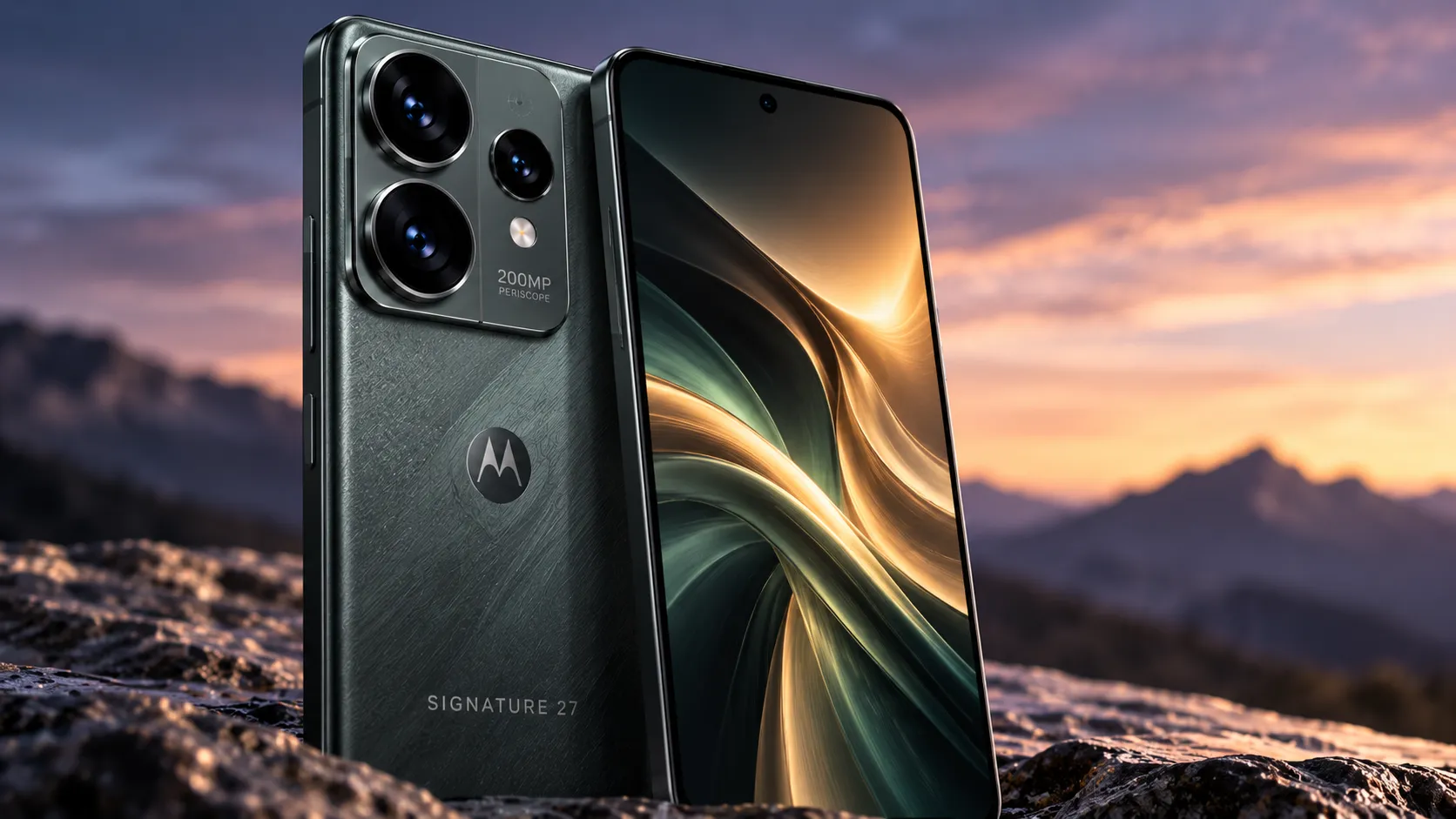
One last change worth knowing: the 2025's shiny sides are replaced with a matte, smudge-resistant finish, and the color lineup shrinks from three options (Pantone Mocha Mousse, Midnight Blue, Hot Pink) to one, Pantone Mountain View, a deep green with woven texture, per Android Central's spec table. Less choice, but cleaner in-hand feel.
The camera swap: Razr Plus 2026 vs 2025 differences that actually matter for photographers
This is where the comparison gets genuinely interesting rather than just incremental.
The 2025 model's 50MP 2x optical telephoto is replaced by a 50MP ultrawide with a 122-degree field of view, autofocus, and macro support. The main 50MP sensor with OIS carries over, though the aperture narrows slightly from f/1.7 to f/1.8, per the Android Central spec table. Android Authority called the outgoing telephoto "awkward" and described the ultrawide replacement as "much more useful," though that's clearly framed as editorial opinion. The Verge confirmed the swap and noted the main camera hardware is otherwise unchanged.
Where the 2025 retains a real advantage: Android Central is direct that 2025 owners keep "slightly better camera zoom detail" because of the dedicated telephoto. The 2026 has no optical zoom beyond the main lens. For portraits, compressed-perspective shots, or anything requiring consistent 2x magnification, the 2025 is simply better equipped. That's not a minor point.
For everything else, an ultrawide serves more people in more situations. Group shots, architecture, tight interiors, travel photography where you can't step back far enough: this is where the 2026 camera earns its place. The new main sensor also gains Ultra HDR support with up to five times wider dynamic range than older Razr models, the dual 50MP setup enables Horizon Lock video stabilization, and a new feature called Frame Match lets you photograph a scene and then guide someone else to replicate your exact framing so you can appear in the shot, per Android Central. Instagram users can capture Ultra HDR images directly inside the app without switching to the native camera. These are launch claims from Motorola and haven't been validated by independent sample-based testing. The dynamic range figure in particular needs real-world confirmation before it means much.
The honest summary: the 2026 camera system is more versatile, not objectively superior. Which phone wins on cameras depends entirely on whether you shoot subjects close up from a distance or wide scenes where you need more field of view.
Price, software support, and who should buy which phone
The MSRP gap between these two phones is $100. The real-world gap at the time of writing is considerably wider. CNET noted in its first-impressions piece that the 2025 model was available for $700 while the 2026 launched at $1,100, a $400 difference in actual buying conditions. Android Central frames the 2025 as saving "a few hundred bucks," which undersells it at current pricing. Discount levels will shift as inventory moves, so check current street prices before assuming that gap holds. But at the time this was written, a $100 premium for a battery bump and hinge upgrade is a reasonable debate; a $400 premium for those same changes is a much harder case.
Software support changes that calculus in one specific scenario. Both phones receive three major Android OS updates. The 2026 model reaches Android 19 with security patches through 2030; the 2025 tops out at Android 18 with security coverage through 2028, per Android Central. That's one extra OS version and two more years of patches on the 2026. If you hold phones for four or more years, those two extra years take you to 2030 on security support, which is genuinely useful given that 2026's pricing environment is unlikely to get cheaper. If you typically upgrade every two or three years, the support window gap barely registers.
Neither phone competes on longevity against Samsung or Google. Android Authority pointed out in late April that both Samsung and Google guarantee seven years of OS updates across their flagship lineups, more than double Motorola's three-year commitment for the entire 2026 Razr family. That ceiling matters if long-term software support is a deciding factor.
For current 2025 owners specifically: this is not a compelling upgrade unless battery life is a genuine daily frustration or the ultrawide would substantially change how you use the camera. Consumer Reports tested the 2025 model earlier this year, rating its display quality and ease of use as excellent, and the phone survived both 50-count and 100-count tumble tests without visible damage. A good phone doesn't become less good because a marginally improved version launched.
Who should buy which
For new buyers choosing today:
-
Buy the Razr Plus 2026 if battery endurance is a consistent daily frustration; you plan to keep the phone past 2028 and value security patches through 2030; you shoot group photos, travel scenes, or architecture and would genuinely use an ultrawide far more than a 2x zoom; or the MIL-STD 810H hinge certification matters to you for long-term confidence. The value case is strongest over a four-to-five year horizon, where the extended support window to 2030 and the more durable hinge add up.
-
Buy the discounted Razr Plus 2025 if you can find it at or below $700 and optical zoom matters to your photography; you're not planning to hold the device past 2028; or you want strong, proven performance at a price that better reflects what the spec sheet actually delivers.
-
Wait if independent battery life and camera testing hasn't landed yet and endurance is your primary reason for upgrading. The 500mAh battery increase is real; how much it changes daily runtime is still unconfirmed.
One thing neither phone resolves: the Snapdragon 8s Gen 3 is aging, and Motorola isn't addressing it. Buyers who prioritize processing headroom or want software longevity comparable to Google and Samsung should factor that in before committing at either price. What Motorola has built here is a carefully refined version of a good flip phone. Whether that refinement is worth $400 more than last year's model depends on how long you plan to keep it and which camera you'd actually use.






Comments
Be the first, drop a comment!