



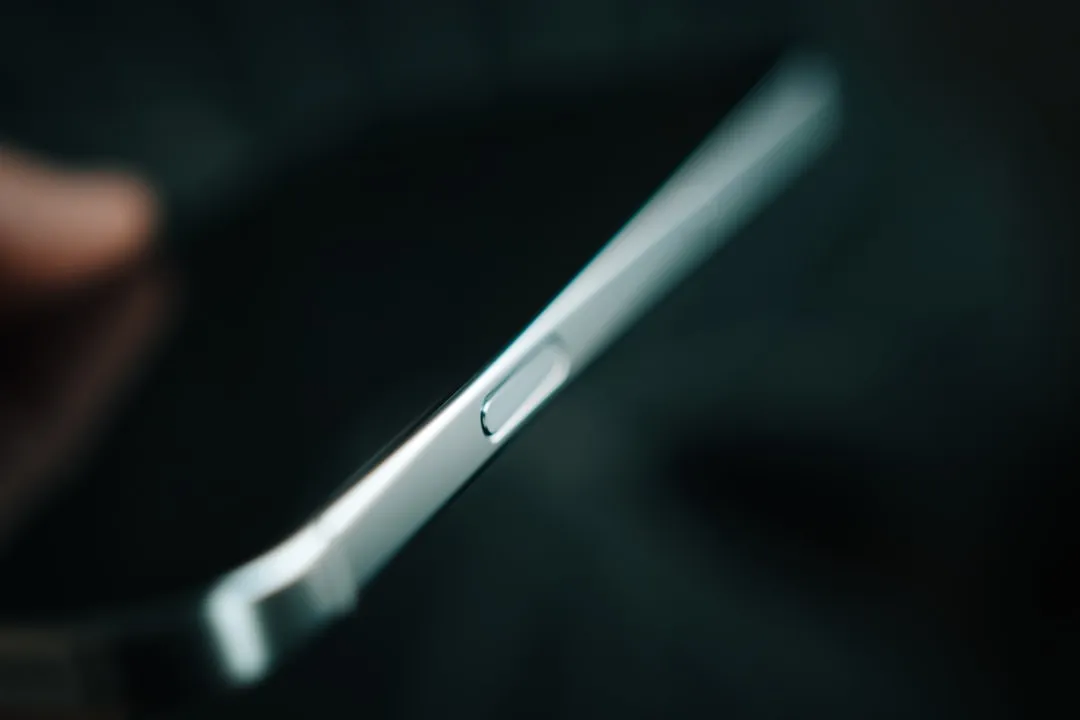
Titanium sounds like the obvious upgrade when a phone maker puts it on a spec sheet, but the metal running around your phone's edge does less than the marketing implies. In the titanium vs aluminum phone frame debate, titanium generally gives the frame more resistance to bending and permanent denting, though the finish still decides how scratches show up day to day. Aluminum tends to win on heat, manufacturing cost, and repair pricing. Neither metal by itself decides whether your phone survives a drop onto concrete.
Apple's own product history shows how quickly that calculus can change. The company built its 2023 pitch for the iPhone 15 Pro around titanium's aerospace-grade strength-to-weight ratio, and Gizmochina reports Apple specifically used a Grade 5 titanium alloy for that generation. Apple switched back to aluminum for the iPhone 17 Pro line, tying the change to heat demands from the newer A19 Pro chip and its vapor-chamber cooling system.
Samsung's Galaxy S25 Ultra uses a titanium alloy chassis, according to a drop-test comparison against the iPhone 17 Pro Max. That puts two of the biggest flagship lines on opposite sides of the same material question.
What's actually different between titanium and aluminum frames
Two properties do most of the work in this comparison: yield strength, which is how much force a metal takes before it bends permanently, and hardness, which is resistance to scratching and denting. Think of yield strength like a paperclip. Push it past its limit and it stays bent instead of springing back. Density, thermal conductivity, and how the frame is finished matter too, but these two properties explain most of titanium's marketing pitch.
Titanium used in phone frames is typically a titanium-aluminum-vanadium alloy known as Ti-6Al-4V, or Grade 5 titanium. NASA-funded materials research has found that titanium alloys hold up to repeated stress better than aluminum alloys of comparable weight, which is the underlying reason phone makers reach for it when they want a frame that resists dents. Aluminum isn't a pushover, either. Aluminum Association data cited by the same outlet shows aluminum alloys used in electronics can beat many steels on strength relative to weight while still resisting corrosion.
None of this happened by accident. Aluminum has stayed the default in premium phones and laptops for years because it strikes a better balance of strength, weight, and cost than steel or titanium, not because it's the toughest material available. Titanium's reputation for toughness is real. Whether that reputation translates into a tougher phone in daily use is a separate question.
Titanium vs aluminum phone frame: Which holds up better in daily use?
Titanium's structural durability does show up in daily wear. The Smartphone Doctor's technicians note that titanium excels at reducing mechanical stress on internal components and confirm that titanium resists bending better than aluminum, even though that alone doesn't guarantee a phone survives every drop. That's part of why bare titanium rails often show fewer dents over months of pocket carry, though finish and coating still decide how much of that advantage shows up on any given phone.
One widely shared drop-test video compared the aluminum-framed iPhone 17 Pro Max against the titanium-framed Galaxy S25 Ultra across six drops, and the result landed closer to a tie than a clean win for either metal. The tester recorded the Galaxy holding up better on corner impacts, while the iPhone showed less rear-camera damage on flat-back drops, though the iPhone did pick up visible scuffs and a dent since aluminum is more malleable than titanium alloy.
That single comparison says less about titanium versus aluminum in general than it looks like it does. The two phones differ in glass composition, camera housing design, weight distribution, and corner geometry, and one video can't isolate the frame metal from everything else different between the devices.
The frame also isn't guaranteed to be the part that breaks. The Smartphone Doctor's repair technicians report seeing screens, batteries, and other internal components fail on impact regardless of frame metal, and note that even titanium phones without cases show internal stress damage after repeated drops. Their own repair data points to a simpler fix: a quality case reduces internal hardware damage more consistently than frame material alone.
Durability, in other words, doesn't run in one clean direction. Titanium can help the visible edges of a phone resist dents longer. What happens when the phone actually hits the ground still depends far more on glass quality, corner design, and whether it's in a case.
Aluminum phone frame heat dissipation: what's proven and what's still a claim
The physics aren't in dispute. Titanium has substantially lower thermal conductivity than aluminum, meaning the material itself moves heat away from internal components far less efficiently. That's not proof that any specific aluminum phone runs cooler, throttles less, or preserves battery health better than a titanium one. Thermal paths, vapor chambers, internal contact points, software power limits, and even case design all factor into the temperature you actually feel in your hand.
Apple's own engineering choices reflect that gap without proving a failure. On the iPhone 15 Pro, the titanium exterior was bonded to a substructure made from 100% recycled aluminum, and Apple states that the aluminum layer helps with thermal dissipation.
Where the reporting gets shakier is the leap to overheating in specific phones. Gizmochina's account ties Apple's return to aluminum for the iPhone 17 Pro partly to thermal and battery-stress issues connected to titanium and the more powerful chip in the prior generation. That lines up with the conductivity gap, but it's still inference, not independent thermal testing or a teardown comparing matched devices. The report doesn't establish whether titanium was the main driver.
Heavy users — people who game for hours, shoot 4K video regularly, or fast-charge often — are the ones most likely to hit thermal limits first if that hypothesis holds up. Before assuming frame metal decides the outcome, check independent reviews for sustained-performance benchmarks and charging temperatures on the specific phone in question. Frame conductivity is one input into a phone's cooling system, not the whole system.
What titanium costs you: price, repair, and manufacturing trade-offs
Titanium is genuinely harder to work with on a production line. It requires specialized tools, runs at slower production speeds, and produces higher scrap rates than aluminum, which machines faster and cheaper at scale. That's a real manufacturing trade-off, not just a marketing talking point.
Some of that trade-off shows up in the finished phone. The iPhone 15 Pro came in 19 grams lighter than its stainless-steel predecessor, and the outlet attributes part of that reduction to the switch from steel to titanium.
Pricing tells a more interesting story. Gizmochina reported that titanium added only $30 to $40 to Apple's per-unit production cost, and estimated that it helped justify roughly a $400 price gap between the standard iPhone 15 and the iPhone 15 Pro. If the figure holds up, "premium material" pricing reflects positioning at least as much as raw material cost.
Titanium's hardness also shows up at the repair counter. The Smartphone Doctor reports that titanium's toughness increases labor time during repairs and that aluminum frames are generally easier and less costly to service, based on the site's own repair observations.
Which frame should you actually buy?
The right material depends on how the phone gets used, not on which one sounds more premium on a spec sheet. Here's where the two metals actually diverge, and what to check for your specific model before deciding:
Visible dents and scratches
Titanium: Higher resistance to bending and denting, per repair-technician observations.
Aluminum: More prone to cosmetic marks in side-by-side drop testing.
What to check: The model's finish and coating, not just the frame metal.
Screen and back-glass survival
Titanium: Frame rigidity doesn't stop glass or camera housing damage.
Aluminum: Same limitation applies.
What to check: Independent drop-test results for the exact model.
Sustained performance and heat
Titanium: Lower conductivity; overheating claims for specific phones remain unverified.
Aluminum: Better heat management, reducing thermal degradation over time.
What to check: Independent sustained-performance and charging-temperature tests.
Repair pricing
Titanium: More time-consuming to service, per repair-industry reporting.
Aluminum: Generally cheaper and faster to service, per the same source.
What to check: The manufacturer's official repair estimate for your exact model.
Case use
Titanium: Dent resistance matters less once cased.
Aluminum: Heat advantage matters less once cased.
What to check: If you always use a case, weigh glass quality and repair cost over frame metal.
No frame metal guarantees a phone survives a drop, and that outcome comes down to glass quality, corner design, internal layout, and whether the phone is cased, not the frame material alone. Check the specific model and generation before buying based on frame material, since manufacturers switch materials between years for reasons tied to the chip inside, not just marketing. Compare the actual repair estimate, sustained-temperature test results, and drop-test data for the phone you're considering, and treat any "strongest phone yet" claim as something to verify against independent reviews once they publish.












Comments
Be the first, drop a comment!