



![Light Phone II [Black] 4G Volte Phone, Minimalist Phone for Calling & Texting, Bluetooth, WiFi, Personal Hotspot…](https://m.media-amazon.com/images/I/51D1IibyZuL._AC_UY218_.jpg)
![Light Phone II [Light Gray] 4G Volte Phone, Minimalist Phone for Calling & Texting, Bluetooth, WiFi, Personal Hotspot…](https://m.media-amazon.com/images/I/51yVBt14yKL._AC_UY218_.jpg)

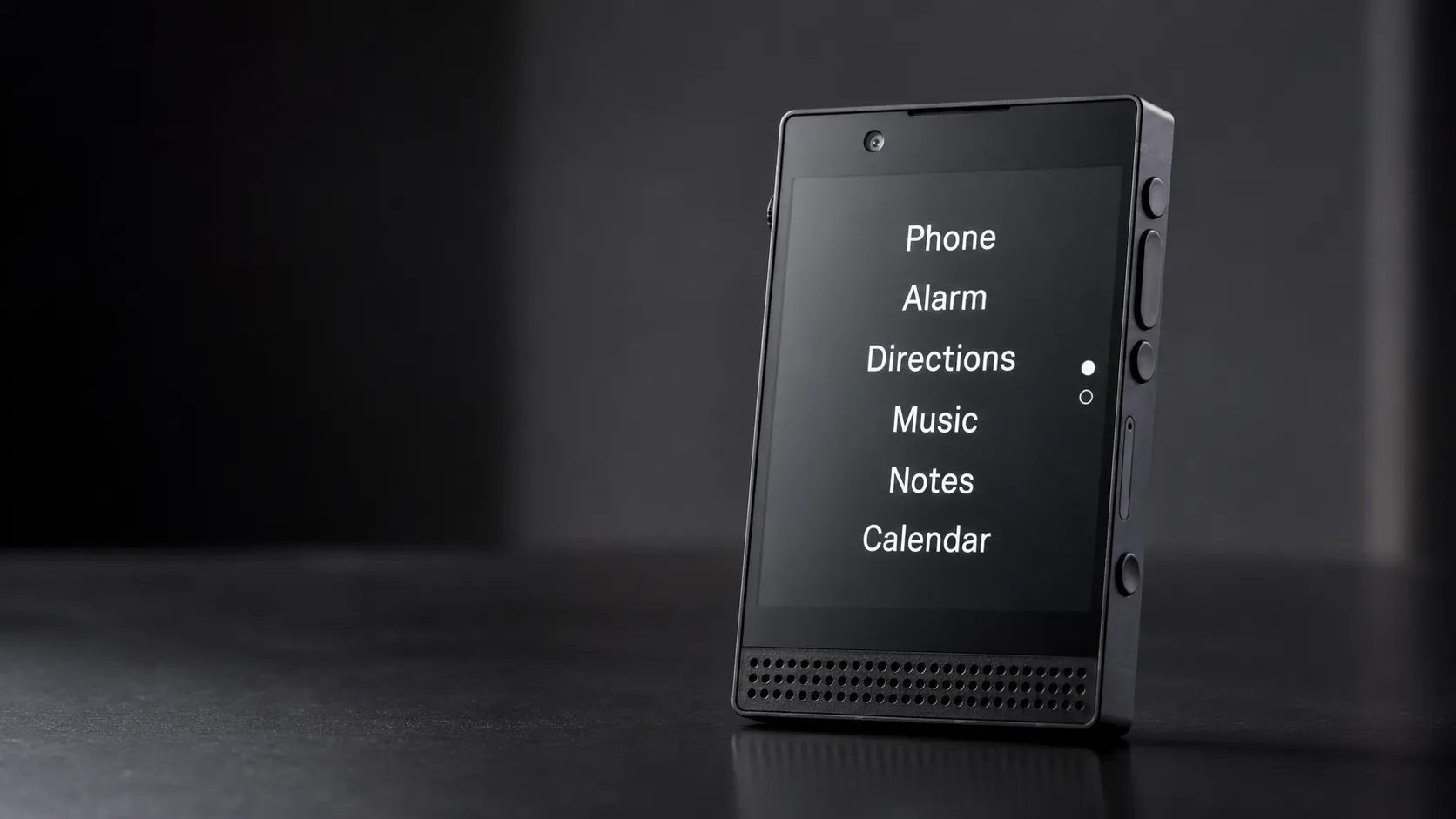
Light has announced a developer program that will let people create tools for the Light Phone III, bringing curated third-party app support to its deliberately stripped-down device. Light and Engadget describe a target timeline: Light says developer access begins in May 2026, Engadget reports the SDK should be ready in June, submitted-tool vetting is expected in August or September, and the user-facing platform is targeted for October. How Light enforces its principles once external submissions start arriving is the part that isn't documented yet.
The structure is unlike any mainstream app store. The program is non-commercial and open-source, every tool in the official Tool Library requires Light's explicit approval, and there is no open storefront. Anyone can build and submit; not everything gets in, Engadget reported on April 30, 2026.
For readers unfamiliar with the product: the Light Phone III ships with a limited set of built-in tools and no app store. Mobile World Live described Light's handsets as a "counterbalance to the dominant smartphone model," with social media, advertising, and open app marketplaces stripped out by design. The developer program doesn't change that posture. It changes who builds the tools that extend it.
Why Light is doing this now
This is not a reversal. Earlier this year, Light described plans to add a calendar, meeting reminders, notepad, barcode reader, voice memo, and two-factor authentication to its lineup. The developer program is the structural answer to that pressure: instead of building every additional tool in-house, Light is creating a controlled framework for others to build them.
The hardware makes this more consequential than it might sound. The Light Phone III includes 4G and 5G connectivity alongside Wi-Fi, Bluetooth, and NFC, per Mobile World Live. A phone with that full connective load-out can run more capable software than a genuinely limited device could. Third-party tools built on top of that hardware are a real expansion of what the phone does, not a cosmetic one.
What has shifted is the model, not the philosophy. Light has always made the call about what belongs on the device. The developer program delegates some of that judgment to an approval process that Light still controls, but will now be stress-tested by external submissions rather than internal decisions alone.
What the Light Phone III SDK actually exposes
The SDK gives developers permission-gated access to push notifications and on-device media, including photos, videos, audio, and other files, Engadget reported. Approved tools will be distributed through Light's own Tool Library rather than a public marketplace, while developer mode will still allow sideloading outside the official library.
Push notifications are where the tension is sharpest. They are the primary mechanism by which apps reclaim attention between sessions: the ping that implies urgency, the badge that suggests something is waiting. Light's SDK grants access to exactly that mechanism while its approval process is supposed to prevent it from being used that way. What Light has not publicly detailed is how it plans to monitor notification behavior in approved tools after launch.
The practical upside is real. Users could gain a 2FA authenticator, a voice memo recorder, a barcode scanner, or a calendar without inheriting feeds, algorithmic nudges, or notification loops. That gap between a fixed-function product and a moderated platform that can grow without becoming something else is precisely what this program is trying to fill.
The program won't produce an infinite library, though. LightOS is Android-based, but, as Engadget's review noted in 2025, "you'd never know it": the interface uses white text on a black background rather than familiar Android-style UI chrome. Developers are working with a constrained, unfamiliar surface. The program is likely to favor builders who understand that constraint over developers trying to port standard Android apps unchanged.
Light Phone developer program: what the rules say and what they don't
On its developer page, Light says official Tool Library submissions must be "blessed by Light," serve a "clear intentional purpose," respect user privacy "to the fullest extent," and fit a curated, non-commercial, open-source platform. The non-commercial and open-source requirements are the most pointed: as Engadget's reporter reads it, they suggest Light will reject tools that require subscriptions or carry in-app purchases, removing the financial incentives that tend to push mobile software toward engagement-maximizing behavior.
The non-commercial framing has at least one visible tension point. A The Verge review expressed confidence that Light would eventually build integrations including Lyft and Spotify. That was a reviewer's expectation, not a company commitment, and it predates the developer program announcement. Light's current published materials don't address whether a companion tool that authenticates into a paid commercial service would qualify as non-commercial under the new policy. It's an unresolved question, and a useful early test case for how strictly the rule gets applied.
What remains absent from Light's public materials is any description of the review process itself: what the submission workflow looks like, how long decisions take, whether developers can appeal rejections. There's also no explanation of what technical controls, if any, govern how approved tools use push notifications post-launch. Based on what Light has made public, enforcement appears to rest on policy rather than built-in technical restrictions. The actual behavior of approved tools will depend on how consistently that policy is applied once vetting begins, currently expected around August or September 2026.
The non-commercial, open-source structure is the most credible safeguard Light has announced. Whether it holds is a question for enforcement details that won't exist in public until late summer at the earliest.
What to watch when the platform launches
As of mid-May 2026, nothing changes on-device yet for current users and prospective buyers. The Light Phone III remains what it was: a phone built around a fixed, purposeful tool set. The trajectory is what's shifting, from a fixed-function product to a moderated platform, with a user launch targeted for October, according to Engadget.
Three signals will show whether the model works as intended:
Which categories of tools clear vetting: purely utility-focused, or something broader.
How push notification use in approved tools is governed, and whether that governance is visible to users.
How Light handles commercial-service integrations if and when they are submitted.
Light says it was "born as an alternative to the tech monopolies that are fighting more and more aggressively for our time & attention," with technology "intentionally designed to be used as little as possible." Those three signals will show whether that standard survives once the company is no longer the only one making the call.


Comments
Be the first, drop a comment!