





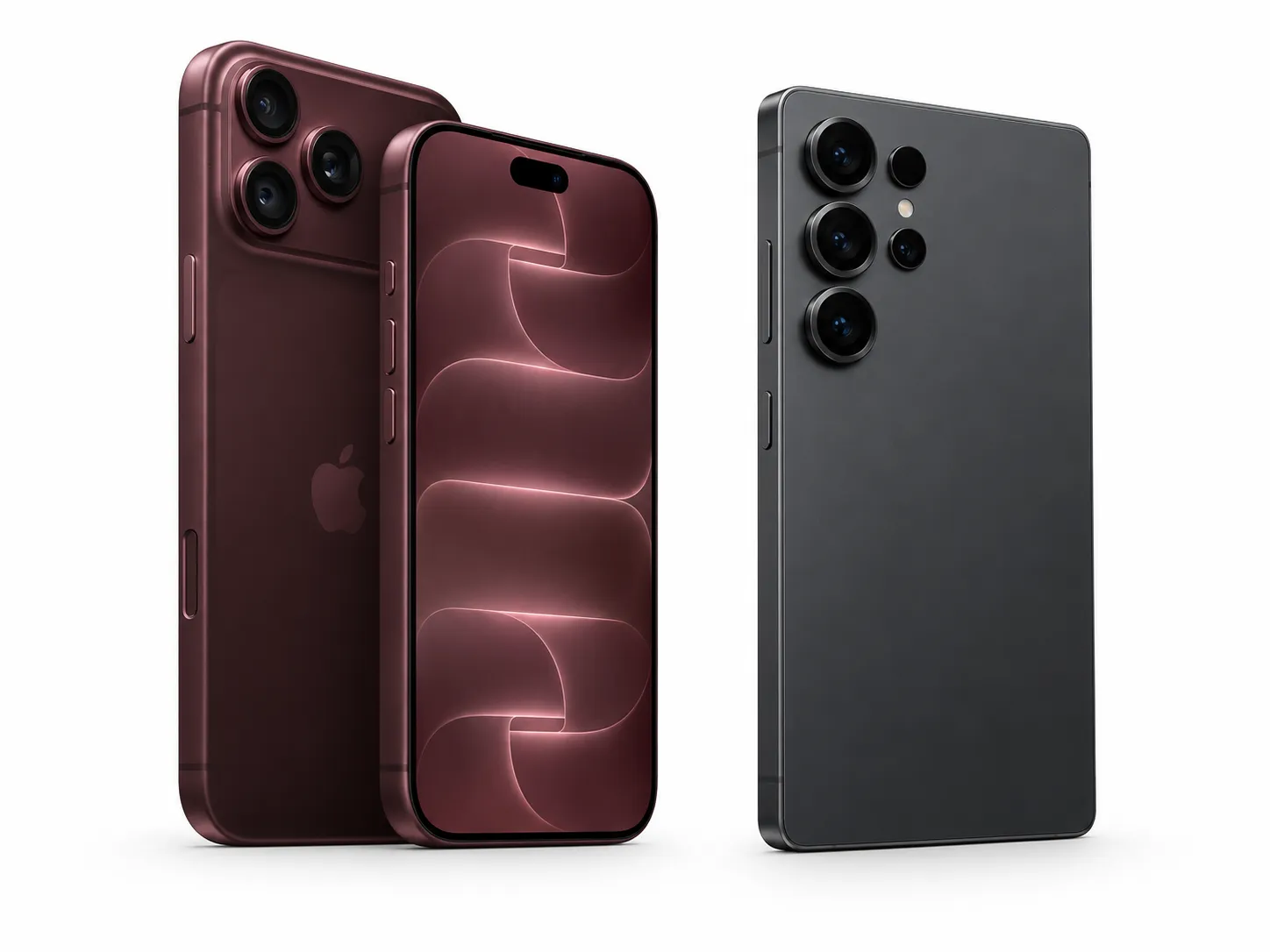
At roughly $1,300 apiece, the iPhone 18 Pro Max and Samsung Galaxy S26 Ultra make price almost irrelevant at the starting line. The real choice comes down to how differently the two phones approach cameras, battery life, software, design, and the features you'll use long after the novelty wears off.
Apple opened iPhone 18 Pro Max preorders on September 12, with general availability beginning September 18. The phone starts at $1,299 and comes in 256GB, 512GB, 1TB, and 2TB configurations, according to Apple's iPhone 18 Pro announcement. Samsung's Galaxy S26 Ultra has already been on sale for several months, giving it a larger body of real-world testing.
Independent iPhone 18 Pro Max reviews are now landing as well. Early results favor Apple in battery endurance and raw performance, but Samsung counters with a lighter design, more dedicated zoom hardware, an S Pen, and deeper Android customization.
At a glance:
Launch price: iPhone 18 Pro Max, $1,299; Galaxy S26 Ultra, $1,299.99
Display: 6.9 inches on both
Weight: iPhone, 249g; Galaxy, 214g
Storage: iPhone, 256GB to 2TB; Galaxy, 256GB to 1TB
Main camera: iPhone, 48MP with variable aperture; Galaxy, 200MP
Telephoto: iPhone, 48MP 4x; Galaxy, 10MP 3x plus 50MP 5x
Standout hardware: iPhone, manual camera controls; Galaxy, S Pen and Privacy Display
Price and design: same tier, very different feel
Samsung launched the Galaxy S26 Ultra at $1,299.99 for 256GB, with 512GB and 1TB options above it. As of September 17, Samsung's U.S. store lists the unlocked 256GB model at $1,099.99 after a $200 promotional discount, though sale pricing can change.
Apple offers twice Samsung's maximum storage if you need the 2TB tier, but their standard starting prices are effectively identical.
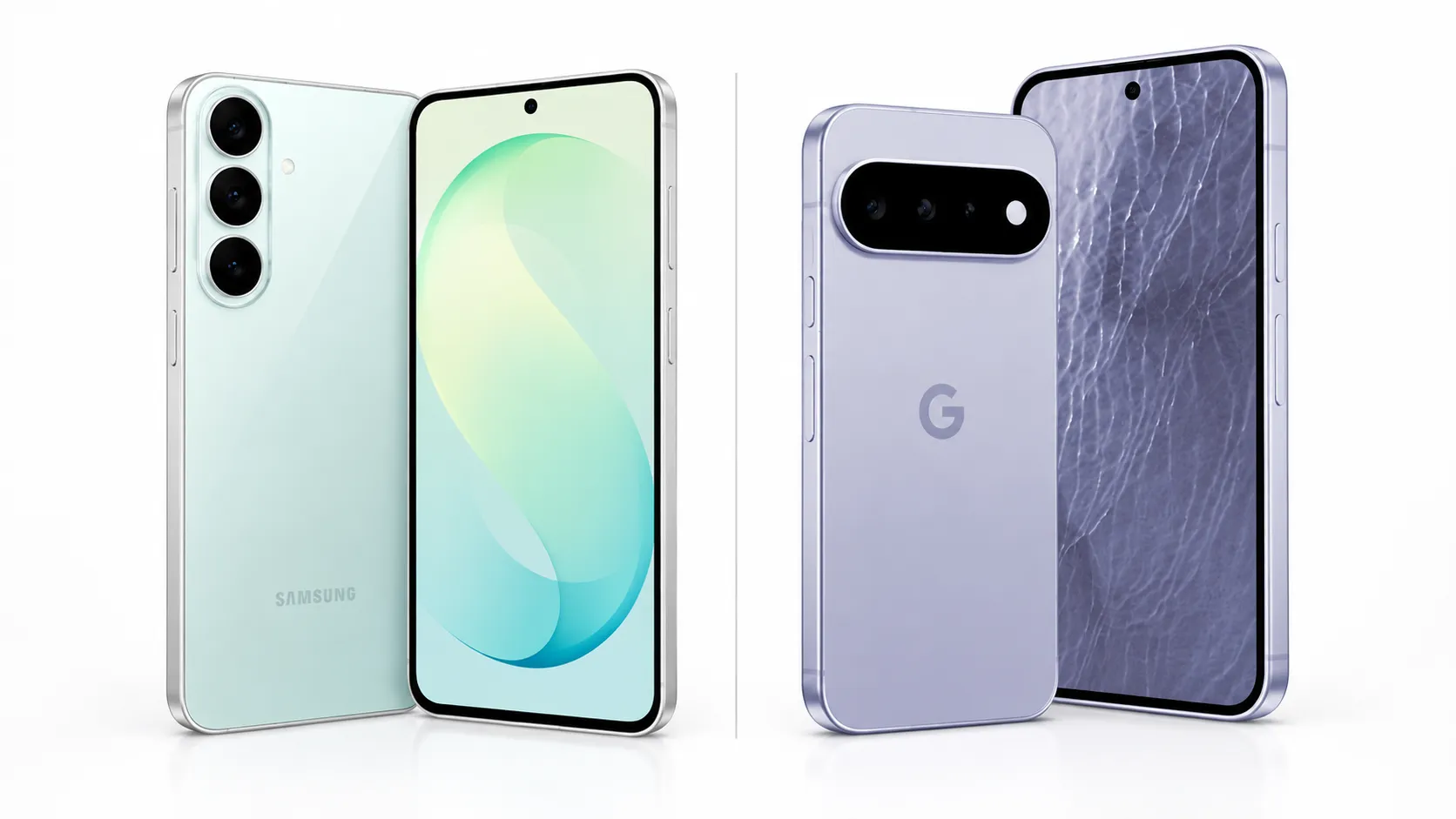
The bigger difference is how they feel in the hand. The Galaxy S26 Ultra weighs 214 grams and measures 7.9mm thick, compared with 249 grams and 8.75mm for the iPhone 18 Pro Max. That 35-gram gap is substantial on two 6.9-inch phones, especially during prolonged one-handed use.
Samsung also retains its integrated S Pen and introduces Privacy Display, which limits visibility from off-center viewing angles. Samsung's specifications also list a 5,000mAh battery, 200MP main camera, and 6.9-inch display.
Apple sells eSIM-only versions of the iPhone 18 Pro Max in the U.S., Canada, Japan, Mexico, the UAE, and several other markets. Samsung retains a physical SIM option, giving frequent travelers who swap local SIM cards more flexibility.
Cameras and displays: control vs. versatility
Samsung's 6.9-inch display runs at 3,120 × 1,440 and 498 pixels per inch. The iPhone 18 Pro Max uses a 2,868 × 1,320 Super Retina XDR display at 460ppi but is rated for up to 3,000 nits of outdoor brightness, compared with Samsung's 2,600 nits. Those numbers alone don't establish which screen looks better day to day, where reflections, color tuning, and viewing conditions matter just as much.
The camera systems differ more sharply.
Samsung uses a 200MP main camera, 50MP ultrawide, 50MP 5x telephoto, and 10MP 3x telephoto. Two dedicated telephoto cameras give the S26 Ultra more native zoom flexibility.
The iPhone 18 Pro Max uses three 48MP rear cameras, including a 4x telephoto. Its biggest change is on the main camera: a six-blade variable aperture with four selectable settings from ƒ/1.48 to ƒ/4.
That gives photographers more control over light and depth of field. Apple has also added aperture, shutter speed, white balance, and manual focus controls to the native Camera app. In testing, The Verge found the wider ƒ/1.48 aperture particularly useful in low light, while the benefits of narrowing the small smartphone aperture were more situational.
Video tools include ProRes RAW, Apple Log 2, genlock for multicamera synchronization, and 4K Dolby Vision recording at up to 120 frames per second. Samsung instead supports 8K recording, which the iPhone doesn't offer.
Samsung gives zoom shooters more dedicated focal lengths. Apple gives photographers and video creators more hands-on control over capture.
Battery testing favors the iPhone
Manufacturer battery ratings are difficult to compare directly because Apple and Samsung use different test methods. Independent testing gives a more useful baseline.
In Tom's Guide's 5G battery test, the iPhone 18 Pro Max averaged 18 hours and 27 minutes, compared with 16 hours and 40 minutes for the Galaxy S26 Ultra in its standard display mode. The iPhone's longest run reached 18 hours and 41 minutes.
That's an advantage of about 1 hour and 47 minutes under the same methodology. Real-world endurance will vary with gaming, photography, cellular reception, brightness, and background activity.
Battery ratings also differ between regional iPhone configurations. Apple's eSIM-only Pro Max is rated for up to 45 hours of video playback, while versions with a physical SIM tray are rated for up to 43 hours.
Charging is much closer. Apple says the iPhone 18 Pro Max can reach up to 50% in around 15 minutes with a compatible 60W-or-higher adapter, while Samsung rates the S26 Ultra for up to 75% in around 30 minutes. Apple's technical specifications also list MagSafe and Qi2 wireless charging at up to 25W.
Neither phone includes a power adapter in the box.
The A20 Pro takes an early performance lead
Apple's A20 Pro uses a 6-core CPU and 7-core GPU alongside its Neural Engine and upgraded thermal system.
Early benchmark results put it ahead of the Snapdragon 8 Elite Gen 5 for Galaxy in raw performance. In the same Tom's Guide review, the iPhone 18 Pro Max scored 4,741 in Geekbench 6 single-core performance and 12,789 in multi-core performance, compared with 3,785 and 11,563 for the Galaxy S26 Ultra. The iPhone also led Samsung in 3DMark Solar Bay graphics testing.
Those numbers won't make messaging or web browsing feel dramatically different. The gap is more likely to show up in demanding games, video exports, editing, and other sustained workloads.
AI and software may decide the switch
iOS 27 became available on September 14, bringing Siri AI to compatible Apple devices as a beta. Apple says Siri can use personal context from messages, email, photos, and onscreen content to answer questions and perform actions across apps. The initial Siri AI rollout is in English, with French, Japanese, Korean, Portuguese, and Spanish support planned for October.
There are regional limits, too. Siri AI isn't initially available on iPhones in the European Union, while Siri AI and the other new Apple Intelligence features aren't currently available in China.
Samsung has had more time to build out its competing software stack. The Galaxy S26 Ultra launched with One UI 8.5 and Galaxy AI features for finding information, managing tasks, and creating or editing content. Samsung notes that some AI features vary by market and service.
Samsung also offers more ways to reshape how the phone works. One UI supports deeper home-screen customization, multitasking, the integrated S Pen, and Samsung DeX for a desktop-style interface on an external display.
Apple's advantage is how tightly the iPhone works with other Apple hardware. AirDrop, Handoff, iCloud, AirPods, Apple Watch, and Mac integration can make leaving an established Apple setup more disruptive than the specifications suggest.
The same applies in reverse. Someone who relies on Galaxy Watch, DeX, the S Pen, Google's services, or Android's broader customization options gives up familiar workflows by moving to iOS.
Which one should you buy?
The Galaxy S26 Ultra is better suited to buyers who prioritize a lighter body, S Pen, Privacy Display, physical SIM flexibility, deeper Android customization, and two dedicated telephoto cameras.
The iPhone 18 Pro Max makes more sense for buyers who want its stronger early battery and performance results, hands-on photography controls, pro-video tools, storage up to 2TB, or tight integration with Apple's other devices.
Those differences matter more than declaring one phone the universal winner. A frequent zoom shooter or S Pen user needs something different from someone who edits video on a Mac and already uses an Apple Watch.
At this price, the harder decision isn't which phone wins more spec-sheet categories. It's which one fits the way you already shoot, work, customize, travel, and connect your other devices — because those habits will matter long after the benchmark scores stop feeling new.




Comments
Be the first, drop a comment!