



Foldable Phone Users Spend More on Apps: Evidence Missing
Talk to enough app developers about platform strategy and someone will eventually repeat a version of the same claim: foldable phone users spend more on apps, so building foldable-specific features is worth the engineering cost. It's a tidy story, and it fits with what everyone already assumes about early adopters of expensive hardware. It also isn't backed by any published dataset. No research reviewed for this article measures in-app spending, subscription conversion, or revenue per user by device form factor, which means the "premium foldable user" is an assumption wearing the clothes of a fact.
That gap matters because foldables occupy a strange spot in the smartphone market: growing fast, still tiny, and increasingly relevant to product decisions that assume something specific about the people buying them. Foldable shipments hit 19.6 million units in 2025, up 18% year-over-year, according to Counterpoint Research, 3 months ago. Despite that growth, foldables made up just 1.6% of global smartphone shipments last year, per the same report. Ownership looks even thinner: fewer than 1% of tracked devices in the field are foldables, according to 451 Research, 5 months ago. What follows is a look at why the spending theory persists, what the available evidence actually shows, and what it would take to settle the question either way.
The foldable market: fast growth, still a rounding error in unit terms
Foldables have grown quickly by percentage and stayed small by volume. Counterpoint tracked a compound annual growth rate near 60% for the category over a six-year stretch from 2019 to 2025, taking foldables from a novelty to a recognizable, if minor, product line (Counterpoint Research, 3 months ago). That growth continued into 2025, when shipments rose 18% year-over-year to 19.6 million units, per the same research.
Set against total smartphone shipments, foldables remain a rounding error: 1.6% of the global market in 2025 (Counterpoint Research, 3 months ago). Counterpoint projects the category will roughly double to 38.6 million units by 2029, implying an 18.4% compound annual growth rate. That forecast is explicitly built on the assumption that Apple enters the foldable market in 2026, not on an observed trend (Counterpoint Research, 3 months ago). Strip that assumption out and the growth curve looks considerably less certain, since Apple hasn't confirmed a foldable device at all.
None of this settles the spending question in either direction. A tiny, high-value niche can still matter enormously to the right developer, the way a small base of business travelers matters enormously to an airline's premium cabin. Size alone doesn't tell you whether foldable owners spend differently. It only tells you how many of them exist, and by that measure, not very many, yet.
What we know about foldable smartphone app spending
The direct evidence, at this point, doesn't exist. None of the published Counterpoint, 451 Research, or Sensor Tower materials reviewed for this article report app spending, subscription conversion, or average revenue per user broken out by device form factor. Foldable owners aren't isolated in any dataset that would need to include them for the "spend more" claim to be checkable.
Even the adoption figures that do exist aren't measuring the same thing, and treating them as if they confirm each other is a common mistake. Counterpoint's 1.6% figure tracks 2025 shipment share, meaning it counts new devices sold in a single year. The 451 Research figure tracks installed base, meaning it counts every foldable currently in someone's pocket, new or old (Counterpoint Research, 3 months ago; 451 Research, 5 months ago). Different denominators, different questions. They point in a broadly similar direction, but neither one proves the other.
That absence is the real story here. Building a dataset that isolates app spending by device form factor isn't simple. It would require cooperation from platform holders like Apple and Google, who hold device-level data at the operating-system layer, or from app-intelligence firms whose SDK integrations could theoretically tag revenue events by hardware type, if they chose to report it that way. As of now, none of the sources reviewed for this article do.
Why a valid comparison is harder than it looks
Even if that dataset appeared tomorrow, a raw comparison between foldable and non-foldable spending wouldn't settle much on its own. Foldable phones carry a premium price, and people who can afford a premium price tend to spend more money in general, on apps and everything else. That's a textbook selection-bias problem: the device correlates with higher spending without necessarily causing it, the same way an airline lounge pass correlates with frequent travel without the lounge pass itself creating frequent travelers.
A credible test would need to hold several variables constant at once. Compare foldable and non-foldable owners within the same operating system, so an iOS comparison doesn't get muddled by Android's different app economy. Match them by country, since app pricing and payment habits vary widely by market. Match them by price tier, so an $1,800 foldable isn't measured against a $400 slab phone, and by app category and acquisition cohort, meaning people who downloaded similar apps around the same time and for similar reasons.
Only after controlling for those factors would any remaining gap be worth attributing to the device rather than to the demographics of who buys it. The metrics that would actually answer the question are specific: payer conversion rate, spend per payer, retention past the first month, and engagement time by app category, all segmented by device form factor. None of the sources reviewed here publish that breakdown, which means the claim currently rests on inference, not measurement.
Three assumptions hiding inside one claim
The premium-user theory bundles together three separate ideas, and each one deserves its own evidence.
The first is that foldable buyers are a small, self-selected group. That part checks out. Interest in foldables has held roughly steady at 32% of respondents saying a foldable screen would make them more likely to buy a given manufacturer's phone, but only 2% planned to actually buy one within the next year, and just 5% ranked a foldable screen as an important purchase factor (451 Research, 5 months ago). That's stable stated interest paired with very low purchase intent, a narrow audience rather than a wealthy one. The same research found interest spread fairly evenly across brand loyalty, with 31% of Apple owners, 33% of Samsung owners, 35% of Motorola owners, and 25% of Google owners saying a foldable screen would sway a purchase (451 Research, 5 months ago). That spread cuts against the idea that foldable curiosity is concentrated in any single income bracket or ecosystem.
The second claim is that foldables change how people use apps, through bigger screens or multi-window multitasking, in ways that lead to more spending. That's a reasonable hypothesis. It's also unsupported by anything in the cited research, none of which measures screen size or multitasking against spending outcomes. Anyone who has used a foldable's larger display for split-screen work can imagine why behavior might shift. Imagining it isn't the same as measuring it.
The third claim is the broadest: that the overall app economy is tilting toward higher-value spending, and foldable owners, as supposed early adopters of expensive hardware, are positioned to benefit disproportionately. That "early adopter" framing is a common industry shorthand rather than something demonstrated in the research available here, and it's worth treating it as a hypothesis rather than a settled premise.
What's actually happening in the app economy
The broader spending trend is real, even if it says nothing specific about foldables. Global in-app purchase revenue reached $167 billion in 2025, up 10% year-over-year, and non-gaming apps overtook games in IAP revenue for the first time on record, a 21% year-over-year increase that reflects nearly three times what non-gaming apps generated five years earlier (Sensor Tower via PR Newswire, 7 months ago). Generative AI services helped drive that shift.
The year before, consumer spending on in-app purchases and subscriptions combined hit $150 billion globally, up 13% year-over-year, while spending specifically on AI apps such as ChatGPT and Google Gemini grew roughly 200% to near $1.1 billion (Sensor Tower via PR Newswire, over a year ago). Non-game spending alone grew 25% year-over-year in that period, adding close to $14 billion.
Those figures describe the entire global app market across every device shape in circulation. They make the premium-user theory sound reasonable, since AI-driven and non-gaming spending are both climbing fast, but they don't prove the theory applies to foldables specifically. Whether foldable owners are capturing a disproportionate share of that growth is a separate question, and it's one none of the cited research is built to answer, because none of it isolates device form factor at all.
The standard developers should use instead
Put the pieces together and the picture is consistent, even where it's incomplete. Foldables are a fast-growing but still marginal share of the smartphone market. The audience interested in them has stayed narrow and stable rather than expanding into the mainstream. The app economy overall is shifting toward AI-driven and non-gaming spending. None of that adds up to proof that foldable ownership predicts higher app spending, because no published research links device form factor to spending outcomes at all.
For developers weighing foldable-specific investment, the practical move is to stop treating foldable ownership as a stand-in for payer value. Companies with their own device-level analytics can cohort by form factor internally, controlling for OS, price tier, country, and acquisition source the way any rigorous comparison would need to, and let that internal data decide. Public market reports don't currently offer that breakdown, and nothing in the research suggests one is coming soon. Absent first-party data, decisions about foldable-specific design are better grounded in observed usage patterns, accessibility benefits, or documented enterprise demand, none of which require assuming anything about spending behavior.
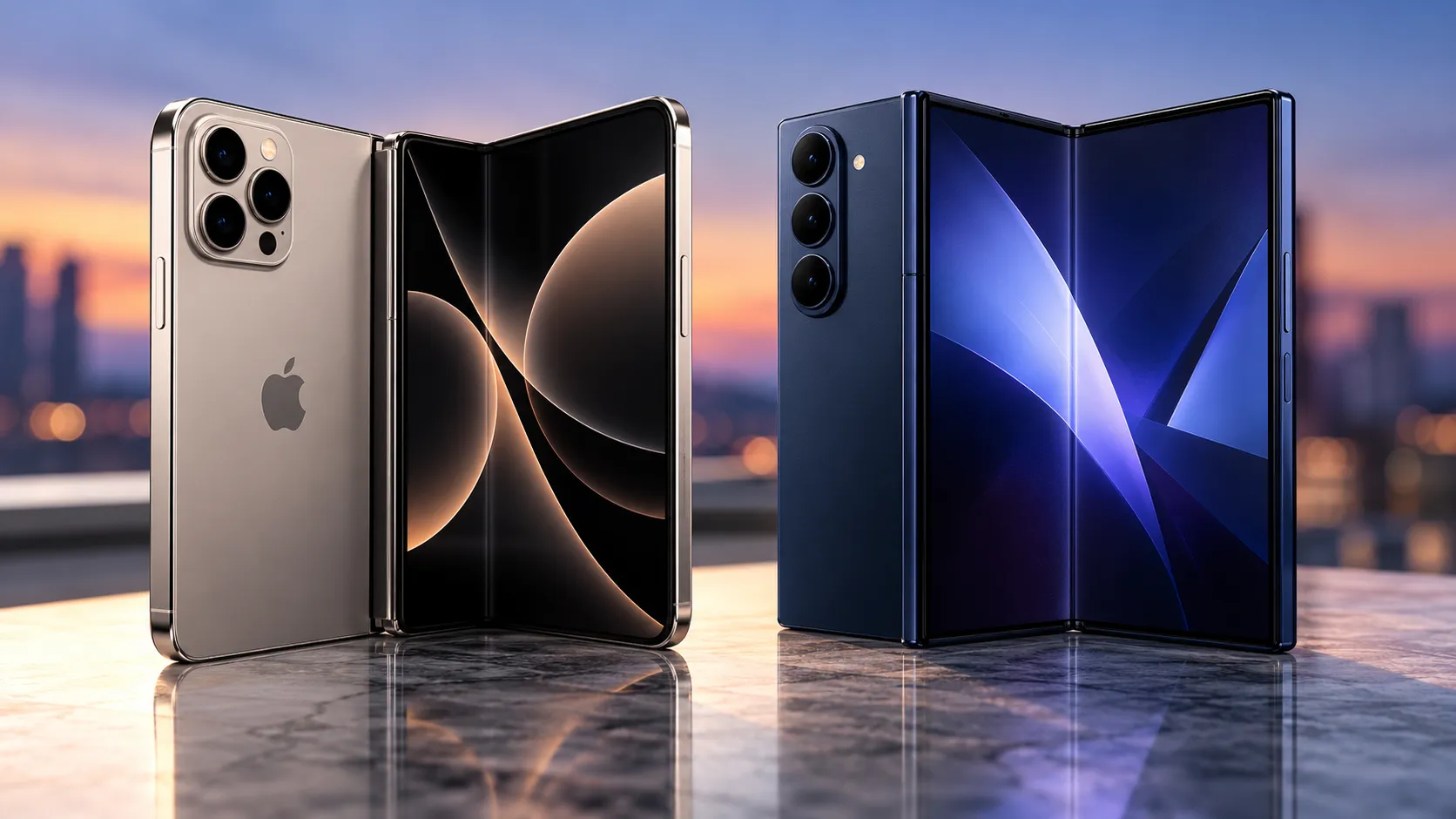
Apple's widely expected entry into the foldable category, still unconfirmed and treated by Counterpoint as an assumption baked into its 2029 forecast rather than a settled fact, could eventually bring more scrutiny and more data to the category. It might also just bring more units, with no accompanying spending breakdown at all. Until an app-intelligence firm or a platform holder publishes device-segmented revenue data, the claim that foldable phone users spend more on apps will remain what it is right now: a plausible story the industry keeps telling itself, not a number anyone has actually measured.










Comments
Be the first, drop a comment!