



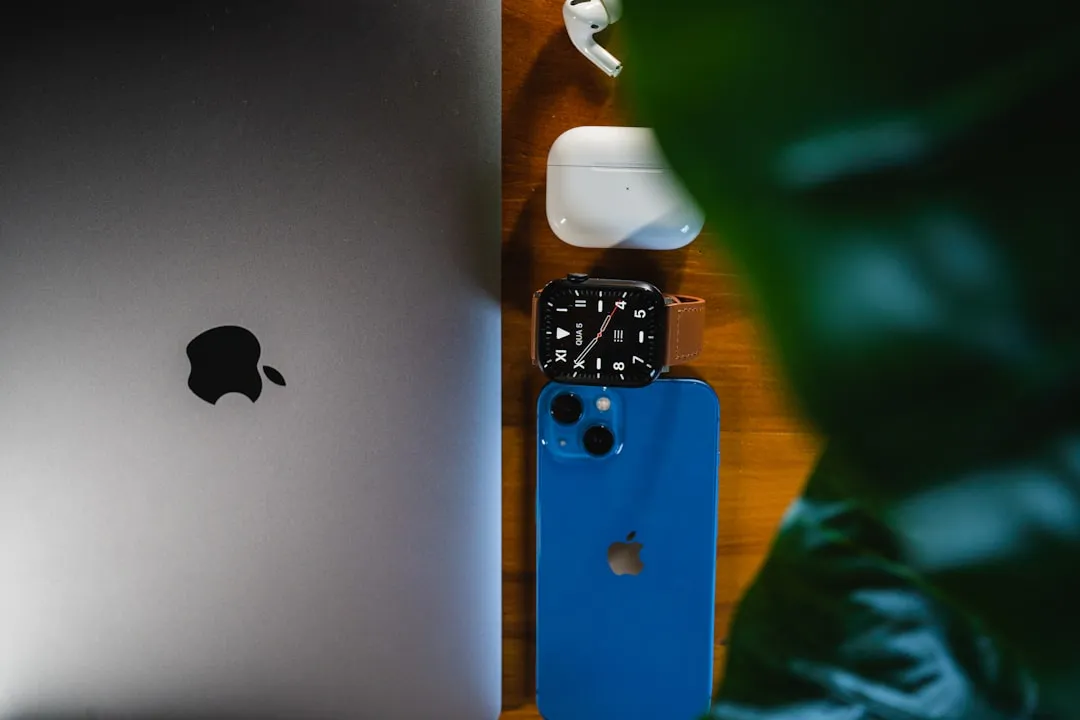
Families are consolidating around single smartphone brands at a remarkable rate, and the reasons go deeper than simple preference. Some parents reported shifting from standalone parental control apps to integrated family apps like Apple's Family Sharing, according to research published in the Proceedings on Privacy Enhancing Technologies Symposium.
More than convenience, households are now becoming more mindful about technology purchases and digital life management. The driving force? A shared ecosystem where everyone uses devices from the same manufacturer, making cross-device features and unified management too compelling to ignore.
This consolidation has accelerated dramatically as manufacturers have invested heavily in family features, creating a competitive landscape where ecosystem strength now matters more than individual device specs. Let's break down why families are choosing brand uniformity over device diversity, what this means for smartphone makers, and how ecosystem lock-in is reshaping consumer behavior in ways that extend far beyond individual purchasing decisions.
Why the ecosystem pulls families together
The convenience factor can't be overstated. Parents managing multiple children's devices consistently cite ease of use as the tipping point for brand consolidation. One mother of three explained her switch from Google's Family Link to Apple's platform by noting that having an iPad, MacBook, and iPhone meant "everything kinda just syncs," making Apple "just more convenient" for her busy household, as documented in the PETS research.
This convenience calculation reveals something crucial: families aren't evaluating individual device quality anymore—they're evaluating how well an entire product line works together under one roof.
The shared ecosystem doesn't just make things easier; it fundamentally changes the purchase decision from "best phone" to "best family platform." You're no longer comparing camera specs and processor speeds—you're comparing how seamlessly a five-year-old can AirDrop homework photos to mom's laptop while dad tracks everyone's location and manages screen time limits, all without installing a single third-party app.
Here's what's particularly interesting: the research revealed a dynamic in mixed-device households that speaks volumes about platform strength. When one parent used an Android phone while the other had an Apple device, the Apple-equipped parent typically became the primary administrator of family management features, highlighting the platform's gravitational pull. This administrative pattern reveals an important design choice: Apple built Family Sharing to work seamlessly only within its own ecosystem. It's not that Android parents couldn't manage families—Apple's Family Sharing primarily operates within its own ecosystem, limiting cross-platform functionality. The non-Apple parent effectively becomes a second-class administrator, able to participate in some features but locked out of the comprehensive control the Apple-equipped parent enjoys.
The integration runs deep. Apple's Family Sharing provides a uniquely comprehensive solution within its closed ecosystem, bundling content customization, purchase sharing, location tracking, and subscription management into one unified platform, the research notes. You're not just getting parental controls here—you're getting a complete family operating system that touches nearly every aspect of digital life. Compare this to Google's fragmented approach, where family features are scattered across Google Family Link, Google One, and YouTube Premium Family plans, each requiring separate setup and management. Apple's bundling isn't just convenient—it's a competitive moat that makes switching costs exponentially higher with each family member added to the network.
PRO TIP: If you're considering a family ecosystem switch, do it before your kids hit teenage years when social pressure for specific platforms intensifies. The investment in retraining and transition effort pays off more when children are younger and more adaptable to change.
What actually drives smartphone loyalty
To understand why families stick with brands, we need to examine what drives individual smartphone loyalty, then see how family dynamics amplify these factors. Brand perception matters more than you might think. Research examining 357 smartphone users found that brand image significantly influences device satisfaction, according to a Nature study on smartphone loyalty. But here's where it gets interesting: satisfaction stems from both the device itself and the mobile carrier, and both dimensions contribute to overall loyalty, the same research demonstrates. We're not dealing with a single relationship here—we're looking at a triangle between user, device, and service provider.
For families, this triangle becomes a complex web: multiple devices, multiple users, shared accounts, and family management features all intersecting. Satisfaction isn't just individual anymore—if one family member has a bad experience, it can influence the entire household's loyalty. When your teenager can't share photos properly because they're on a different platform, or when grandparents struggle with video calls that require third-party apps instead of native FaceTime, individual device problems become family friction points.
Apps emerged as a critical common factor, significantly affecting satisfaction with both smartphones and carriers, the study found. The apps you use daily influence how you feel about both your hardware and your network service. That connection underscores how deeply software experience has become intertwined with hardware perception. For families sharing apps, subscriptions, and content libraries across devices, this effect multiplies—one family member's app frustration affects everyone who shares that content.
Surprisingly, price fairness didn't significantly impact device satisfaction in the research model, contrary to initial predictions. This has profound implications for family purchases: parents might justify expensive ecosystem lock-in because daily convenience outweighs the sticker shock of buying four iPhones instead of mixing brands. The pain of payment fades after a few months; the friction of incompatibility persists daily. You forget what you paid for your phone six months ago, but you experience ecosystem convenience or frustration every single day.
Device satisfaction proved to be a powerful predictor of loyalty, showing a strong positive relationship in the analysis, according to the Nature research. In statistical terms, device satisfaction reported in one study showed a remarkably strong connection.
The overall model explained nearly 69% of loyalty variation, demonstrating the robustness of these satisfaction-loyalty connections. This predictive power means smartphone makers can focus their retention efforts on daily experience factors—app ecosystems, seamless feature integration, family management tools—rather than competing primarily on price or specs. The companies that understand this have shifted R&D investment accordingly: less on incremental camera improvements, more on ecosystem infrastructure that keeps entire families locked in.
The embedded ecosystem advantage
Integration becomes stickier when it's built into the operating system. The embedded nature of family management features within the Apple ecosystem significantly influenced parents' platform decisions, research on Family Sharing reveals.
This isn't just about having features available—it's about how seamlessly they work together without requiring third-party solutions or complex setup processes. When functionality is native rather than bolted on, it fundamentally changes the user experience.
Apple's embedded approach isn't just technically superior—it's strategically brilliant. By making family features native to iOS and macOS, Apple ensures that third-party developers can't replicate the experience.
Google's Family Link, by contrast, sits atop Android as an app, meaning Samsung, OnePlus, or any manufacturer could theoretically build a competing solution. Apple's closed ecosystem becomes its competitive advantage: you can't get this level of integration anywhere else because the platform architecture prevents it.
Consider what this means for competitive dynamics. Corporate image plays a substantial role, showing a significant association with mobile carrier satisfaction in the research model, the Nature study indicates.
Perceived fees matter too, demonstrating a significant correlation with carrier satisfaction, according to the same analysis. How you perceive the company behind your service affects your satisfaction with that service—it's not purely rational calculation. Apple's brand perception as premium and family-friendly reinforces satisfaction with its ecosystem, while the "perceived fairness" of family plan pricing matters more than actual dollars spent.
The combination creates a powerful retention mechanism. Once a family commits to one brand's ecosystem, the switching costs—both financial and practical—multiply with each additional device and user added to the network.
Consider what switching actually entails for a family of four: roughly $3,000-4,000 in new devices if switching from mid-range to mid-range, re-purchasing $200-500 in apps and subscriptions that don't transfer, losing years of shared photos and documents stored in platform-specific formats, and retraining everyone from grandparents to teenagers on a new system.
But the hidden cost is social: families describe feeling "left out" when they can't share locations easily, when photos arrive as compressed MMS messages instead of full-resolution platform-native images, and when video calls require sending awkward third-party app links instead of just tapping a contact name.
PRO TIP: If you're locked into an ecosystem and frustrated, look for cross-platform workarounds: shared Google Photos albums work across platforms for images, WhatsApp handles messaging and video calls universally, and Life360 provides location sharing regardless of device brand. You'll sacrifice the seamless integration that made the ecosystem attractive in the first place, but you'll gain flexibility for family members who want different devices.
Where brand consolidation leads us
This family-first approach is already reshaping product roadmaps at major manufacturers. Samsung has expanded its SmartThings integration specifically for family device management. Google has been quietly redesigning Family Link to provide deeper Android integration that rivals Apple's native approach.
Even smaller players like OnePlus are exploring family features as differentiators in competitive markets. The battleground has shifted from megapixels and processor speeds to family management capabilities—because capturing a household means capturing multiple device purchases over many years, not just one phone sale.
Both device satisfaction and carrier satisfaction independently contribute to loyalty, as the Nature research confirms, suggesting that smartphone manufacturers need to think holistically about the entire user experience.
You can't just build a great phone and call it done—you need to consider the entire ecosystem your device lives within, from cloud services to family management to cross-device continuity features. For families, the calculus has shifted from "which phone is best for me" to "which ecosystem works best for all of us."
Bottom line: this represents a fundamental change in how households evaluate technology purchases. The research showing that more than half of parents switched to integrated family platforms, per the PETS study, suggests this trend will only accelerate as more manufacturers recognize the competitive advantage of comprehensive family management tools. We're moving from a world of device loyalty to one of ecosystem loyalty, where the unit of retention isn't the person—it's the family.
Smartphone makers who can deliver seamless multi-user, cross-device experiences stand to capture not just individual customers, but entire households—and keep them locked in for the long haul.
Expect to see three major shifts by 2027: First, mid-range phones will gain flagship-level family features as manufacturers recognize families don't need the latest processor—they need ecosystem access.
Second, family plan pricing will become more aggressive as brands compete for household lock-in, with bundled device-plus-subscription offers becoming standard.
Third, we'll likely see intensifying regulatory pressure around anti-competitive ecosystem practices, particularly in the EU where Digital Markets Act scrutiny of Apple's and Google's family feature restrictions is already mounting.
What this means for you: Consider your family's five-year technology trajectory before your next phone purchase. Are your kids approaching teenage years when specific platform pressure intensifies? Do elderly parents need to stay connected who struggle with complex setups? Will college-bound children need to manage their own accounts soon? These lifecycle questions now matter as much as camera quality or battery life—because you're not just buying a phone, you're choosing a family platform that will shape digital life for years to come.
That changes everything from product development priorities to marketing strategies to long-term business models. The companies that understood this shift first—Apple most notably—are now reaping the rewards of household-level lock-in that competitors are scrambling to replicate.




Comments
Be the first, drop a comment!