



Apple satellite smartphone market share: why its lead may shrink
Apple shipped nearly three out of every four satellite-enabled smartphones in 2025. That single statistic from Counterpoint Research tells you something important about where Apple satellite smartphone market share stands today. What it doesn't tell you is which market Apple actually dominates, or how durable that position becomes once the larger market matures.
There are two satellite-phone markets developing simultaneously, and Apple is only competing in one of them.
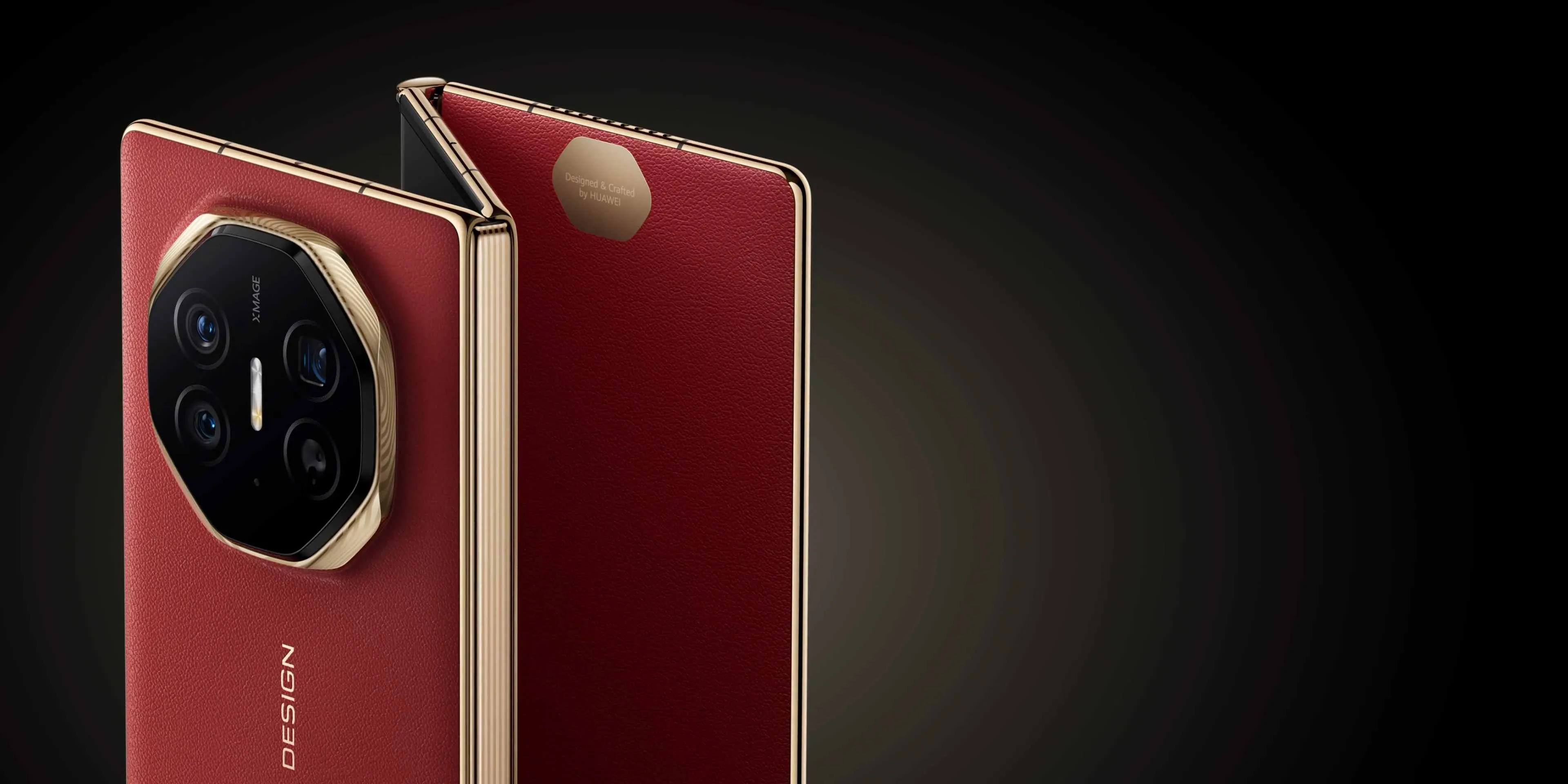
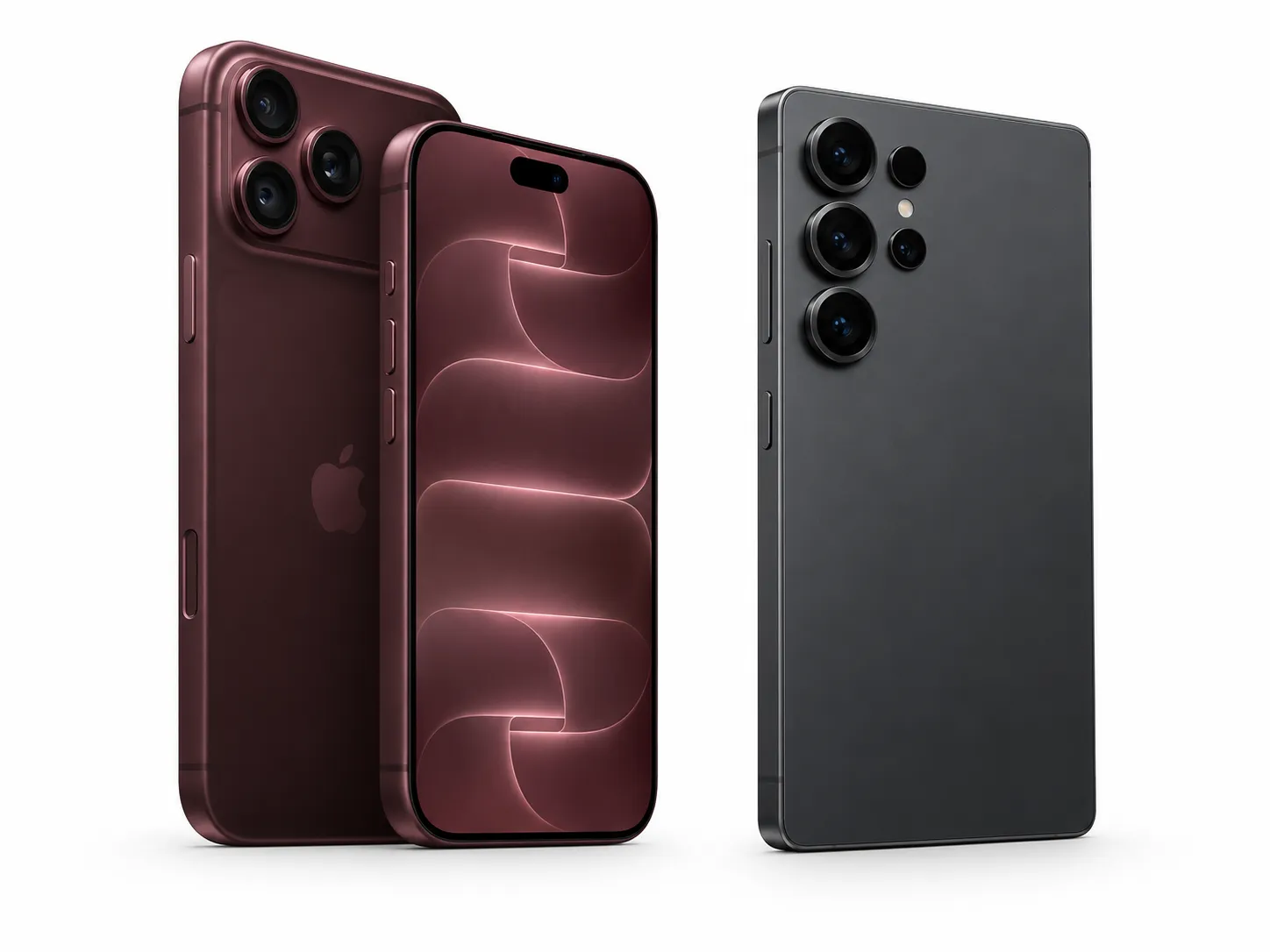
The first is the modified-device market: premium phones with specialized satellite hardware, running on dedicated spectrum through proprietary arrangements with a single satellite partner. Apple helped open this category with Globalstar in 2022 and leads it decisively, with a 71.6% share against Samsung at 15.9%, Huawei at 6.1%, Google at 2.2%, and HONOR at 1.9%. The second is the unmodified-device market: any compatible smartphone connecting to satellites through carrier networks using shared industry standards, no specialized hardware required. That market is barely commercial yet. But CCS Insight forecasts its addressable device base at 8.8 billion units by 2028, compared to roughly 1.5 billion for modified devices. The Congressional Research Service frames the goal plainly: extend voice, messaging, and data to any phone, anywhere a terrestrial signal isn't available.
Apple built its lead in the first market. Who wins the second is an open question.
How Apple satellite connectivity on iPhone became a structural advantage
Apple and Globalstar helped open the consumer satellite category with the iPhone 14's Emergency SOS feature in 2022, as Light Reading reported in early 2025. That timing matters in ways that don't show up in market share percentages. Apple has since shipped multiple iPhone generations with satellite capability, built consumer familiarity with the feature, and expanded it from emergency-only into general messaging with iOS 18. Competitors entering the modified-device market now aren't just catching up on hardware; they're catching up on years of brand conditioning around what satellite connectivity is for.
The financial architecture behind that lead is substantial. Apple's total commitment to Globalstar amounts to $1.7 billion, spread across an equity stake, prepayments, and other buckets, according to Light Reading. That funding covers construction of a new LEO satellite constellation, dubbed the Extended MSS Network, along with expanded ground infrastructure. Globalstar projects its total annual revenue will more than double in the first year after the expanded service launches, per its own disclosures cited by Light Reading. That number signals how thoroughly Apple's demand has reshaped a supplier's business model.
The structure Apple built is worth understanding in its specifics. Globalstar allocates 85% of its network capacity to Apple's service, and the new constellation will run on Globalstar's existing licensed spectrum holdings across the L-band, S-band, and C-band, according to Light Reading. That dedicated capacity arrangement is part of what makes the iPhone satellite experience feel polished: it's not competing for bandwidth with other customers. Replicating it would require funding a comparable constellation build from scratch.
Proprietary hardware, dedicated spectrum, a funded next-generation constellation, deep OS integration taken together, that's what Apple's 71.6% share actually reflects. A vertically integrated system, not simply a popular product. The analytical caveat is that this architecture was purpose-built for a specific kind of satellite service. The market that will determine long-term category leadership is being built on a different architecture entirely.
Why adoption is stalling and what the roadmap actually promises
The adoption ceiling is a product problem, not an awareness problem.
Satellite connectivity today functions primarily as a safety net useful in genuine emergencies, rarely relevant to ordinary daily communication. Most users will never send a satellite SOS. A feature activated once every few years doesn't move purchasing decisions reliably, and it doesn't support recurring subscription revenue. As Counterpoint noted today, the absence of compelling everyday use cases is what's keeping satellite capability from becoming a mainstream expectation.
The functional constraints are real and physics-driven. SMS is currently the main supported feature of D2C satellite services, with voice calls and internet browsing expected to follow, according to the Congressional Research Service. Satellite links don't currently support 5G, and each satellite handles far fewer simultaneous connections than a ground-based tower. Functionality and reliability may improve as additional satellites are deployed and technologies advance, but that improvement curve requires time and sustained capital, not just ambition.
Worth being concrete about what "unmodified device" actually means in practice, since the phrase implies a simplicity it doesn't quite deliver. The Congressional Research Service notes that while a number of smartphones are already compatible with D2C satellites, not all service providers offer the service and not all smartphones are equipped for it at this time. Compatibility depends on whether a device meets NTN specifications in 3GPP Release 17 or 18, and whether the user's carrier has struck a satellite network agreement. The vision of any phone connecting anywhere is real; the current reality involves eligible device lists and coverage gaps.
The 3GPP standards roadmap puts rough timing on what changes when. The current baseline, Release 17, limits satellite capabilities to emergency SOS and messaging. Release 18 is expected to extend premium-tier satellite functionality across brands. Release 19 is the threshold associated with mid-tier mass-market adoption, according to Counterpoint. In practical terms, meaningful improvement in premium Android satellite features could arrive within one to two product cycles. Mainstream satellite connectivity across mid-range devices is realistically several years away, and no confirmed OEM launch commitments tied to Release 19 are yet visible in the current source set. Treat the 3GPP timeline as a sequencing guide, not a committed schedule.
The business model is the other unresolved variable, and arguably the more important one. Globalstar CEO Paul Jacobs stated the problem directly in conversation with Light Reading earlier in 2025: "If it adds an additional subscription fee, what's the uptake?" He continued: "If it was free, I think people would use it. But if it's not free, what is the market size? That's what I think the industry is trying to understand." Apple originally positioned its satellite service as free for two years, then extended that window into 2025 without announcing a paid follow-on. The right price point remains undetermined even for the market leader.
Jacobs also noted that in Apple's model, satellite messaging is designed to encourage customers to purchase a new device rather than sign up for a new monthly service. That's a workable model for Apple. It's much harder to apply for a carrier trying to generate recurring revenue from satellite access across a heterogeneous device base.
The two-track race: what Counterpoint Research satellite smartphone data actually shows
The satellite smartphone market is running two parallel development tracks. They aren't in direct competition today, but they're competing for the same long-term outcome.
Apple's track delivers polished, tightly integrated satellite features to iPhone users now, using proprietary hardware and dedicated Globalstar spectrum. The NTN track, built around 3GPP Non-Terrestrial Network standards, aims to make satellite access available to any compatible smartphone through carrier relationships, without specialized hardware. Samsung, Xiaomi, OPPO, HONOR, and vivo are aligning with the standards-based path, while Apple, Huawei, and Google operate proprietary systems, according to Counterpoint.
The chipset layer is where the NTN ecosystem gets built at scale. Qualcomm leads Android satellite modem enablement through its Snapdragon X80 and X85, while MediaTek is advancing NTN integration through its MT6825 5G SoC, per Counterpoint's report. These components matter because they determine which Android devices can access satellite networks without proprietary modifications. When Qualcomm and MediaTek satellite support ships as standard in mid-tier chipsets, the pool of NTN-compatible devices grows through normal hardware refresh cycles no deliberate OEM satellite strategy required.
There's also a geographic dimension worth noting. Telecom operators in Europe and China are not rushing to offer satellite connectivity, even as satellite operators increase capacity for the mass market, according to Counterpoint. North America is where early commercial activity is concentrated, driven partly by the scale of rural coverage gaps. Per FCC data cited by the Congressional Research Service, approximately 69.4% of the United States is covered by 4G services and only 38.6% by 5G. That unserved geography is the demand signal driving carrier investment in satellite partnerships.
The question of whether the NTN track is moving from specification to actual commercial service now has some empirical evidence. New Zealand carrier One NZ launched a commercial Starlink-powered direct-to-cell service included at no extra charge in existing monthly plans, according to Light Reading. That's a real-world test of the bundled model Globalstar's CEO identified as the most plausible path to meaningful uptake. In the US, Starlink has a partnership with T-Mobile, while AST SpaceMobile has signed agreements with both Verizon and AT&T, per The Register. All three major US carriers now hold satellite network agreements, positioning North America as the early commercial testing ground.
Apple's share percentage will almost certainly decline as the NTN ecosystem matures. That's not a verdict on Apple's strategy; it's a consequence of category maturation. The modified-device market Apple dominates will become a smaller fraction of a much larger whole. The proprietary approach wins on execution quality for iPhone users now. The open approach, if chipset integration and carrier deployment materialize on the Release 18 and 19 timelines, wins on addressable scale. Conflating the two produces a misleading picture of Apple's actual position.
What the 46% forecast requires and what to watch
Apple's 71.6% share reflects a structural advantage earned over three years: early market entry, deep OS integration, and a $1.7 billion commitment to next-generation satellite infrastructure, as documented by Light Reading. That lead is real and durable near-term. No competitor can replicate the underlying architecture quickly, and the consumer familiarity Apple has built around satellite features doesn't evaporate.
What Apple's current share figure doesn't reveal is whether it will still dominate when the category expands to include the unmodified-device market.
Counterpoint's projection that 46% of global smartphone shipments will carry satellite connectivity by 2030 depends explicitly on expanded participation from Android manufacturers and carriers beyond developed markets, per Research Vice President Peter Richardson. That condition hasn't been met. The same projection expects Apple, Google, and Samsung to lead in overall penetration by 2030 which suggests Apple's position isn't expected to collapse, but the competitive dynamics shift meaningfully as the NTN-aligned Android ecosystem scales up. A declining share of a rapidly growing category is a different problem than a declining share of a stagnant one.
The most consequential near-term test isn't what Apple announces next. It's whether carrier-satellite partnerships like T-Mobile/Starlink and AT&T/AST SpaceMobile produce services that drive sustained uptake from Android users who currently have no particular reason to pay extra for a feature they rarely use. If the One NZ bundled model proves its value and scales into the US market, the business model question gets answered with real consumer behavior. If D2C services stay narrow in function and ambiguous in pricing, the category stays where it is: a differentiating spec on premium devices that most users activate rarely and almost never pay for directly.
Two signals are worth watching over the next 12 to 18 months: whether T-Mobile's Starlink service moves from beta to broad commercial launch with defined pricing, and whether Release 18-compatible Android devices ship with satellite features that consumers engage with outside of emergencies. Those two data points will clarify the long-term competitive picture far more than any market share report on the modified-device segment alone. Apple's dominance holds either way in the near term. Only the second outcome leaves it intact in the long term.


Comments
Be the first, drop a comment!