



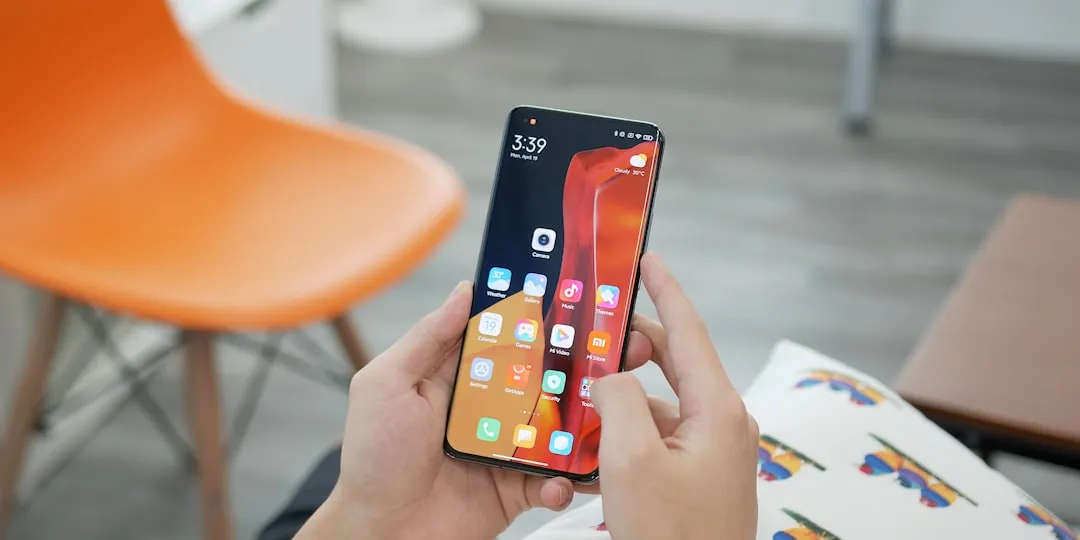
Xiaomi 17 Ultra vs. Standard: Who Should Pay the Higher Price
Pre-launch framework: Confirmed pricing, software support terms, and independent camera test results for the Xiaomi 17 series are not yet available as of late March 2026. This piece builds a buyer's decision framework from structural patterns in Xiaomi's flagship history. Every historical claim is labeled as precedent. Verified specs and pricing will replace these references at launch.
The standard phone got too good
Xiaomi's Ultra problem is not what you'd expect. The camera is impressive. The build is premium. The specs justify the engineering. The problem is the phone it's being compared against.
The standard Xiaomi flagship has become genuinely excellent in a way that breaks the usual upgrade logic. In the 14 and 15 series, the standard model ran the same Snapdragon chipset as the Ultra, competed with Samsung and Google at the top of every benchmark tier, and handled photography well enough that most buyers couldn't identify which phone took which shot in daylight conditions. That's not a consolation prize. That's a complete flagship, at a lower price, in a lighter chassis.
This is what makes Xiaomi's Ultra premium structurally harder to justify than Samsung's Galaxy S Ultra or Vivo's X series equivalents. Samsung prices the standard S25 meaningfully below the S25 Ultra, but it also gives the Ultra a different chipset configuration in some markets, an integrated S Pen, and a longer reported software support window. There are multiple independent reasons to upgrade. Xiaomi's Ultra, based on prior-generation patterns, has concentrated its justification almost entirely in the camera platform. When that platform has to clear a bar set by a phone that already shoots well, the gap it needs to demonstrate gets narrower every year.
Three variables settle the decision: what you shoot, what you carry, and where you buy. The rest of this piece works through each one.
What Xiaomi's history tells you, and what it can't
Across the 14 and 15 series, Xiaomi followed a consistent structure. Both models in each pair shared the same Snapdragon chipset. The Ultra carried a larger primary sensor, a more sophisticated telephoto architecture, a ceramic or titanium build, and a noticeably heavier chassis. Software support terms were broadly similar across both tiers, though exact commitments varied. European pricing historically widened the absolute gap between standard and Ultra once distribution and VAT were factored in.
That is the pattern. It is not a prediction about the 17 series.
The 17 could introduce a chipset split that makes processor performance a first-order comparison point. It could diverge on software support in a way that changes the long-term value math entirely. The Leica partnership scope could expand across both models or consolidate exclusively on the Ultra. None of those questions has a confirmed answer yet, and each one shifts the conclusion meaningfully. Where this piece draws on prior-generation structure, it's to explain how Xiaomi has historically drawn the line, not to claim the 17 series draws it in the same place.
What the history does establish is the decision framework. Xiaomi has spent four generations refining a consistent philosophical split: the standard model gets the silicon and enough camera to satisfy most buyers; the Ultra gets the camera platform for buyers who would otherwise consider a Sony or a dedicated mirrorless. Understanding why that line is unusually hard to price is more useful than any single spec.
The camera gap lives at specific edges
Camera hardware is where Xiaomi has drawn its sharpest line between tiers. A larger primary sensor paired with a more capable telephoto architecture is the Ultra's core argument. But sensor size is a capability claim, not an outcome claim. The question worth answering is when that capability produces a result a careful observer can actually see on a phone screen or a print.
Bright daylight is not that moment. At this price tier, standard and Ultra models have converged under good light. Social media compression removes most of the remaining gap. A larger sensor does not announce itself in a 1080p Instagram post.
The separation shows up at specific edges:
- Low-light portrait work, where a larger sensor gathers meaningfully more light and produces cleaner background separation
- Telephoto pulls beyond roughly 5x optical, where a more sophisticated zoom architecture retains detail the standard model cannot match
- Long-exposure night scenes, where primary sensor size translates directly to shadow detail and reduced noise floor
Those are real, definable conditions. They are also not where most buyers spend most of their time. Someone who primarily shoots birthday parties in decent indoor light, street scenes in the afternoon, or quick snaps of food will find the gap narrower than the hardware specs imply. Someone who shoots concerts, weddings in dark venues, or wants to reach across a field without moving closer will feel the Ultra's sensor advantage on nearly every shot.
The Leica partnership scope matters here separately. If co-engineering applies equally to both models, the color science gap is narrower than the optics suggest even in daylight. Ultra-exclusive Leica tuning, if that's how the 17 series structures it, extends the gap into color rendering under ordinary conditions, not just into the low-light ceiling. That single confirmation shifts the verdict for buyers who care about image character rather than technical reach.
Camera specs describe what a phone can do. Published image comparisons from independent reviewers describe the gap buyers actually experience. Once reviews arrive, the tests worth checking are low-light performance, long-zoom detail retention, and daylight color consistency. DxOMark, GSMArena, and image-sample reviews from Tom's Guide and Engadget have historically provided the most useful side-by-side comparisons for this kind of evaluation.
The costs that show up before you open the camera app
The Ultra's camera platform doesn't arrive in isolation. It comes in a heavier chassis, at a higher price, with physical dimensions that affect daily use whether or not you ever shoot in low light.
Weight is the most persistent cost. Based on prior-generation patterns, the Ultra runs roughly 25 to 30 grams heavier than its standard sibling. That sounds modest until it's present for every forty-minute reading session, every long video call, every day the phone lives in a shirt pocket. Unlike the camera advantage, which activates in specific conditions, the weight is constant. Buyers who use their phone one-handed regularly, or who go caseless, feel this on a three-year ownership cycle in a way that no spec sheet communicates. Hands-on reviewers at Engadget and The Verge have historically offered the most useful carry-comfort assessments.
Battery endurance is more nuanced. A shared chipset means equivalent processing efficiency, and the Ultra's larger chassis should accommodate a larger cell. Whether that translates to meaningfully more screen time depends on actual testing. Based on prior generations, the more reliable differentiator was charging speed rather than total endurance. Faster wired charging matters to someone topping up before leaving the house; for someone who charges overnight, it's invisible. If real-world endurance proves roughly equivalent between both models, that's worth knowing before assuming the heavier phone earns its weight in battery life. ChargerLAB and Tom's Guide battery tests are the sources to cross-reference once independent testing is published.
Build materials are the third consideration. If ceramic or titanium construction is Ultra-exclusive, buyers who care about premium feel or long-term scratch resistance are paying for something real. If both models share the same chassis materials, the physical gap narrows to weight and dimensions only.
Where pricing changes the answer more than cameras do
Here's the part of this comparison that gets underweighted: in some markets, pricing is the deciding variable, not camera performance.
Xiaomi prices its Ultra models domestically in China for competitive volume reasons. That launch price is typically the most favorable the phone will see anywhere. European pricing adds import costs, distribution margins, and VAT in a way that can increase the absolute gap between standard and Ultra substantially. A premium that represents a modest step up in China can represent a genuinely significant financial decision in Germany or France. Indian pricing follows a different structure again.
This is where Xiaomi's comparison diverges most sharply from Samsung's. The Galaxy S Ultra commands a large premium in every major market, and Samsung holds that line consistently. Xiaomi's gap is more variable. A buyer in Shanghai and a buyer in Milan are evaluating meaningfully different propositions when they look at the same two phones, and the Milan buyer's rational choice may be different even if they have identical shooting habits.
The prior-generation trajectory matters too. If the Ultra premium has been compressing year over year, fence-sitters get an easier decision each cycle. If it's widening, that context belongs in any recommendation to someone considering whether this year is the right time to upgrade from last year's standard model.
Confirmed pricing for both models across China, Europe, and India will be sourced from Xiaomi global, Reuters, Bloomberg, and GSMArena at launch. Market-specific availability and any delayed Ultra rollout will be tracked via Android Authority and Canalys. No general recommendation in this piece should override the actual number in your specific market.
What the confirmed specs will settle
| Finding at launch | What it means | |---|---| | Both models share chipset and software support | Standard 17's long-term value case strengthens significantly | | Ultra carries exclusive Leica tuning or longer software updates | Premium becomes harder to argue against for buyers planning 3+ years | | Real-world battery endurance is equivalent on both models | Weight and price become the Ultra's only meaningful daily costs | | Camera gap is narrow in independent image comparisons | Ultra becomes a specialist purchase for edge-case shooters, not a general upgrade | | Ultra premium is wider than prior generation in key markets | Standard 17 pulls ahead for most buyers on value grounds alone |
Who should pay more
The Xiaomi 17 makes the stronger case when:
- Camera use covers social sharing, daylight documentation, and video calls, conditions where prior-generation phones at this tier have converged in independent image testing
- One-handed comfort is a real daily constraint and the confirmed weight gap proves noticeable in hands-on testing
- Software support is confirmed as identical across both models, removing longevity as a differentiator
- The Ultra's premium in your market represents a meaningful budget decision rather than a marginal one
The Xiaomi 17 Ultra makes the stronger case when:
- Mobile photography is a genuine primary use case, specifically in low-light, portrait, or extended telephoto conditions where image comparisons confirm a consistent and visible difference
- The optical zoom range maps to a regular shooting habit, travel, wildlife, or event coverage, rather than something that surfaces a few times a year
- Premium build materials carry real tactile or durability value given your ownership pattern
- The price gap in your market is proportionally close to the China launch price, not inflated by regional distribution
The Ultra costs more, weighs more, and is physically larger. That trade should be a conscious one. Buyers who cannot name a specific shooting condition where the standard model falls short for them have their answer already.
The verdict
A buyer who regularly shoots in conditions where sensor size and optical zoom produce visibly better results, and who can absorb the price gap in their market without meaningful sacrifice elsewhere, has a clear case for the Ultra. Everyone else has a clear case for the 17.
The deeper story here is what Xiaomi's lineup reveals about where smartphone camera competition has arrived. The standard flagship has gotten good enough that the Ultra's job is no longer to fix real shortcomings; it's to extend capabilities most buyers never test. That's a harder sell at any price, and it gets harder each year the standard model improves. The Ultra is a specialist tool wearing a flagship price tag. The buyers who need it tend to know before they read a single spec sheet. The buyers who aren't sure probably don't.




Comments
Be the first, drop a comment!