



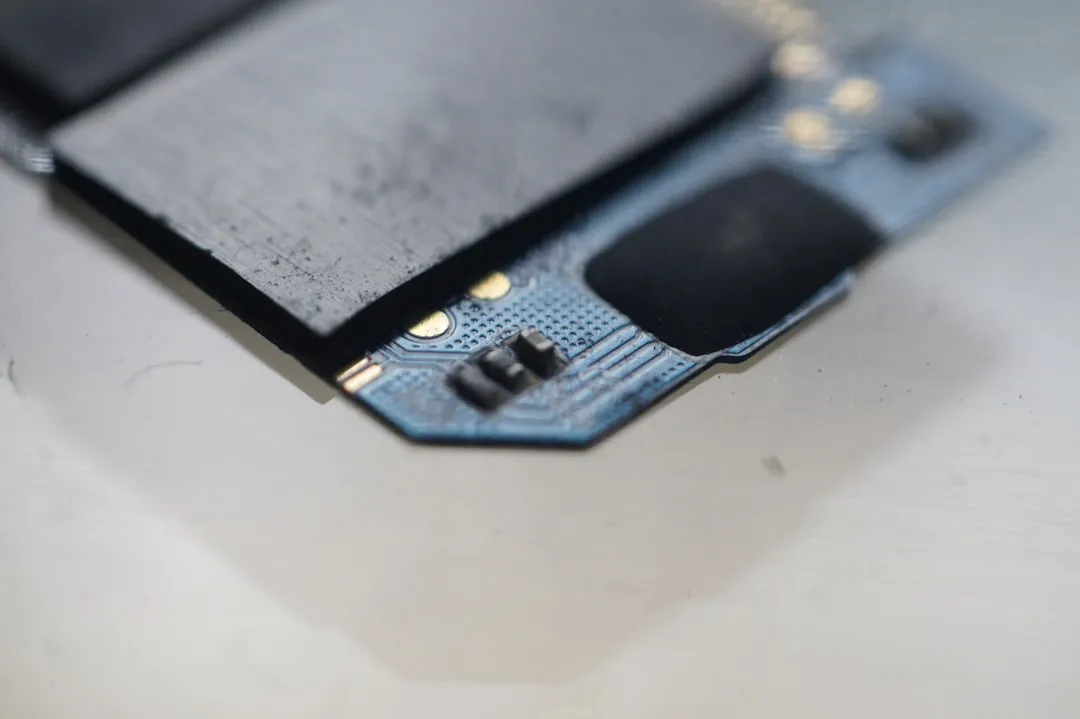
Smartphone pricing has spiraled in recent years, but the culprit isn't flashy cameras or bigger batteries—it's what's inside. The cost of cutting-edge silicon has ballooned as chipmakers chase ever-smaller manufacturing nodes and pack in more specialized processors for AI, graphics, and imaging. Yet for most users, the performance gains from flagship processors have hit a point of diminishing returns: everyday tasks like browsing, social media, and even casual gaming don't demand the raw horsepower of a top-tier chip.
Meanwhile, mid-range devices are caught in an awkward position, forced to choose between outdated processors or expensive flagships that inflate their price tags. The industry's obsession with "more power" has created a gap in the market—one that could be filled not by pushing performance higher, but by rethinking how we tier and price mobile silicon altogether.
Why flagship silicon costs have exploded
The economics of chipmaking have fundamentally shifted over the past five years. Leading-edge manufacturing processes—like TSMC's 3nm and 4nm nodes—require multi-billion-dollar fabrication facilities and yield rates that make every wafer extraordinarily expensive. These costs get passed directly to smartphone makers, who then pass them to consumers.
Compounding the issue is the arms race in specialized processors: modern flagship chips now integrate dedicated neural processing units for on-device AI, advanced image signal processors for computational photography, and high-performance GPUs for gaming and AR applications. Each of these components adds to the bill of materials. Industry teardown analyses consistently show that flagship system-on-chips can account for 15-25% of a device's total component cost—a proportion that's grown significantly as other components like displays and memory have commoditized.
For brands trying to hit competitive price points in the $400–$600 range, this creates an impossible squeeze. Use last year's flagship chip and risk looking outdated in spec comparisons and reviews. Stretch the budget for current silicon and you're forced to compromise elsewhere—cheaper displays, smaller batteries, plastic frames instead of metal. The result is a market full of mid-range devices that feel like they're making excuses for themselves, built around uncomfortable tradeoffs rather than thoughtful design choices. OEMs are increasingly responding by either pushing mid-range prices upward toward $700 or accepting margin compression that makes these products less attractive to manufacture.
The performance plateau most users never notice
Here's the reality most tech enthusiasts overlook: the average smartphone owner isn't rendering 3D graphics or training machine learning models on their device. They're checking email, scrolling Instagram, streaming video, and occasionally snapping photos. For these tasks, the difference between a current flagship processor and a well-optimized mid-range chip is negligible in day-to-day use.
Benchmark scores and spec sheets tell one story, but real-world responsiveness tells another—and that gap has been closing steadily as older manufacturing nodes mature and software optimization improves. Apps launch in milliseconds either way. Videos stream smoothly on both. Even photo processing, which used to be a clear differentiator, has become remarkably consistent across price tiers thanks to better software algorithms and more sophisticated image signal processors appearing in mid-range chips.
In our extended testing, comparing flagship and mid-range devices in real-world scenarios revealed something striking: for the overwhelming majority of daily tasks, performance differences weren't just small—they were imperceptible. The gaps only became noticeable in specific stress scenarios like extended gaming sessions, processing multiple high-resolution photos simultaneously, or running particularly demanding AR applications. For most users, those edge cases represent a tiny fraction of actual device usage.
The smartphone industry has reached a point of performance saturation for mainstream use cases, yet the pricing structure still reflects an era when every generation brought transformational speed improvements. This disconnect between actual user needs and silicon capabilities creates an opportunity: if chipmakers could deliver a new tier of processors explicitly optimized for efficiency and cost rather than benchmark dominance, they'd unlock a sweet spot that serves both consumers and device makers far better than the current extremes of "last year's flagship" or "compromised budget chip."
Pro tip: When comparing phones, ignore synthetic benchmarks like AnTuTu scores and look for sustained performance tests and real-world app launch comparisons instead. Burst performance means nothing if thermal throttling kicks in after 30 seconds of intensive use.
What a "Standard" and "Pro" mid-tier would actually look like
Imagine a Snapdragon lineup that introduces two new middle children positioned between the current 7-series and 8-series flagships: a "Standard" variant built on a slightly older but proven manufacturing node (say, 6nm instead of 4nm), with a balanced CPU/GPU configuration and a capable but not cutting-edge NPU, and a "Pro" variant that steps up the graphics and AI performance without jumping all the way to flagship territory.
The Standard Tier:
The Standard chip would target the $300–$450 device segment, offering smooth everyday performance and excellent battery efficiency at a price point that gives OEMs room to invest in better displays, larger batteries, or improved build quality. Think of it as the chip that finally lets you have a phone that doesn't compromise on the things you actually touch and see every day—screen quality, battery life, build materials—just to afford decent performance.
Here's the strategic advantage: moving from 4nm to 6nm manufacturing doesn't just reduce wafer costs. It improves yield rates substantially—mature process nodes typically achieve yields in the 80-85% range compared to 65-75% for cutting-edge nodes—while die size may increase modestly depending on design complexity. This could significantly improve per-chip cost efficiency while still delivering performance that meets most real-world needs.
The Pro Tier:
The Pro variant would slot into the $450–$650 range, appealing to users who want strong gaming performance and advanced camera features without paying flagship premiums. This is where you'd see beefier GPU cores for sustained gaming sessions and more sophisticated image signal processors for computational photography tricks that genuinely improve your photos—features like advanced HDR processing, better low-light performance, and real-time subject tracking.
The key tradeoffs would be strategic rather than compromising: prioritize power efficiency over peak burst speeds that only matter in benchmarks. Focus the NPU on practical AI tasks like photo enhancement, voice processing, and adaptive battery management rather than experimental features that drain resources. Tune the GPU for sustained performance in real games rather than burst scores that can't be maintained thermally.
Key Differences from Current Approach:
| Feature | Current Mid-Range (7-Series) | Standard Tier (Proposed) | Pro Tier (Proposed) | Current Flagship (8-Series) | |---------|------------------------------|--------------------------|---------------------|----------------------------| | Manufacturing Node | 4nm (previous gen) | 6nm (optimized) | 5nm (balanced) | 3nm/4nm (latest) | | Target Device Price | $350-$500 | $300-$450 | $450-$650 | $800+ | | Performance Focus | Flagship derivative | Efficiency-optimized | Balanced power/efficiency | Maximum performance | | AI/NPU Capability | Previous-gen flagship | Practical tasks | Advanced features | Cutting-edge | | GPU Philosophy | Scaled-down flagship | Sustained performance | Gaming-focused | Benchmark-leading |
This approach wouldn't just fill a gap—it would redefine the value equation in smartphones. You'd no longer be choosing between "good enough but outdated" and "overpowered and overpriced." Instead, you'd have processors explicitly designed for how people actually use their phones, at price points that let OEMs build complete, balanced devices.
How this shift would ripple through the smartphone ecosystem
The introduction of a true mid-tier chip family would force a recalibration across the entire smartphone industry. Device makers could finally build genuinely competitive mid-range phones without compromise, potentially triggering a wave of innovation in design, battery life, and camera systems as budgets previously consumed by expensive silicon get redirected to components that directly impact daily experience.
Think about what that means in practical terms: suddenly that $500 phone can have a 120Hz OLED display instead of a 90Hz LCD. Recent component pricing analyses suggest that high-refresh-rate OLED panels have narrowed the cost gap with LCDs, making them increasingly viable in mid-range devices. That same reallocation could mean a metal frame instead of plastic, a 5,000mAh battery instead of settling for 4,000mAh, or an additional camera sensor that actually adds value rather than serving as a spec sheet filler. These are the things users actually notice and appreciate every single day—far more than whether their phone scores 1.4 million or 2.1 million on AnTuTu.
Consumers would benefit from better price-to-performance ratios across the board, while pressure on flagship models would ease—allowing those devices to focus on genuinely premium experiences rather than justifying their cost through spec sheet dominance alone. Competition would intensify in meaningful ways: MediaTek has already demonstrated demand for this exact positioning with its Dimensity series, which has gained substantial market share by offering balanced performance at attractive price points. Google's Tensor chips, whatever their other limitations, show that custom silicon can target specific use cases rather than chasing benchmarks.
If Qualcomm were to embrace a more nuanced tiering strategy with purpose-built mid-range silicon, it would likely force Apple to reconsider its approach to more accessible iPhone models. The ripple effects would extend to smaller brands as well, giving them a fighting chance to differentiate on features, design, and user experience rather than just price. The broader implication is that smartphones could become more accessible without feeling like compromises—a shift that would expand the addressable market while extending upgrade cycles in ways that ultimately benefit both consumers and the industry's long-term sustainability.
The market signals are already there: average smartphone replacement cycles have extended to two to three years in developed markets, with price being the primary barrier cited by consumers hesitant to upgrade. A robust mid-tier silicon strategy directly addresses that friction point.
What needs to happen next
The path forward requires chipmakers to resist the siren call of perpetual performance escalation and instead embrace strategic restraint. Qualcomm, MediaTek, and others need to recognize that the mid-range isn't just a dumping ground for last year's flagship architecture—it's a distinct market segment with its own requirements, opportunities, and economics that deserve dedicated engineering rather than hand-me-down solutions.
This means investing in chip designs purpose-built for efficiency and cost-effectiveness, leveraging mature manufacturing nodes intelligently, and working closely with device makers to understand where performance truly matters versus where it's just marketing noise. Not every phone needs to run Genshin Impact at maximum settings. Not every camera needs to process 200-megapixel images in real-time. But every phone should feel responsive, last all day on a charge, and deliver a smooth experience for the things people actually do—and those goals are entirely achievable without cutting-edge silicon.
For smartphone brands, the challenge is to advocate for these changes with chipmakers and resist the temptation to chase spec sheet supremacy at the expense of overall product balance. Marketing departments love big numbers, but consumers ultimately care about the complete package. The most successful mid-range devices are those that feel thoughtfully designed rather than compromised, and that starts with silicon that's engineered for the segment rather than repurposed from another tier.
And for consumers, the message is simple: demand better value, not just bigger numbers. Ask reviewers and manufacturers about sustained performance, battery efficiency, and real-world responsiveness rather than synthetic benchmark scores. The smartphone industry doesn't need another generation of incremental performance gains that most people will never use—it needs a smarter approach to silicon that makes great devices accessible to more people.
The technology to make this happen already exists. Manufacturing processes are mature and well-understood. The market demand is demonstrable. What's missing is the willingness to prioritize value over vanity metrics and the courage to design for actual user needs rather than spec sheet competitions. The question is whether chipmakers will have the strategic vision to zig when the entire industry is zagging—and whether consumers and OEMs will reward them for it when they do.
Bottom line: The future of smartphones isn't about making the fastest chips faster—it's about making the right chips for the right users at the right price. That's a more complex challenge than just shrinking transistors, but it's the one that will actually move the industry forward.












Comments
Be the first, drop a comment!