





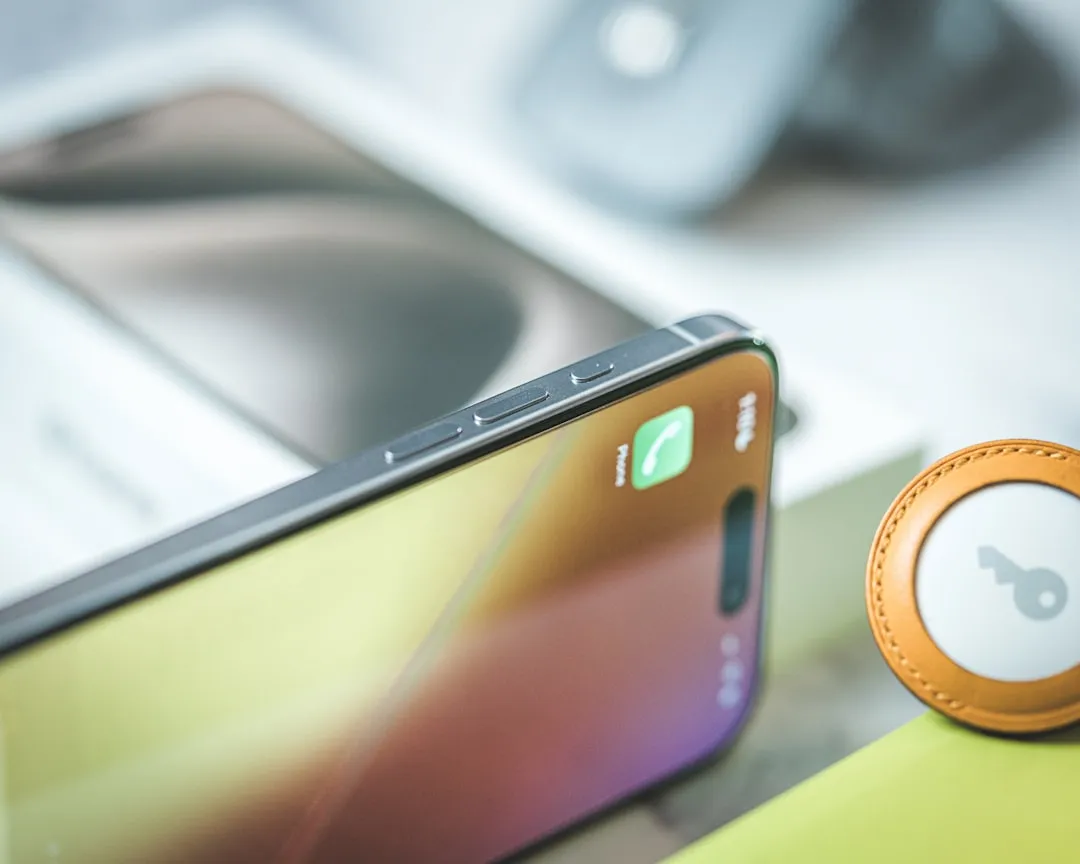
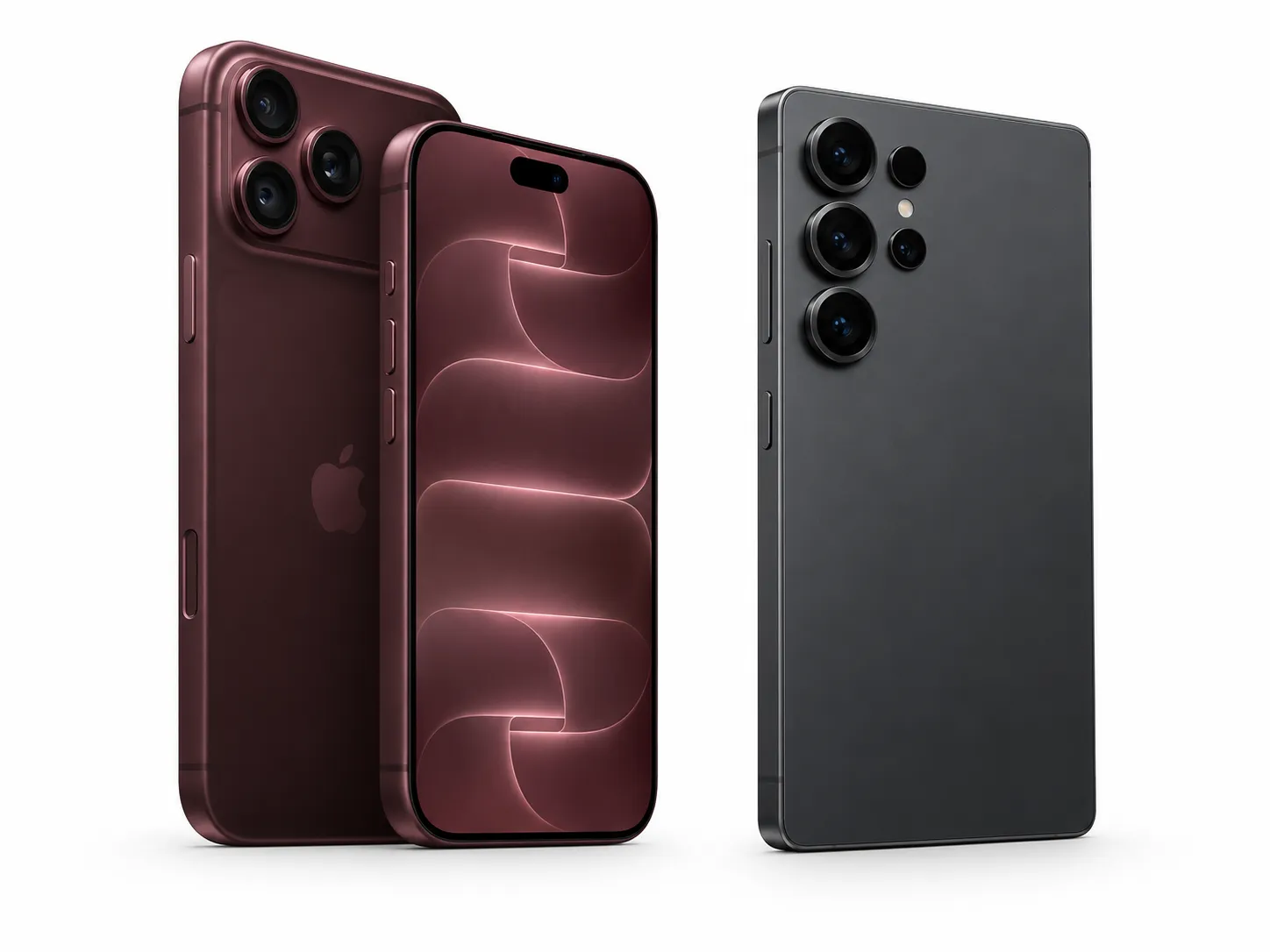
Apple's biggest iPhone redesign in nearly a decade appears to be its weakest seller based on early buyer-share and supply-chain indicators. In the iPhone Air's first full quarter on sale, just 6% of US iPhone buyers chose it, according to a Consumer Intelligence Research Partners survey cited by CNN in January 2026. The standard iPhone 17 took 22% of purchases, the Pro took 25%, and the Pro Max took 27%. The Air captured less than a third of what the cheapest model in the lineup managed, and the iPhone Air's poor sales story doesn't stop at Cupertino.
Samsung's Galaxy S25 Edge showed similar signs of weak demand. Reports from Asia suggest Chinese brands quietly shelved comparable projects before they reached consumers. Available sales indicators, taken together, point to something more specific than a single miscalculation: thinness failed as a premium pitch because buyers could immediately see what they were giving up and couldn't easily explain what they were getting in return. The CIRP survey covered 500 US consumers, a limited sample that reads better as a directional signal than as precise market-share data, but it aligns with supply-chain cuts, retail figures from India, and a Samsung executive going on record about disappointing numbers. Every signal points the same way.
The value proposition problem: why consumers passed on the Air
The lineup comparison that made iPhone Air poor sales visible
The iPhone Air launched at $999 with a single rear camera and a smaller battery. For $100 more, the iPhone 17 Pro offered a triple-lens camera system, meaningfully better battery life, and fewer obvious trade-offs for mainstream buyers, MacRumors reported in November 2025. That $100 spread was simply too narrow given the capability gap it spanned.
The comparison with the base iPhone 17 was even more uncomfortable. The standard model costs less than the Air yet still beats it on camera and battery life. The Air holds advantages in screen size and chip performance, but those aren't the features most buyers lead with when choosing a phone, CNN noted. Apple's own lineup undercut the Air's case before a customer reached the shelf.
CIRP analyst Josh Lowitz put the consumer logic plainly: most Air buyers were simply upgrading from an older device, not actively seeking a thinner one. Nobody was walking into stores wishing their phone were lighter, analyst Carolina Milanesi observed. "We are used to carrying what we carry. So it wasn't a problem per se." Weight and thinness weren't pain points that needed solving.
What iPhone Air's poor sales and Galaxy S25 Edge sales say about slim phone demand
IDC's Nabila Popal captured the dynamic precisely: "Just because something looks great, doesn't mean you want it at the end of the day," she told CNET in December 2026. Slim phones reliably drew the largest crowds at launch events. Converting that attention into actual purchases was another matter.
The core problem, as CNET summarized, was a combination of scaled-back cameras, shorter battery life, and high prices alongside no clear explanation for why thinness justified any of those trade-offs. Novelty is a reason to look, not a reason to buy.
Premium smartphone experiments succeed when the benefit is tangible and expressible in a single sentence. Better camera. Bigger screen. Longer battery. Achieving a 5.6mm profile, per MacRumors, required trade-offs that buyers noticed immediately, and no amount of launch-event enthusiasm was going to change that calculus at the register.
What the sales data shows, and where it gets complicated
Consistent weakness across markets
In India, the Air opened at roughly 8-10% of iPhone 17 series sales among retailers, then fell to 2-3% during the peak festive period even as overall smartphone demand surged following GST rate cuts. IDC estimated the Air held under 5% of Apple's Indian shipments at launch and projected a further decline to below 3% by December 2025, ETBrandEquity reported in October of the same year. Industry executives told the same outlet that Air performance was "relatively better in India than in other markets" a nuance that doesn't reverse the trend but suggests the weakness wasn't perfectly uniform across geographies.
Apple's supply chain responded faster and more decisively than any survey could. Analyst Ming-Chi Kuo estimated suppliers would cut iPhone Air production capacity by more than 80% by the first quarter of 2026. Foxconn reportedly dismantled most or all Air production lines; Luxshare halted production at the end of October 2025, according to ETBrandEquity and MacRumors. When manufacturers dismantle lines rather than simply throttle them, the signal is hard to misread.
Samsung ran a parallel experiment with nearly identical results. The Galaxy S25 Edge accounted for just over 2% of Samsung's flagship sales in India at launch, then fell to under 1% by the second half of 2025, per Counterpoint Research cited by ETBrandEquity. Samsung offered discounts shortly after launch; demand stayed flat regardless.
What is confirmed versus what is reported
The clearest on-record statement came from Samsung's own executive suite. Won-Joon Choi, COO of Samsung's Mobile Experience Business, said in a post-Galaxy S26-launch interview that S25 Edge sales were comparatively "lower" than the company's other handsets and that Samsung had not committed to a follow-up device, Bloomberg reported in late February 2026. That is the most unambiguous statement from any senior executive at either company that slim-phone sales are actively shaping roadmap decisions.
Reports that iPhone Air rivals including Xiaomi, Oppo, and Vivo have frozen or canceled their own ultra-thin programs carry lower confidence. These accounts, aggregated through MacRumors in November 2026, draw on Asian trade reporting without direct company confirmation. Xiaomi, Oppo, and Vivo have not publicly commented. The directional story is plausible given the broader pattern; the specifics remain unverified.
Apple has not disclosed model-level shipment figures and did not respond to requests for comment on Air sales or production changes, CNN noted. The picture assembled here from surveys, supply-chain checks, and retail data is consistent, but it is built from secondary indicators, not from the company itself.
How OEM roadmaps are shifting after ultra-thin phones underperform
Apple and Samsung recalibrate
Apple has reportedly delayed the second-generation Air to redesign it, potentially adding a second camera and improving battery life before any successor launch, according to reporting from The Information cited by MacRumors last November. If accurate, that would suggest that the original's trade-off profile, the very thing buyers rejected, was the problem. The line has not been killed; it has been sent back to address the exact objections consumers raised.
Apple has navigated this territory before. The iPhone Mini was discontinued after weak demand. So was the iPhone Plus. Both were form-factor experiments that didn't find a large enough audience to sustain, CNN noted. The Air may follow a similar arc, or it may evolve into something more capable, but the first version did not clear the bar.
Samsung's posture is a pause, not a cancellation. Choi left the door open, and the company is still evaluating whether a follow-up slim device makes sense, per Bloomberg. For a company with a hardware roadmap of that complexity, "evaluating" is as close to a halt as public statements tend to get.
Where innovation spending appears to be going instead
Samsung is still investing in foldables broadly, though the Galaxy Z TriFold should be framed as a short-lived showcase device after Samsung reportedly confirmed in March 2026 that sales would wind down once inventory cleared. Forrester analyst Thomas Husson noted that Samsung needs a pipeline of boundary-pushing devices to maintain its identity as a technology leader, regardless of whether any single device sells in volume, CNET reported. The innovation spending hasn't disappeared; it's being redirected toward formats with a clearer user story.
Foldables carry a different economic logic. Prices can run triple that of a standard handset, meaning a small share of unit volume generates an outsized share of revenue, CNET noted. Some analysts cited by CNET project a foldable iPhone could become a meaningful revenue contributor. Foldables are also projected to grow 30% in 2026, driven largely by Apple and Samsung entering or expanding in that space. The math that breaks down for a $999 thin phone starts to work differently at that price point.
The Air's engineering may outlive its sales numbers in one specific way. Apple relocated the phone's chip into the camera module to create space in the body, a novel solution that could prove directly relevant to a foldable iPhone, where reducing closed-state thickness is a core design challenge, CNN reported. That reads as much like a manufacturing proof-of-concept as a consumer product launch, though Apple has not framed it that way publicly.
What this episode teaches about premium smartphone experiments
Consumers demonstrated they will pay a premium for phones. The iPhone 17 Pro Max, the best-selling model in the lineup with 27% of US purchases, carried a $1,199 price tag, per CNN. What buyers would not do is pay more for a device that was worse in the ways they actually cared about, repackaged around a physical dimension they'd never noticed as a problem. Thinness failed the one-sentence test: it couldn't explain itself in terms of what the user actually gains.
Several things remain genuinely open. The Air line is not confirmed dead; it is reportedly being rebuilt around the objections buyers raised. Samsung has paused rather than cancelled. The engineering work done for slim phones may have real downstream value in foldables. And brands will keep pushing unusual form factors because the perception halo from making something remarkable is real, even when most consumers don't buy it. As Milanesi put it: "I might not buy the Air but still think that Apple is the best company because they brought the Air." Volume and brand perception are not the same metric, and companies that can afford to fund both will keep doing so.
The premium smartphone market hasn't run out of room for experimentation. But this cycle established a clear standard for what the next experiment needs to clear: the benefit has to be tangible, the trade-offs have to be defensible, and the price has to reflect what buyers are actually getting. Foldable screens satisfy that test for a certain audience. Ultra-thin slabs, at current capability levels and prices, did not. The industry has noted the distinction and is adjusting accordingly.



Comments
Be the first, drop a comment!