



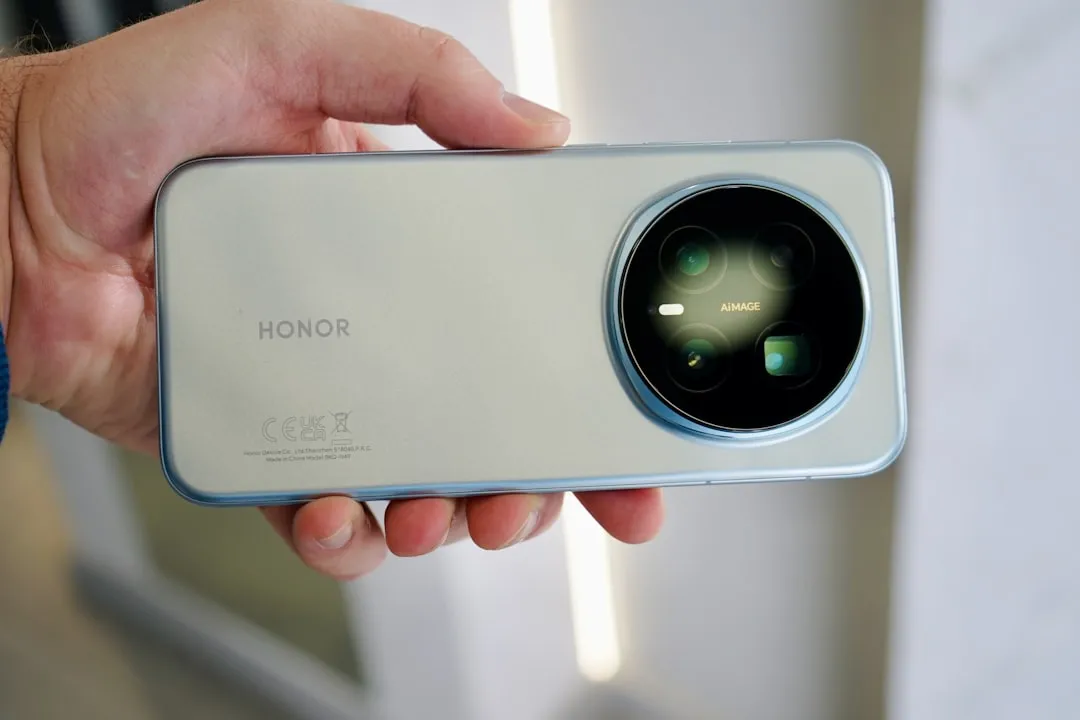
Why Honor's 10,000 Nit Display Phone Specs Can Be Misleading
Tipster Digital Chat Station posted to Weibo this week claiming an unnamed Honor smartphone will pair a display reaching 10,000 nits of peak brightness with a battery exceeding 10,000mAh, as Gadgets360 and Android Authority both reported today. Honor has confirmed none of it. No name, no chipset, no launch market, no timeline.
That number deserves scrutiny before it becomes a headline selling point. Peak brightness on any phone describes the output of a small fraction of the panel under controlled lab conditions, not what you actually see squinting at a map in afternoon sun. The figures that predict whether a screen is readable outdoors are full-screen brightness, high-brightness mode output, and anti-reflective coating quality. None of those appear in a Weibo leak. This piece explains what the measurements actually mean, what independent testing shows about outdoor readability, and where Honor's escalating spec claims fit into that picture.
Peak brightness vs real-world brightness: what the numbers actually measure
Peak brightness is measured across a small bright region set against a predominantly dark background. The scenario it captures is the brief highlight that flares during an HDR scene in a streaming video: a sun glinting off water, a lamp against a dark room. That is the number on the box. It is not measuring the full panel.
When every pixel fires simultaneously, power gets distributed across the entire display and output drops sharply. On flagships with marketing claims of 4,000 to 6,000 nits, full-screen brightness in practice tops out between roughly 1,000 and 1,600 nits, Android Police found earlier this year. A 10,000-nit headline makes that gap even wider, not narrower: the ceiling climbs while the floor stays put.
Three distinct figures describe display brightness, and they measure genuinely different things. Peak brightness captures a small window under ideal conditions. HBM (high-brightness mode), auto-brightness, and what Google calls HDR brightness all refer to maximum whole-screen output when the ambient light sensor detects bright surroundings. Full-screen brightness is what the display sustains across the entire panel during normal use. The latter two are considerably more useful for predicting sunlight readability than any peak figure, as Android Authority noted today.
Test methodology matters too. Brightness measurements are always tied to APL, or Average Picture Level. PhoneArena uses 20% APL in its lab work because that most closely approximates what a display looks like during regular use, and it produces meaningfully different results from the small-window HDR test behind most peak figures. A 10,000-nit claim almost certainly comes from the latter, which is why the number tells you very little about the experience of actually using the phone.
Sustained peak output is not physically practical regardless of the claimed ceiling. Every nit requires power, and every watt produces heat. Android Police noted that prolonged full-panel operation at peak brightness degrades OLED materials, and a 5,000mAh battery would be exhausted before a single episode finished if the screen genuinely held that output continuously. HBM and full-screen figures are themselves time-limited under thermal load, which is why independent measurements of sustained performance tell you far more than any manufacturer's claimed maximum.
What 10,000 nits means on a Honor phone in practice
Walk through what a 10,000-nit display actually encounters across a normal day.
During an HDR film with a bright sun flare against a dark sky, a small portion of the panel might briefly approach the claimed peak. That is the scenario the measurement was built for. Switch to reading an article on a white background and you are looking at full-screen brightness, which could be five to ten times lower than the headline figure. Step outside on a bright afternoon and the screen boosts output through HBM, but that mode operates under a completely different limit than peak. Hold the phone at an angle where ambient light reflects back at you and raw brightness alone may not save you, regardless of how high the ceiling climbs.
Android Police puts the practical threshold for outdoor readability at around 1,000 to 1,500 nits of full-screen brightness. Beyond that, gains in perceived readability diminish while power consumption and heat keep rising. The brands with the most-discussed flagship displays, Apple and Samsung, don't hold the brightest peak specs on paper, yet Android Police found they consistently outperform higher-nit competitors in real-world readability. The reason sits in a different part of the spec sheet entirely.
Why anti-reflective coating often matters more
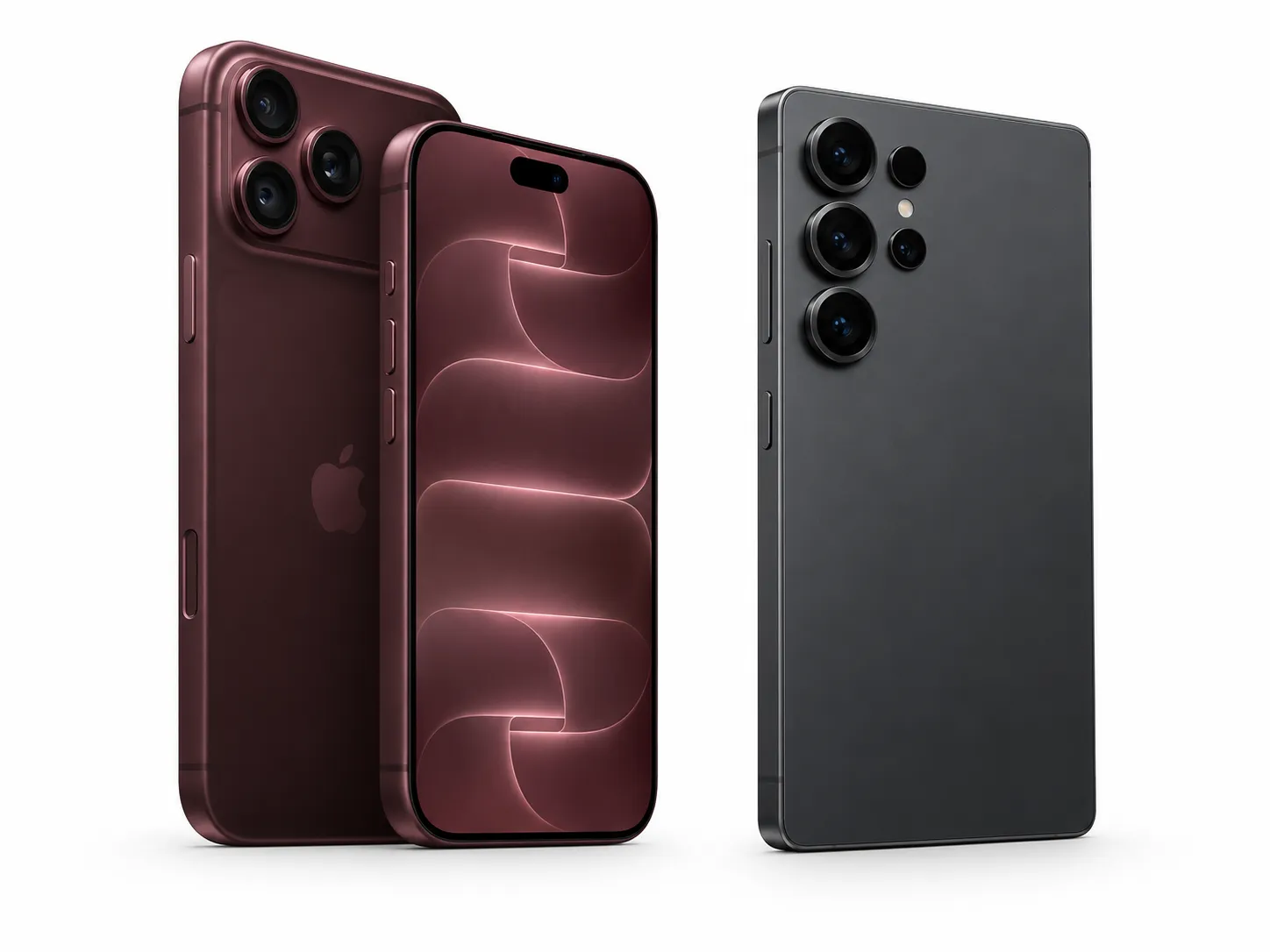
The most instructive comparison in recent display testing has nothing to do with Honor. It's what happened when PhoneArena put the OnePlus 15, Galaxy S25 Ultra, and iPhone 17 Pro Max side by side outdoors about seven months ago.
At 20% APL, the OnePlus 15 panel measured nearly 30% brighter than the iPhone 17 Pro Max and roughly 50% brighter than the Galaxy S25 Ultra. A large and measurable gap. It did not translate into a corresponding outdoor visibility advantage. The Galaxy S25 Ultra's Corning Gorilla Armor DX coating eliminated reflections that the OnePlus 15, despite its substantial brightness lead, could not fully overpower. Even at reduced brightness settings, the S25 Ultra's anti-reflective advantage held. The iPhone 17 Pro Max, with a less aggressive coating, still delivered a meaningful edge over the uncoated alternative.
PhoneArena's conclusion was direct: outdoor visibility cannot be brute-forced with raw brightness, and anti-reflective treatment is the more effective solution. A phone that cuts incoming reflections before they compete with screen output solves the problem at the source. A phone that tries to overpower reflections with sheer nit count is fighting harder than it needs to, burning more battery in the process, and still losing at oblique angles where the reflection geometry works against it.
Anti-reflective coatings carry real tradeoffs worth acknowledging. They degrade with use. PhoneArena noted reports of some Galaxy S24 Ultra units losing anti-reflective properties after about a year of daily use, not a widespread failure, but a legitimate durability question no spec sheet addresses. There is also a simple geometric caveat: a reflection can often be neutralized just by tilting the phone, so the problem anti-reflective coatings solve is itself partly situational.
None of that overturns the evidence on coating effectiveness. It means the question of outdoor readability across a phone's lifespan is more complicated than a single lab test, and worth asking about before purchase.
Honor's escalating numbers in context
The leaked device fits a pattern that has been building through Honor's recent China-market lineup. According to Gadgets360, the Honor Win and Win RT launched in China in December 2025 with 10,000mAh batteries and displays claimed at 6,000 nits of peak brightness. The Win Turbo variant followed earlier this month, reportedly pushing the peak figure to 8,000 nits with the same battery capacity. The Honor Power 2 is also reported to match 8,000 nits, paired with a 10,080mAh cell. A 10,000-nit claim, if accurate, would be the next increment in a deliberate sequence.
The trajectory makes the leak plausible. It also makes the headline figure less meaningful, because each step upward has arrived without publicly available third-party measurement of those claimed brightness levels. Whether each increment produces a proportional gain in tested outdoor readability remains an open question.
The device itself is entirely unconfirmed. Honor has not acknowledged it, and the leak provides no name, chipset, panel supplier, charging specs, or launch market. Honor's existing high-battery, high-brightness lineup has not been officially sold outside China, as Android Authority noted today, which leaves global availability uncertain even if the phone materializes.
The battery figure deserves a separate note. A 10,000mAh cell is large by current standards, but capacity and display efficiency are separate variables. A larger battery does not offset a power-hungry panel; it buys more time before the same drain problem catches up. No source has quantified how an ultra-bright Honor display interacts with a large battery under sustained real-world conditions, and that interaction is not something a spec sheet resolves.
What to actually look for in a phone's display
The gap between peak brightness claims and real-world performance is not closing as long as peak figures drive headlines. The relevant questions for any phone purchase have to be more specific than the number on the box.
What is the HBM or full-screen brightness, as measured by an independent lab rather than the manufacturer? The 1,000 to 1,500-nit full-screen threshold for solid outdoor readability cited by Android Police is achievable without exotic peak claims. Does the display carry an effective anti-reflective coating, and is there a durability track record for it over more than one product cycle? How does brightness hold up under sustained outdoor use, not just in a brief peak measurement before thermal throttling kicks in?
Those three questions, answered by independent testing, predict actual outdoor experience better than any headline nit figure. That's the consistent takeaway from both PhoneArena and Android Authority.
When Honor's unannounced phone surfaces, if it does, the spec sheet will be easy to find. The useful information, how the screen performs in direct sunlight, how long it holds that output before throttling, whether any coating closes the reflectance gap with more established competitors, won't come from a Weibo post. It will come from lab time and outdoor testing. Spec escalation is straightforward. Building a screen that actually reads better in sunlight is harder, and right now the two are not keeping pace with each other.


Comments
Be the first, drop a comment!