





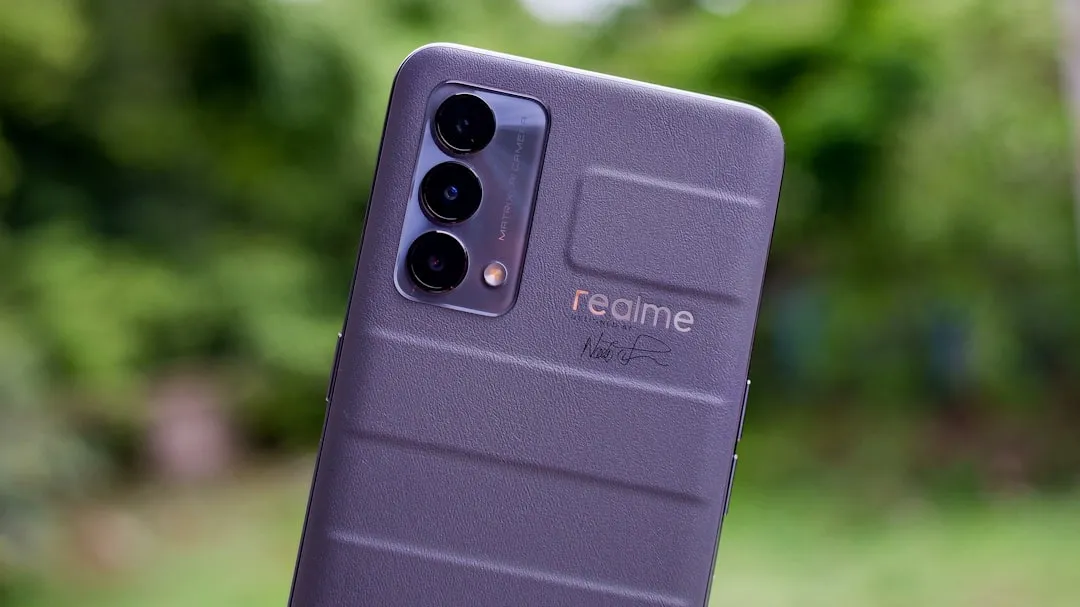
Imagine going on a weekend trip and leaving your charger at home—only to realize your phone is still showing 30% battery on Sunday night. That's the kind of endurance we're talking about with the Realme P4 Power, a device that packs an absolutely massive 10,001mAh silicon-carbon battery (India Today). This isn't just another incremental bump in capacity—it's currently the largest battery available in any smartphone you can buy in India (India Today). After putting this behemoth through weeks of real-world testing, I wanted to see if it could truly deliver on its promise of multi-day battery life without compromise. The results? Let's just say this phone fundamentally changed how I think about battery anxiety—when you can genuinely forget about finding the nearest outlet, it transforms your entire relationship with your device.
What makes a 10,001mAh battery different from the rest?
Here's the thing about battery capacity: most flagship phones hover around 5,000mAh, maybe stretching to 6,000mAh if you're lucky. The P4 Power doubles that figure—and then some. According to testing data from GSMArena, this phone achieved over 17 hours on PC Mark's battery life benchmark, a result that puts it in a league of its own. In my own hands-on experience during a particularly demanding trip, I pushed the device hard with continuous navigation, Bluetooth streaming, and mobile data for hours on end—and still ended the day with roughly 20% remaining (India Today). The screen-on time during that intensive session clocked in at just over 11 hours (India Today)—enough to run navigation, stream music, and game simultaneously without watching your battery percentage plummet, scenarios that would drain traditional phones in hours.
The oddly specific 10,001mAh number isn't random—it's Realme literally one-upping the Honor Win RT's 10,000mAh cell (India Today). But this marketing one-upmanship actually masks a genuine technological leap: silicon-carbon battery chemistry. This next-generation technology allows for significantly higher energy density compared to traditional lithium-ion cells, storing around 40% more charge in the same physical volume (Beebom). The silicon-carbon anode can hold 15 lithium atoms for every 4 silicon atoms, compared to graphite's much lower 1:6 ratio (Beebom). This atomic advantage translates to the kind of all-day—and then some—battery life that most phones can only dream about.
How long does it actually last in real-world use?
Let's break down what this battery capacity means when you're actually using the phone, not just looking at lab numbers. During typical days with moderate usage—think social media browsing, messaging, some video streaming, and casual photography—I consistently reached nighttime with over 50% battery remaining after 6 to 7 hours of screen-on time (India Today). More importantly, this endurance remained stable across different network conditions—whether on 5G data or WiFi—suggesting the silicon-carbon chemistry delivers consistent performance regardless of connectivity demands. For average users who aren't glued to their screens all day, the P4 Power should comfortably deliver at least two full days on a single charge, and light users focused mainly on messaging and web browsing might even stretch it to three days (India Today).
The endurance numbers from Realme's lab testing paint an even more impressive picture. According to GSMArena, you can watch YouTube videos for over 32 hours straight on a full charge, or play BGMI for nearly 12 hours continuously. Navigation usage extends to over 21 hours, while 4K video recording can run for 12 hours before the battery gives out (GSMArena). Here's what really impressed me: even at just 5% remaining battery, you can still squeeze out nearly 4 hours of voice calls or over an hour of GPS navigation (GSMArena). That's the kind of emergency reserve that can genuinely save you when you're caught without a charger.
Pushing the phone harder with intensive mixed usage revealed where the battery truly excels. Gaming sessions that would trigger aggressive power-saving modes on conventional phones ran smoothly for hours, while simultaneous navigation and music streaming barely made a dent. The result: nearly two full days even under punishment that would kill most phones by dinner (Mobigyaan). Continuous gaming sessions ran for several hours without triggering aggressive thermal throttling (Mobigyaan), and you can expect over 10 hours of screen-on time across multiple gaming sessions depending on your specific usage patterns (Mobigyaan). What stood out was how predictable the battery drain remained—the percentage dropped steadily rather than in sudden chunks, even when switching between demanding and light tasks (Mobigyaan). This predictable drain pattern eliminates the anxiety of sudden percentage drops when launching demanding apps—you can actually plan your usage knowing the battery will deplete steadily rather than cliff-diving at inconvenient moments.
Charging speed: does 80W cut it for a 10,000mAh battery?
Now, here's where things get interesting. An 80W charging speed might sound modest compared to the 240W monsters we've seen from Realme in the past (GSMArena), but context matters. When you're pumping electrons into a battery twice the size of most phones, 80W delivers surprisingly brisk charging times. According to GSMArena, the phone reaches 50% charge in just 36 minutes, and remember—50% of a 10,001mAh battery is a lot of juice. The official spec from Times of India claims the phone hits 50% in 30 minutes with the included 80W SuperVOOC charger—the slight discrepancy likely stems from real-world variables like ambient temperature and battery health algorithms that prioritize longevity over raw speed.
One important note: the full 80W speed is only available when using SuperVOOC chargers, while USB PD PPS chargers are capped at 55W (GSMArena). But here's a fun party trick—the P4 Power also supports 27W reverse wireless charging, meaning it can charge an iPhone 16 Pro to 50% in just 27 minutes (GSMArena). Essentially, you're carrying around a high-capacity power bank that happens to also be your phone.
These impressive charging times aren't just about wattage—they're enabled by the fundamental chemistry difference in silicon-carbon batteries. The silicon-carbon anode's direct energy transfer eliminates the heat bottleneck that forces traditional batteries into multi-cell configurations for fast charging (Beebom). This means the P4 Power achieves 80W speeds in a single-cell design, reducing complexity and potential failure points while maintaining thermal safety. These batteries can support 80W and higher charging speeds safely, whereas traditional lithium-ion graphite batteries often require multi-cell configurations to achieve similar speeds without overheating (Beebom). During my testing with bypass charging enabled during gaming sessions, the phone drew power directly from the charger instead of routing it through the battery, significantly reducing heat buildup while maintaining stable performance and protecting long-term battery health (Mobigyaan). This bypass charging feature proved invaluable during marathon gaming sessions, eliminating the heat buildup that typically forces you to choose between playing and charging.
Performance and longevity: built to last eight years?
Battery capacity is meaningless if the cell degrades rapidly, which is where the P4 Power's longevity claims get really interesting. Realme states that this silicon-carbon battery is rated for 1,650 charge cycles while maintaining over 80% of its original capacity after eight years of use (Times of India). These numbers translate to a practical advantage: if you charge daily, a typical phone's battery degrades noticeably after two years. The P4 Power's silicon-carbon cell, however, should maintain healthy capacity past four years—and since you're charging less frequently thanks to the massive capacity, you're actually putting less stress on the battery throughout its life. It's a compounding advantage. According to GSMArena, the company estimates that average users will have completed 392 fewer charge cycles after four years compared to typical phones, simply because they need to charge less frequently. On top of that, the silicon-carbon chemistry can last 150-200 more charge cycles than conventional batteries (GSMArena).
The battery's durability extends beyond just charge cycles. The -30°C to 56°C temperature rating addresses a real weakness of traditional lithium batteries—anyone who's watched their phone die in winter cold or overheat in a summer car knows this pain (GSMArena). The drop-test and compression resistance similarly target real-world scenarios: the phone slipping from your pocket or getting crushed in a packed bag. The cell is also resistant to flat compression and has been drop-tested from 1 meter (GSMArena). The phone itself carries IP66, IP68, and IP69 ratings, having been tested under 2 meters of water as well as in both hot (85°C) and cold (0°C) water conditions (GSMArena).
This battery longevity creates an unusual problem: the cell will likely outlast the phone's useful life. With only 3 years of OS updates and 4 years of security patches, the software will age faster than the hardware—a reminder that battery technology has outpaced Android's update commitment (GSMArena). The Dimensity 7400 Ultra chipset, while capable today, likely won't be competitive eight years from now (GSMArena). So while the battery might outlast the phone's useful software life, it's still a significant improvement over typical smartphone longevity.
Gaming and sustained performance: does the dual-chip architecture deliver?
The P4 Power takes a different approach to performance compared to typical mid-rangers. Instead of chasing peak benchmark scores, Realme focuses on sustained performance through a dual-chip architecture pairing the Dimensity 7400 Ultra with a HyperVision+ AI chip (Mobigyaan). During testing, this architecture revealed its advantage: the Dimensity 7400 Ultra handles raw rendering power while the HyperVision+ AI chip predicts frame timing and optimizes GPU scheduling. The result isn't higher peak frame rates—it's the elimination of stutter and frame drops that plague extended sessions on conventional phones. In BGMI, 90 FPS doesn't mean much if it oscillates between 90 and 45; the P4 Power locks it steady (Mobigyaan).
The HyperVision+ AI chip goes beyond simple frame pacing—it analyzes gameplay patterns to predict GPU load, preemptively adjusting power allocation to prevent thermal throttling before it starts. This proactive approach explains why frame rates stay stable even after hours of continuous play. The architecture proves especially effective in high-refresh-rate gaming, prioritizing steady FPS delivery over short performance spikes followed by throttling (Mobigyaan). In titles like Asphalt Legends and BGMI, the phone maintained high refresh rates for extended periods (Mobigyaan). BGMI ran at 90 FPS in Smooth graphics with Extreme+ frame settings, maintaining stable rates consistently, while HDR High settings delivered 40 FPS (Mobigyaan).
This thermal efficiency means you can game plugged in without the phone becoming uncomfortably hot—a common problem when charging and gaming simultaneously on most devices. The Dimensity 7400 Ultra is paired with a 4,613mm² vapor chamber and an extra-large 13,743mm² sheet of graphite for heat dissipation (GSMArena). Outside gaming, the phone felt consistently responsive, with app launches, multitasking, and background activity management benefiting from the large power reserve and dual-chip scheduling (Mobigyaan).
The design trade-offs: how Realme fit 10,000mAh into 9mm
One of the most impressive engineering achievements here is how Realme managed to pack this enormous battery into a relatively svelte chassis. Achieving this density required careful component selection. The 9.08mm thickness comes from using a single-cell silicon-carbon design rather than traditional multi-cell configurations (GSMArena). The phone weighs 219g—only 11g heavier than the Realme P4x, which has a 7,000mAh battery and measures 8.4mm thick (GSMArena). That weight increase seems modest until you realize that's only 3.3g per 1,000mAh of additional capacity—an impressive power-to-weight ratio.
The phone sports a new TransView design language with a dual-tone aesthetic (GSMArena). The TransView design isn't just aesthetic—the transparent top section actually serves a purpose. By showcasing the NFC coil and internal components, Realme demonstrates confidence in their engineering while the matte battery section below dissipates heat more effectively than glossy finishes. The lower matte section houses the battery, while the top transparent portion offers a peek inside where you can actually see the NFC coil (GSMArena). It's available in Flash Orange and Power Silver colorways (GSMArena), or TransBlue, TransOrange, and TransSilver according to other sources (Times of India).
The 6.8-inch AMOLED with 144Hz refresh rate might seem counterintuitive for a battery-focused phone—high refresh rates drain power faster. But the massive capacity absorbs this overhead, and the 6,500-nit peak brightness ensures outdoor visibility without forcing you to crank brightness to 100% constantly, actually saving power in bright conditions (Times of India). The display is a 6.8-inch AMOLED panel with 1280x2800 pixel resolution, offering up to 144Hz refresh rate and peak brightness reaching 6,500 nits (Times of India). It's a quad-curved panel protected by Corning Gorilla Glass 7i (Times of India).
The camera setup reveals Realme's priorities: a solid 50MP Sony IMX882 main sensor with f/1.8 aperture and OIS for reliable shots, capable of 4K video at 30fps (GSMArena). But the 8MP ultra-wide camera with 112° field of view and 16MP selfie camera with 85° coverage are clearly mid-range choices (GSMArena). Battery capacity took precedence over camera versatility—a reasonable trade-off for the target audience.
Bottom line: redefining what "all-day battery" really means
After weeks of testing, the Realme P4 Power delivers on a simple promise: you genuinely forget what battery anxiety feels like. That psychological shift—from constantly monitoring percentage to simply using your phone—represents more value than any benchmark score. The 10,001mAh silicon-carbon battery isn't just a spec-sheet gimmick—it delivers genuinely transformative real-world endurance that makes carrying a power bank feel unnecessary (Mobigyaan). The combination of massive capacity, efficient silicon-carbon chemistry, and dual-chip architecture creates a battery-first performance philosophy where stable, long-lasting operation takes priority over short bursts of benchmark dominance (Mobigyaan).
At its launch price starting from ₹23,999 (effective with offers) for the 8GB+128GB variant (Times of India), the P4 Power undercuts battery-focused competitors while matching or exceeding their core specs. For travelers, heavy users, or anyone tired of afternoon charging rituals, this represents exceptional value. The P4 Power represents solid value for those who prioritize battery life above all else (India Today), especially for endurance-focused users who genuinely need multi-day operation.
The P4 Power represents a philosophical shift in smartphone design—prioritizing sustainable, long-lasting operation over peak benchmark performance. As silicon-carbon technology matures and becomes more widespread, this approach may define the next generation of mid-range devices. For now, Realme has created something rare: a phone that solves a universal complaint without requiring users to compromise on performance, design, or features. The future of smartphone batteries isn't about faster charging—it's about charging less often. And it refuses to die.







Comments
Be the first, drop a comment!