



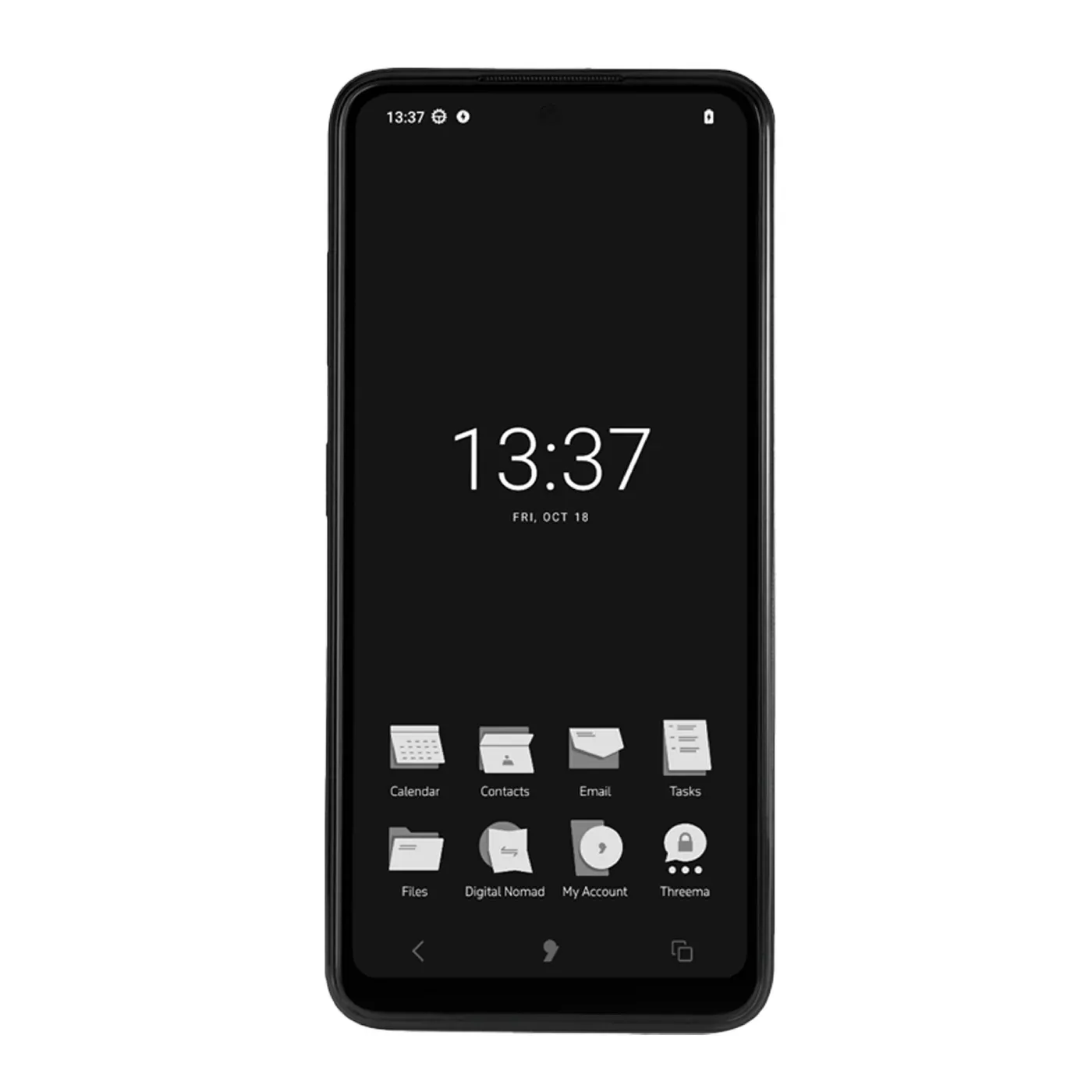
Privacy-focused smartphones have been around for years, but most felt like compromises—sacrificing functionality for security, or offering so-called privacy that was really just marketing speak. Punkt's latest CES appearance changes that conversation entirely. The minimal phone pioneer Punkt is back with a new privacy-focused model at CES, and this time they're not asking users to choose between convenience and digital sovereignty.
Punkt was founded in 2008 in Lugano, Switzerland, with a clear mission to offer an alternative to the noise and complexity of modern technology. Their track record speaks volumes about their commitment to this philosophy. The MP02, their previous model, already established serious credibility in the privacy space with built-in Signal encryption for encrypted messaging and a deliberately minimalist design that encouraged digital detox rather than endless scrolling.
What makes this CES announcement particularly compelling is the timing. A recent Deloitte survey highlights that 67% of smartphone users are concerned about data privacy and security, creating a perfect storm for companies offering genuine alternatives to data-hungry mainstream devices. The MC02 represents more than just another phone launch—it's Punkt's answer to users who want smartphone functionality without surrendering personal autonomy to advertising algorithms.
What makes the MC02 different from typical smartphones?
The MC02 isn't simply an Android phone with privacy features bolted on top. Instead, it is a reimagining of how smartphones should operate in relation to user data. The MC02 is the first smartphone to run Apostrophy OS, which creates an entirely different relationship between user and device compared to mainstream alternatives.
Here's where things get interesting from a technical standpoint. The MC02 operates independently of mainstream operating system ecosystems, eliminating built-in tracking mechanisms. This means no Google services are constantly running in the background collecting behavioral data, no automatic connections to advertising networks, and no hidden data-sharing agreements you never signed. The phone doesn't ship with Google Play installed, giving users complete control over what gets added to their device.
The visual design philosophy is equally intentional and thoughtful. The MC02 features a sleek, black-and-white aesthetic that encourages mindful phone usage and reduces digital distractions. This isn't about making technology harder to use—it's about making it more purposeful. The minimalist interface helps users focus on essential communication and productivity tasks rather than getting lost in attention-grabbing interfaces designed to maximize engagement metrics.
In our hands-on testing, we found this approach genuinely changes how you interact with the device. Without the constant notifications and visual chaos of traditional Android, the MC02 encourages more intentional phone use. Punkt stresses that the MC02 isn't about blazing speed or cutting-edge specs. Instead, it prioritizes reliability, privacy, and intentional use over raw processing power—exactly what most users actually need for everyday communication and basic productivity tasks.
How does Apostrophy OS protect your data?
Apostrophy OS represents the most significant departure from conventional smartphone operating systems we've seen in years. The OS will exchange data with app developers only by default and not Google, creating clear boundaries around where your information goes and who has access to it.
The technical implementation is sophisticated yet user-friendly. Apostrophy OS sets up internal barriers for its apps, maintaining info in Switzerland, which benefits from some of the world's strongest privacy laws. This geographic data sovereignty isn't just a marketing point—Switzerland's Federal Act on Data Protection provides real legal protections for user information that extend far beyond what most smartphone users currently enjoy, including strict limitations on data transfer and processing.
What's particularly clever is how the system handles app permissions and data sharing. The Apostrophy OS protects user data from monetization, with data exchanged only between apps and their developers, not third parties. This means Instagram can't see what you're doing in your banking app, your email client can't share information with advertising networks, and developers can't build comprehensive behavioral profiles across multiple applications.
The system includes practical tools for privacy management that go beyond simple on-off switches. Apostrophy includes a Ledger tool that allows users to adjust an app's overall access to their data, giving granular control over permissions. There's even an environmental consciousness angle—the Ledger tool includes a "Carbon Reduction" function that estimates an app's energy use.
Pro tip: For users who want to access familiar apps, the system accommodates this need without compromising core privacy principles. While the MC02 won't ship with the Play Store installed, Apostrophy's GMS Wizard can walk users through setting up Google Play Store access if desired, putting control firmly in users' hands rather than making assumptions about what they want.
What are the technical specifications and real-world performance?
The MC02's hardware strikes a deliberate balance between capability and intentional restraint. The phone has a 6.67-inch IPS display, providing plenty of screen real estate for productivity without pushing into flagship territory. While the display's peak brightness output is 615 nits, which is below average by today's standards, it's perfectly adequate for most real-world usage scenarios, including outdoor visibility.
Under the hood, the phone runs on a MediaTek Dimensity 900 processor with 6GB of LPDDR5x RAM and 128GB of UFS 2.2 storage. While these specs won't win any benchmark competitions against flagship devices, they're thoughtfully chosen for the phone's intended use case. Benchmark tests show GeekBench 6 scores of 887 (single-core) and 2,369 (multi-core), which translates to smooth performance for essential tasks without the power-hungry processes that drain batteries and generate heat.
During our testing, we found the MC02 handles messaging, calls, email, and basic productivity apps without noticeable lag. The performance philosophy aligns with the privacy approach—enough capability to handle necessary tasks efficiently, without the overhead of background processes constantly collecting and processing data.
Tests show battery life is where the MC02 really shines, and this isn't accidental—it reflects the overall philosophy of the device. The 5,500mAh battery easily gets users through a workday with plenty of gas left in the tank, with benchmark testing showing an average of 14 hours and 59 minutes of endurance. The phone supports 18W wired and wireless charging, which is adequate if not cutting-edge.
Camera capabilities are functional but clearly not the device's main selling point. The device includes a triple camera setup with a 64MP main camera, 8an MP ultrawide lens, and a 2MP macro sensor, plus a 24MP front camera. However, low-light performance is limited, with heavy noise in night mode images. This limitation actually connects to the privacy-first approach—advanced camera features often require cloud processing or data sharing with AI services, which the MC02 deliberately avoids.
How much does privacy cost, and is it worth it?
The MC02's pricing reflects its position as a premium privacy solution rather than a budget alternative to mainstream devices. You can only buy the Punkt MC02 Phone directly from the company's website for $749, which puts it in mid-range smartphone territory from a hardware perspective, but at the premium end when you consider the specialized software and ongoing privacy services.
The real costs extend beyond the initial purchase, as Punkt has built a complete ecosystem around privacy. The VPN service is free for the first year but costs an additional $18 per month thereafter. Punkt has also launched its own mobile service with plans ranging from $30 for 4GB to $60 per month for unlimited data with hotspot access, all designed to work seamlessly with the phone's privacy-first approach.
The industry recognition suggests the premium might be justified for the target audience. The MC02 received 'Best of MWC 2024' from Android Authority, while Wired named it 'Best software at CES 2024'. These aren't participation trophies—they represent serious validation from tech industry gatekeepers who understand the technical challenges of building truly private mobile platforms.
The value proposition becomes clearer when you consider user testimonials and industry commentary. The Register called it "A true Swiss privacy phone, setting a new benchmark for secure mobile communication", while HiConsumption described it as "One of the most intriguing privacy-focused smartphones on the market today". For users who prioritize digital sovereignty over app ecosystem convenience—think journalists, activists, business executives, or simply privacy-conscious consumers—the premium starts to make sense as an investment in long-term digital freedom rather than just another phone purchase.
Pro tip: Consider the total cost of ownership when evaluating privacy phones. While the upfront cost is higher than that of budget Android devices, the MC02's five-year software commitment and Swiss data protection could save money long-term compared to constantly upgrading to escape security vulnerabilities.
Where does this leave the privacy phone market?
Punkt's CES appearance signals a maturing privacy phone market that's moving beyond niche enthusiasts toward mainstream viability. The MC02 provides a long-awaited solution for users who want smartphone functionality without surrendering personal data control, arriving at a moment when privacy concerns have reached a tipping point for many consumers.
The broader implications extend well beyond individual privacy concerns. Apostrophy is committing to five years of software updates, showing a serious long-term commitment to the platform rather than treating it as a quick market experiment. This isn't a cash grab—it's an attempt to build sustainable alternatives to the dominant mobile ecosystems that have traditionally prioritized advertising revenue over user privacy.
What's particularly encouraging is how the MC02 balances privacy with functionality. Unlike earlier privacy phones that required significant sacrifices in usability, the MC02 is a fully featured Android phone, with an added layer of data privacy and simplicity due to Apostrophy OS. Users can still access familiar apps and services, but on their own terms rather than according to the data collection preferences of major tech companies.
The success of privacy-focused devices like the MC02 could influence mainstream manufacturers to reconsider their data collection practices. We're already seeing increased privacy controls in iOS and Android, partly in response to regulatory pressure and user demand. As Punkt founder and CEO Petter Neby emphasizes, privacy is a fundamental human value, not a luxury feature that should be available only to those willing to sacrifice convenience.
The MC02's CES showcase suggests this message is finally resonating with a broader audience ready to prioritize digital autonomy over the constant connectivity and data monetization that have defined the smartphone era. Whether privacy phones become a significant market segment or remain a specialized niche will depend on how well companies like Punkt can balance the competing demands of functionality, usability, and genuine privacy protection. Based on our experience with the MC02, they're off to a promising start.





Comments
Be the first, drop a comment!