



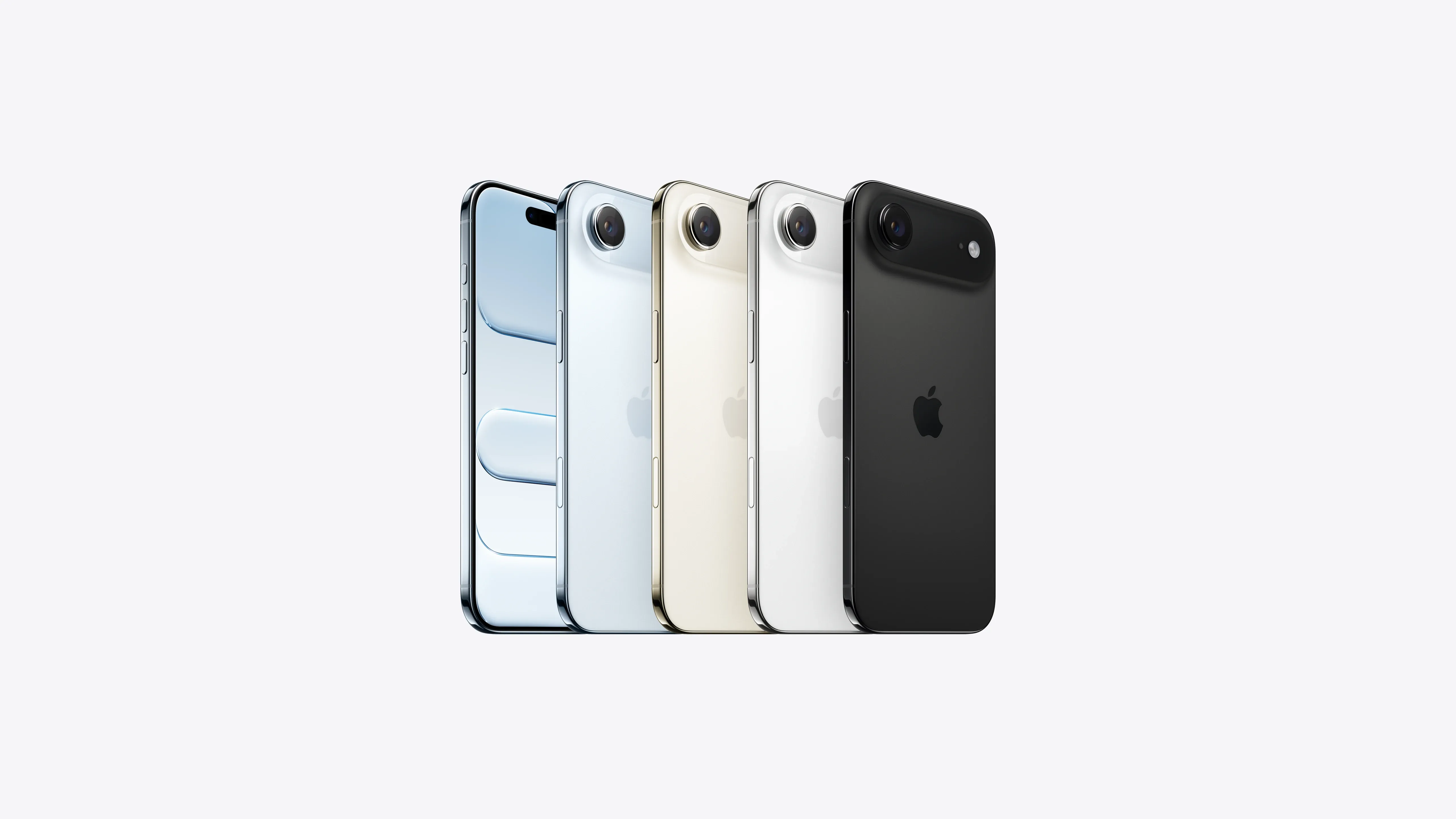
Imagine a world where your everyday smartphone—the same device you use to snap photos and scroll social media—becomes the backbone of professional sports officiating. That's exactly what's happening in Brazil's top soccer league, the Brasileirão, where Genius Sports is deploying arrays of iPhone devices to make millimeter-precise offside calls.
The technology, already operational in the NFL and Premier League, transforms consumer hardware into a sophisticated computer vision system. Guilherme Buso, VP LatAm at Genius Sports, confirmed the company is actively preparing to deploy this solution in the Brasileirão.
Beyond offside decisions, the system also collects player performance data, shot velocities, and tactical movement patterns. Rather than functioning solely as a VAR enhancement, the technology applies consumer-grade tools to professional-level match analysis.
Why iPhones? The surprising economics of precision sports tech
Here's where it gets interesting: Genius Sports isn't using specialized industrial cameras or custom-built hardware. Instead, they're strategically positioning multiple iPhone devices around stadiums, networked together to capture what Buso describes as "an infinite amount of data." The setup might sound elaborate, but as Buso explained, "It may sound massive, but it isn't."
These interconnected iPhones transform raw visual data into a complete virtualization of the match, enabling the semi-automatic offside detection system. The technology, branded as GeniusIQ, tracks everything on the pitch—from player movements to skeletal mapping—with enough precision to determine offside calls down to millimeters. You might be wondering how consumer phones could possibly deliver this level of accuracy. The answer lies in the networking approach: multiple synchronized cameras capturing overlapping fields of view, processed together to create a three-dimensional understanding of the entire pitch.
What makes this particularly clever is the calibration requirement: each installation must be permanently fixed in place to maintain accuracy, which means temporary setups for individual matches would sacrifice the precision that makes the system valuable. This permanent installation approach transforms stadiums into instrumented environments rather than treating the technology as portable equipment.
The choice of consumer smartphones over specialized equipment suggests a fascinating cost-benefit calculation. iPhones offer professional-grade sensors, reliable software updates, and standardized hardware at a fraction of what custom vision systems would cost.
Beyond the offside line: what else this system captures
The real power of this technology extends far beyond settling disputed calls. The multi-camera iPhone array measures comprehensive performance metrics including distance covered by each player, ball speed, and shot velocity with remarkable precision. Teams can analyze tactical formations and strategic patterns in ways that were previously impossible or prohibitively expensive. Think about it: every player movement, every sprint, every positioning decision becomes quantifiable data that coaches can analyze after the match.
This data feeds directly into Genius Sports' broader ecosystem, including their BetVision platform, which adds augmented reality overlays to broadcasts. Imagine watching a match where player names appear on screen, clickable for instant betting markets with real-time statistics—that's already happening in the NFL using this same camera infrastructure. The integration is pretty seamless: viewers can see players' names appear in the broadcast and use filters that allow clicking on a player's name to place a bet, since the system provides markets and statistics in real time.
The system even enables micro-betting opportunities, allowing users to place wagers on specific next-play outcomes. In the NFL, for instance, users can bet on who will score the next touchdown.
Bottom line: what started as an offside detection tool has evolved into a complete data intelligence platform that serves coaches, broadcasters, and betting operators simultaneously.
The technical challenge: making consumer phones think like referees
Let's break down what's actually happening here from a computer vision perspective. Traditional VAR systems struggle with millimeter-level precision because they rely on broadcast camera angles that weren't designed for forensic analysis. As Buso points out, "in Brazil and anywhere in the world, offside is often defined by millimeters, and it is very difficult for a referee on the pitch to make such a call. Sometimes even the VAR cameras cannot measure it precisely."
Genius Sports solves this by deploying multiple synchronized iPhones at fixed positions around the stadium, creating a calibrated 3D capture volume. The skeletal mapping capability is particularly impressive—the system doesn't just track player positions, it maps body joints and limbs to determine which body part is furthest forward during potential offside moments. These cameras can track everything happening on the field, from players' movements to skeletal mapping, with accuracy that can identify in real time whether there is an offside or not, or whether the ball has crossed the goal line or not.
Real-time processing is critical here, and Genius Sports positions itself as "experts in real-time data," according to its VP's comments. The system needs to analyze frames, identify players, map their skeletons, determine ball position, and calculate offside status—all within seconds to be useful for match officials. This same technology already operates across multiple sports including the NFL, Premier League, and basketball, proving the computer vision pipeline is robust enough for professional competition.
What this means for smartphone imaging and AR futures
This deployment has implications that extend well beyond soccer stadiums. When consumer smartphones become the foundation for professional-grade computer vision systems, it validates the imaging capabilities Apple and other manufacturers have been building into these devices. The iPhone's camera system, computational photography pipeline, and processing power are clearly sufficient for applications that demand forensic-level accuracy. We're seeing a broader trend here: consumer hardware increasingly capable of professional tasks that once required specialized equipment.
The augmented reality integration through BetVision also hints at where smartphone AR technology is heading—not just entertainment filters, but practical overlays that provide actionable information in real time. In the NFL implementation, viewers experience an extra layer of engagement through augmented reality that fundamentally changes how they interact with the broadcast. This represents a significant shift from AR as a novelty to AR as a functional interface for complex data streams.
Genius Sports presented this technology at the Brasil Sports Tech Summit in São Paulo, emphasizing their commitment to sports integrity alongside commercial applications. As Buso explained, "Since the beginning of the sports betting regulation process, Genius Sports understood that it was the right time not only to focus on the commercial side of our supply scope, but also to proactively contribute to sports integrity here in Brazil."
The reception from Brazilian soccer federations and clubs has been enthusiastic, though Buso acknowledges implementation requires finalizing agreements and navigating various stakeholder demands. "It depends on direct relations with federations and clubs, but the reception has been incredible. Now we need to finalize agreements and implement the project. It takes time and is not simple, as there are many demands." If this system launches for the 2026 Brasileirão season—which Buso called "a dream"—it would mark a significant milestone in demonstrating how consumer mobile technology can be repurposed for mission-critical professional applications.
The bigger picture: consumer tech in professional spaces
What started as a solution to eliminate controversial offside calls has evolved into something more significant: proof that consumer smartphones can anchor sophisticated IoT deployments in demanding professional environments. The technology currently operates in Liga MX in Mexico and is available to betting operators worldwide who integrate Genius Sports' data feeds, Games Bras confirms. This cross-sport, cross-market adoption suggests the iPhone-based approach offers compelling advantages over traditional specialized hardware—likely including lower costs, easier maintenance, and more flexible upgrades.
As Buso emphasized, the goal is "using technology to eliminate doubt" in situations where human officials simply cannot make accurate calls in real time. Now here's the thing: this principle of eliminating doubt through technology applies far beyond sports officiating. Any situation requiring precise measurement, verification, or monitoring could potentially benefit from similar consumer hardware deployments networked with sophisticated software.
The broader implication for smartphone manufacturers is clear: professional applications are becoming a legitimate use case for consumer hardware, potentially influencing future design decisions around camera systems, processing power, and connectivity. We might start seeing hardware specifications justified not just by what consumers want for photos and videos, but by what professional deployments require for computer vision and real-time analytics.
For the rest of us watching from the stands or our couches, it means more accurate officiating, richer data visualizations, and new ways to engage with sports—all powered by the same technology sitting in our pockets. The hardware setups deliver a lot to the sports ecosystem as a whole, benefiting not just referees and teams but fundamentally changing how fans experience and interact with professional sports.







Comments
Be the first, drop a comment!