





Motorola Razr 70 Ultra Leak: What the Near-Identical Design Signals
The first detailed look at Motorola's next clamshell flagship arrived this week via leaked CAD renders, and the company appears to have changed almost nothing. That's not an oversight. It's a calculated move from a manufacturer that currently holds roughly half the US foldable market.
CAD renders published by leaker OnLeaks in partnership with XpertPick show the Razr 70 Ultra, sold in North America as the Razr Ultra 2026, keeping the same 4-inch wraparound cover display and 7-inch inner screen as the current model, according to Android Authority. The one physical change the Razr 70 Ultra leaked renders confirm: the phone is marginally thicker, measuring 7.8mm unfolded and 15.8mm folded, up from 7.2mm and 15.7mm on the Razr 60 Ultra. That finding is consistent across Android Authority, GSMArena, and Android Police, all reporting today.
Motorola holds roughly 50% of the US foldable market, per IDC data cited by Yahoo Tech and Android Police. The current design is selling. A low-risk refresh makes straightforward business sense.
A naming note before going further: Motorola markets the same device as the Razr 70 Ultra internationally and the Razr Ultra 2026 in North America. Both names refer to the same phone throughout this piece.
What the Motorola Razr 70 Ultra leaked renders confirm (and what they don't)
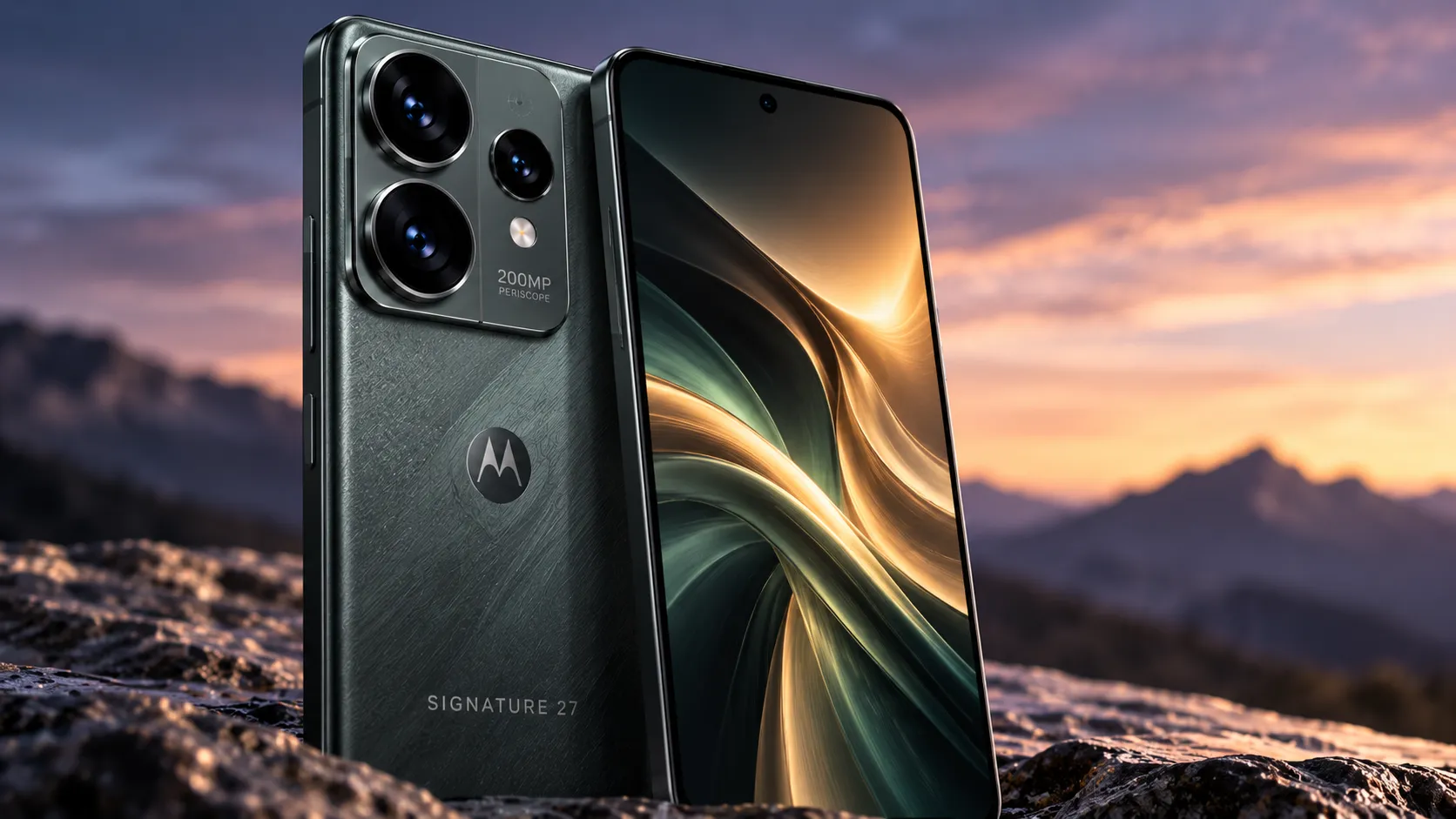
The outer shell carries over completely. Same dual-display layout, same rounded metal frame, same camera-integrated cover screen. NotebookCheck described the design yesterday as "almost unchanged," with a new silver finish and revised fabric texture as the only visible cosmetic updates.
Button placement is identical to the current model: volume and power/fingerprint controls on the right, a dedicated Moto AI hardware button on the left, per renders detailed by GSMArena. The bottom edge carries the same arrangement of microphone, speaker grille, SIM slot, and USB-C port.
The phone this replaces, the Razr 60 Ultra (sold in the US as the Razr Ultra 2025 at $799), shipped with a Snapdragon 8 Elite chip, a 165Hz AMOLED display peaking at 4,500 nits, a 4,700mAh battery, and dual 50MP rear cameras, per NotebookCheck and Ars Technica's review from last May. That's a strong hardware foundation, which makes a conservative exterior redesign more defensible than it might initially appear.
What the renders cannot confirm: No chipset, battery capacity, charging speed, camera sensor details, weight, software support window, or pricing are established by this leak. Android Authority states directly that specs for the new Ultra are not yet available. There isn't a reliable Motorola Razr 70 Ultra specs leak to speak of any reporting on those details, including this piece, is inference or earlier speculation, not confirmed data.
What 0.6mm of added thickness actually means for internal hardware
The thickness increase is the leak's single genuinely new measurement. The interpretive work around it is where sources diverge and where readers should press for specifics before drawing conclusions.
In a clamshell foldable, the folded thickness budget is tight in ways a regular phone isn't. The hinge mechanism alone consumes significant volume, which leaves engineers competing for space across the battery cells, vapor chamber, and camera stack. A 0.6mm increase across the whole device, split across two halves when folded, represents a real engineering change, not rounding error. The question is which component or components absorbed that space. The current leak doesn't say.
The case for practical gains:
- Android Authority suggests the added volume could enable a larger battery, faster charging, improved thermal management, and upgraded camera hardware, framed explicitly as plausible rather than confirmed
- GSMArena similarly attributes the slight size increase to possible battery capacity growth and camera hardware upgrades
- Android Police notes the difference is imperceptible by hand, but characterizes the change as likely driven by internal hardware requirements
The case for skepticism:
- An earlier report from NotebookCheck, from two weeks ago, suggested the Razr 70 Ultra may retain the same 4,700mAh battery capacity and 68W charging as its predecessor which would mean the extra space didn't go toward power capacity
- No component leaks, regulatory filings, or certification data in the available reporting confirm larger battery cells or faster charging hardware for the Ultra specifically
- The Snapdragon 8 Elite Gen 5 is cited as the probable processor by GSMArena, but as inference, not certification evidence
The extra volume may have gone toward the vapor chamber for better sustained performance, a taller camera stack, or simply a slightly thicker hinge assembly. Any of those would produce the same dimensional result without touching battery capacity at all. Until Motorola publishes specs, the thickness story is an open question, not an upgrade confirmation.
For buyers cross-shopping Samsung, the Razr 70 Ultra vs Galaxy Z Flip 8 comparison will ultimately hinge on exactly this question: whether Motorola's added bulk translated into real-world gains in battery life or thermals, or whether it landed somewhere less visible to the user.
Why Motorola is playing it safe with a design that's already winning
Samsung went in the opposite direction with the Galaxy Z Flip 7: it slimmed to 6.5mm unfolded and 13.7mm folded, gained an edge-to-edge 4.1-inch cover display, and extended software support to seven years, per ZDNet's hands-on comparison from last November. Motorola is not matching Samsung on thinness, and this week's design leak makes clear the company isn't trying to.
Despite Samsung's design momentum, Motorola holds roughly 50% of the US foldable market per IDC, as reported by both Android Police and Yahoo Tech. The Razr Ultra 2026 is expected to compete directly with Samsung's upcoming Galaxy Z Flip 8, per Android Authority, making the practicality-versus-thinness tradeoff the central competitive question heading into launch season.
One open question the leak doesn't address may matter more than the dimensions: software support. Sources conflict on what the Razr Ultra 2025 actually promised. ZDNet reported four OS updates and five years of security patches, while Ars Technica's review from last May put it at three years of full OS updates and one additional year of security patches. Either figure falls well short of Samsung's seven-year commitment. Motorola's new Razr Fold book-style device now matches Samsung's seven-year window, per Android Authority from earlier this month. Whether that commitment extends to the Razr 70 Ultra remains unannounced and for anyone thinking about this phone as a multi-year investment, that question matters as much as the thickness.
What comes next
A launch is expected as early as April, following last year's timeline, per GSMArena. When confirmed specs arrive, four numbers are worth tracking immediately: battery capacity, charging rate, weight, and software support years. Those four data points will determine whether the Razr 70 Ultra's added thickness paid off in ways buyers can actually feel and whether Motorola has finally closed the gap with Samsung on the update policy that currently gives its biggest rival a durable long-term argument.
The hard evidence from today's leak is dimensional: 7.8mm unfolded, 15.8mm folded, same screen sizes, same exterior layout as the Razr 60 Ultra, consistent across Android Authority, GSMArena, and Android Police. Everything else bigger battery, faster charging, new chipset is plausible but unconfirmed. The conflicting earlier report from NotebookCheck keeps that skepticism honest.
Motorola has market share, a design buyers clearly like, and room to add something inside the shell. What that something is will define whether this is a meaningful upgrade or a holding pattern dressed in new fabric.







Comments
Be the first, drop a comment!