





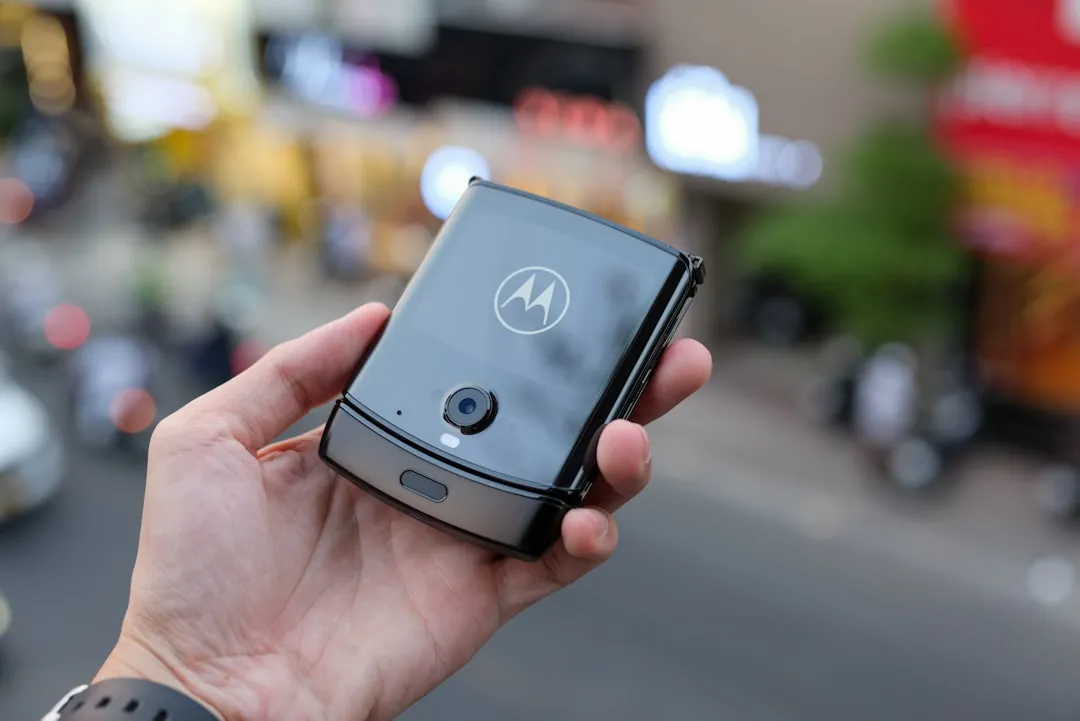
Motorola Razr 2026 Review: Strong Value, Real Trade-Offs
The Motorola Razr 2026 costs $800. That's $100 more than last year's model, a jump that CNET called "hard to stomach" this week. The friction is real. Based on what reviewers have found, though, the Razr 2026 still makes the strongest case among sub-$1,000 flip phones for buyers who prioritize cover-screen flexibility and battery life over raw processing muscle. It concedes clear ground on chip performance and software longevity. Buyers who understand that trade-off going in will be satisfied; buyers who don't will feel the gap at $800 in a way they wouldn't have at $700.
Pricing context matters. The Razr 2026 is the only model in Motorola's 2026 flip lineup under $1,000, with the Plus at $1,100 and the Ultra at $1,500 (Android Central). In the UK, it undercuts the Galaxy Z Flip 7 by £250 and comes in below Samsung's budget-oriented Z Flip 7 FE at £849 (Trusted Reviews). Motorola's US foldable market share grew from 30.1% to 44.1% between 2024 and 2025, according to Counterpoint Research data cited by How-To Geek earlier this month, with How-To Geek attributing that climb to aggressive pricing, carrier deals, and hardware that leans into flip-phone nostalgia. Whether the formula that drove that share gain still holds at $800 is what this review works through.
Who the Razr 2026 is for, and who should skip it
The Razr 2026 fits someone who wants a genuine foldable flip at the lowest serious price and uses their phone primarily for everyday tasks: messaging, social media, navigation, casual photography. If battery endurance and software feel matter more than raw processing power, this phone makes sense.
Skip it if you own the Razr 2025. The design is physically identical, same dimensions (171.3 x 74 x 7.3mm open), same weight (188g), same display sizes, and the new chip is a marginal revision of last year's processor (Trusted Reviews; Android Central). The generational upgrade case doesn't hold at a higher price.
Skip it too if long-term software support is a deciding factor. Motorola commits to three OS updates and, depending on which reviewer you ask, either four or five years of security patches. CNET reports five years; Trusted Reviews reports four. Verify Motorola's current commitment directly before treating update longevity as a selling point. Android Authority argued last week that if Samsung can support a $200 Galaxy A17 5G for six years, Motorola should be able to match that for an $800 flip. All three Razr flip phones, including the $1,500 Ultra, get the same three OS updates. That discrepancy is hard to argue away at any price tier.
For buyers focused primarily on price, a discounted 2024 Razr is worth considering. How-To Geek notes that a 2024 model can be found for around $400, roughly half the current price for an essentially identical form factor. The Razr 2026 earns its premium through three concrete upgrades: an ultrawide camera jump from 13MP to 50MP, new MIL-STD-810H toughness certification the 2025 model didn't carry, and a larger 4,800mAh battery (Android Police; Trusted Reviews). Real improvements, but incremental ones. Whether they're worth $400 depends entirely on whether those specific upgrades matter to you.
Motorola Razr 2026 cover display: where Motorola wins the category
A flip phone lives or dies on its cover screen. The value proposition of the form factor is handling more from the outside, replies, notifications, quick tasks, without unfolding the device. How much freedom the software gives you on that small outer display determines how useful the flip is day to day.
Motorola's implementation is far less restricted than Samsung's default setup. The Razr 2026 lets users run nearly any app on the 3.6-inch cover screen, configure those apps without opening the phone, and use their preferred keyboard including Gboard, all from the closed position (Android Authority). Samsung's Galaxy Z Flip 7 takes the opposite approach: cover-screen app access is limited by default, third-party keyboards don't work in the closed state, and unlocking full functionality requires navigating Good Lock modules that Android Authority found unreliable. That's a meaningful design philosophy difference between two phones competing in the same category.
Motorola's Hello UX skin stays close to stock Android, making the switch from a Pixel-class device nearly frictionless (Android Central). Android 16's Live Updates feature arrives on the Razr 2026 for the first time, enabling real-time status tracking for delivery orders and rideshares directly on the cover screen without opening the phone. Android Central called the overall software experience "excellent," which tracks: the cover-screen use case is exactly what Live Updates is built for.
The physical size is the honest counterpoint. At 3.6 inches, Android Central notes the cover screen is beginning to feel cramped as cover-screen use cases grow. It's a pOLED panel running at 90Hz with 1,700 nits peak brightness, protected by Gorilla Glass Victus (Android Central). Capable enough for what the software allows, but buyers who want more real estate on the outside should step up to the Razr Plus.
Battery and displays: the practical case for everyday use
Foldables have historically struggled with battery life. Thinner chassis, folding displays, and smaller internal volumes tend to produce compromises on capacity and endurance. The Razr 2026's 4,800mAh silicon-carbon battery is a direct answer to that pattern.
CNET's 45-minute stress test combining streaming video, gaming, and video calls produced only a 4% charge drop (CNET). Trusted Reviews finished a light-to-moderate workday, around 2.5 hours of screen time, with roughly 40% remaining. Both results exceed what most buyers would expect from a flip-form device.
Charging holds up equally well. 30W wired charging refilled 67-68% in 30 minutes across two independent tests (CNET; Trusted Reviews), with a full charge completing in just over 50 minutes. The phone also supports 15W wireless charging and 5W reverse wireless charging, letting it top up earbuds or a smartwatch in a pinch (CNET).
The inner display is strong for media use. The 6.9-inch AMOLED panel runs at 120Hz, hits 3,000 nits peak brightness, and resolves at 2,640 x 1,080 (Android Central). Android Central found it doesn't feel like a compromise for everyday video and browsing. At 188g, the Razr 2026 is the lightest in its lineup, now with MIL-STD-810H toughness certification and the returning IP48 dust and water resistance rating (Android Police; Android Central). These aren't the specs that generate excitement on paper. They're the ones that matter six months in.
The performance and camera ceiling: what $800 doesn't buy you
The MediaTek Dimensity 7450X is the Razr 2026's most honest limitation. At $700, it was a defensible trade-off. At $800, it's harder to accept quietly.
The chip uses the same 4nm process node and core architecture as its predecessor, the Dimensity 7400X. Android Central found benchmark scores only marginally better than last year's chip, and in one test, slightly lower. Trusted Reviews Geekbench 6 results put the budget-tier Galaxy Z Flip 7 FE 78% ahead of the Razr 2026 in the same test. CNET benchmarks placed the Razr 2026 at one-third to one-half the performance of the Razr Plus 2026 depending on the workload (CNET).
In daily use, these numbers translate to specific friction points: occasional UI slowdowns, camera viewfinder delays of up to five seconds, and thermal throttling in direct sunlight (Android Central). Demanding games run at medium graphical settings with capped frame rates (Trusted Reviews). The chip's genuine upgrade is a Release 17 5G modem with improved power efficiency (Android Central), a real connectivity gain that won't show up in any benchmark. The phone ships with 8GB of RAM and 256GB of storage, though the Android installation alone consumes about 26GB of that (CNET).
Camera hardware tells a similar story of modest refinement. The main 50MP sensor is unchanged from the Razr 2025. The meaningful upgrade is the ultrawide, moving from 13MP to 50MP, which Trusted Reviews found delivers better results for wide shots. Without a telephoto lens, digital zoom becomes unreliable beyond 2x and poor past 5x (CNET; Android Police). For casual shooting in good light, the cameras are capable. For anyone who regularly shoots at distance, or needs reliable zoom, the absence of a telephoto lens is a genuine constraint the price increase makes harder to overlook.
Razr 2026 vs Razr Plus 2026: what the extra $300 buys
This is the comparison most buyers searching the Razr lineup actually need to make.
The Razr Plus 2026 costs $1,100. For $300 more than the base model, CNET benchmarks put its performance at roughly double to triple the Razr 2026 depending on the workload (CNET). The core flip concept, IP48 rating, and Android 16 software are identical across both.
The practical differences come down to three areas:
- Performance: The Plus handles demanding apps, gaming, and multitasking without the lag and thermal issues the base model shows under load
- Cover screen: The Plus carries a larger outer display than the Razr 2026's 3.6-inch panel, which Android Central already flags as feeling cramped
- Software support: All three Razr flip phones receive the same three years of OS updates (Android Authority), so the Plus offers no longevity advantage
For everyday users, the base Razr 2026 handles the same core tasks without meaningful degradation. The $300 gap makes sense for gamers, heavy multitaskers, or anyone who spends significant time on the cover screen. For everyone else, the upgrade arithmetic doesn't change Android Central's assessment: the base Razr 2026 is still the best value in the lineup at its price.
Verdict: still worth buying, with clear limits
Trusted Reviews called the Razr 2026 a phone "stuck in place." That's accurate as a generational assessment. Being stuck in a good place isn't the same as being a poor buy.
At $800, this phone offers cover-screen software that outclasses Samsung's default implementation according to current reviews, battery endurance that outperforms category expectations, and 30W charging that completes a full cycle in just over 50 minutes (CNET; Trusted Reviews). Android Central calls it the best budget flip phone you can buy. The chip and camera limitations are real, but they're predictable and consistent with what the category has always asked buyers to accept.
The software support question is where the value argument gets genuinely complicated. Three OS updates on a phone that costs $800 and is expected to last four or five years means the hardware may outlast the software commitment. The security patch discrepancy between sources, four years per Trusted Reviews and five per CNET, compounds the uncertainty. Android Authority went so far as to say it's hard to recommend any Razr until that changes. Motorola's hardware instincts are clearly sharp. The ownership horizon is where the price increase asks for a commitment the software terms don't fully back up.
Buy the Razr 2026 if you want the flip form factor at the lowest serious price and your daily use doesn't push hardware hard. Step up to the Razr Plus if you need stronger processing and can absorb the extra $300. If a discounted 2024 Razr at around $400 covers your needs, that's the more price-efficient path, and the form factor experience is essentially the same.


Comments
Be the first, drop a comment!