





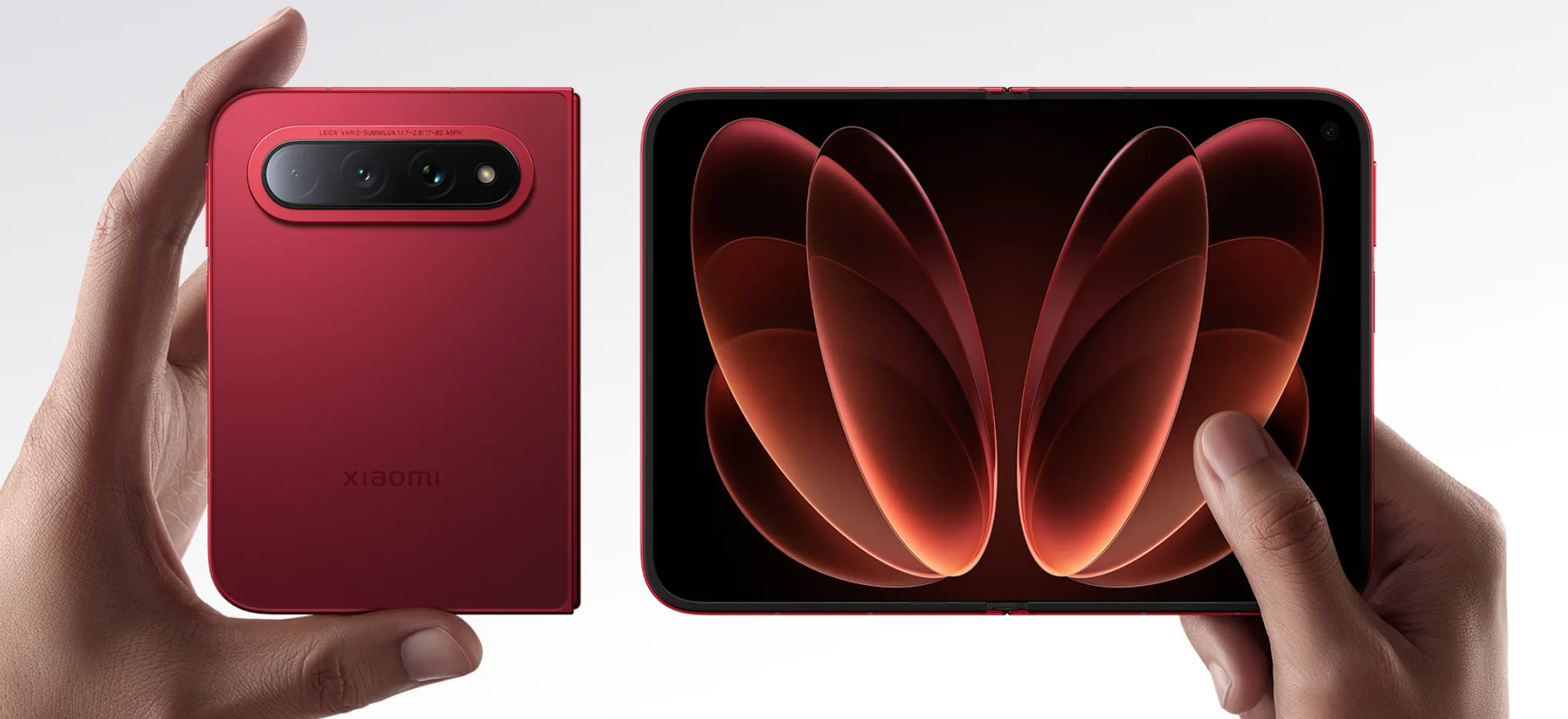
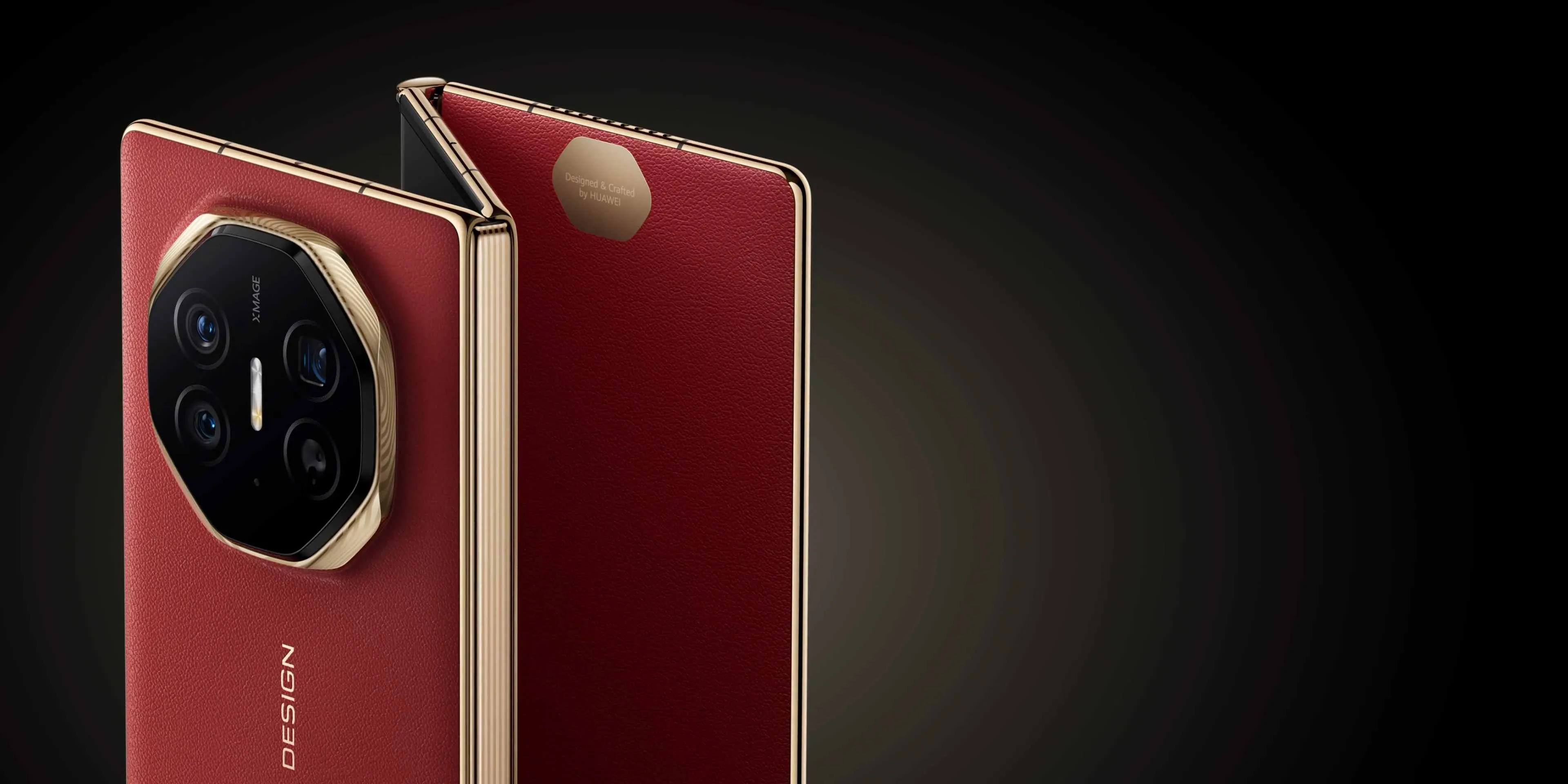
Foldable phones have long wrestled with a fundamental tension: how do you make a device thin and light enough for everyday carry while ensuring it can survive the constant stress of opening and closing? Honor's upcoming Magic V6, set to debut at Mobile World Congress on March 1, appears ready to challenge conventional thinking on this front. The device will be unveiled a day before MWC 2026 officially begins, positioning it as a headline launch. Early glimpses show a striking red variant with a textured, suede-like rear panel that shifts from deep red to light grey depending on lighting conditions. Perhaps most intriguingly, Honor is launching its flagship outside China first—a strategic departure that signals the company's global ambitions. But can a device this slim truly deliver on durability promises, or are we looking at another case of marketing hype over engineering reality? Having followed the foldable market since the original Galaxy Fold's rocky debut, I've learned to approach manufacturer claims with healthy skepticism—and the V6 deserves exactly that scrutiny.
What "striking" thinness actually means in 2026
The race to build the thinnest foldable has become something of an arms race, with manufacturers routinely making bold claims that don't always hold up under scrutiny. Here's what makes this particularly tricky: measurement methodologies vary wildly between companies, and what gets measured matters tremendously. Are we talking about thickness at the display's center, at the frame, or including that camera bump? This lack of standardization allows companies to present the most flattering numbers possible.
The Magic V6 appears to maintain its predecessor's ultra-slim profile—the V5 measured 9.39mm when closed and 4.47mm when open in independent testing, though Honor marketed it as 4.1mm. The V6 may be even thinner than the V5, according to early reports, though we'll need verified measurements to confirm. When folded, the device doesn't appear any thicker than a standard smartphone—an impressive feat considering what's packed inside.
Here's the bottom line: thinness matters for pocketability and daily comfort. A device that feels bulky in your pocket becomes a device you don't want to carry. But achieving slim dimensions requires engineering trade-offs. You can shave millimeters by using thinner materials or smaller batteries, but if those choices compromise structural integrity, you've built an expensive paperweight. The original Galaxy Fold's screen failures showed exactly what happens when you prioritize form over durability—protective layers were so thin that fingernails could damage the display.
The engineering behind foldable durability
Let's break it down: foldable durability isn't about a single component—it's a system-level challenge involving materials science, hinge design, and display technology working in concert. Every fold creates stress points. Every opening introduces potential ingress paths for dust and moisture. The physics are unforgiving—flexible materials fatigue over time, adhesives weaken with temperature cycling, and micro-gaps accumulate debris.
Honor's approach to these challenges centers on radical simplification. The earlier Magic Vs demonstrated a four-component hinge design that contrasted sharply with Samsung's 92-component mechanism. Now, you might think more components equals better engineering, but that's not necessarily true. The simpler design relied on metal components cast into aerospace-grade plastic for stiffness rather than gears, making it lighter and cheaper to assemble. What's particularly interesting from a reliability standpoint: fewer moving parts means fewer potential failure points, simpler repairs, and more consistent manufacturing tolerances.
Honor claimed the Magic Vs could be folded and unfolded up to 400,000 times—twice Samsung's Galaxy Z Fold 4 rating. That translates to roughly 100 folds per day for 11 years. While most users upgrade every two to three years, this engineering margin matters for resale value, warranty confidence, and brand reputation. Devices that approach their rated limits within typical ownership periods face accelerated degradation and warranty claims.
The display itself featured thin, vertically aligned titanium strips that allowed sharp folding while preventing deformation. This represents the real innovation challenge—the display needs flexibility at the fold line but rigidity everywhere else. Too flexible and you get screen bubbling; too rigid and you crack the panel. These titanium strips act like the ribs in an umbrella, providing structure without restricting movement.
While the Magic Vs lacked IP certification, teardowns revealed red ingress protection seals throughout the device, suggesting Honor understands the importance of water and dust resistance even without official ratings. IP certification for foldables remains complex and expensive due to the moving parts and multiple ingress points, but internal protection measures show the company isn't ignoring environmental threats. If the V6 builds on these foundations with refined materials and tighter manufacturing tolerances, we're looking at a genuinely mature approach to foldable construction.
How the V6 stacks up against current champions
The foldable landscape has become increasingly competitive, with Samsung, Oppo, and Honor all vying for the "thinnest" crown—though actual measurements often tell a different story than marketing claims. The Samsung Galaxy Z Fold 7 measured 4.35mm when open and 9.16mm when closed, narrowly beating the Oppo Find N5's 4.36mm and 9.17mm in independent testing. These are hair-splitting differences—we're talking hundredths of a millimeter—but they matter in a market where perception drives purchasing decisions.
Samsung sacrificed stylus support to improve durability, a trade-off neither Honor nor Oppo had to make. That's significant because it shows the engineering compromises required to hit these thickness targets while maintaining structural integrity. The digitizer layer for stylus input adds thickness and creates another potential failure point in the display stack.
But thinness alone won't differentiate the V6—Honor's real advantage may lie in power management. On the charging front, the V6 appears positioned to dominate: certification documents reveal 120W wired charging support, nearly double the Magic V5's 67W and vastly exceeding Samsung's 25W and Google's 39W. This isn't just incremental improvement—it's a generational leap that could drop charge times to under 30 minutes for a full battery, fundamentally changing how you interact with the device.
Battery capacity is equally impressive, with the flagship model reportedly carrying a 7,150mAh cell while standard variants pack 6,850mAh. For context, most conventional smartphones top out around 5,000mAh. You're looking at legitimate two-day battery life here, potentially more with conservative use. Power-hungry dual displays have always been the Achilles heel of this form factor, and Honor appears ready to tackle that limitation directly.
The V6 is also expected to feature Qualcomm's Snapdragon 8 Elite Gen 5 chipset with Oryon Gen 3 cores reaching 4.6GHz, alongside rumors of a 200MP primary camera. These specifications suggest Honor isn't just competing on thinness—it's building a comprehensive flagship experience. That said, the camera megapixel count deserves scrutiny. Real-world photography depends on sensor size (larger sensors capture more light), pixel binning technology (combining multiple pixels for better low-light performance), computational photography algorithms, and lens quality. A 200MP sensor means nothing if the optics or processing can't support it.
What "toughness" claims typically mean (and how to evaluate them)
PRO TIP: When manufacturers tout durability, look beyond the headline numbers to understand what's actually being tested and under what conditions. Marketing materials love to cherry-pick the most impressive figures while ignoring less favorable metrics.
Fold cycle ratings provide a useful baseline, but real-world usage involves more than just opening and closing. How does the hinge perform when there's debris present? What happens in temperature extremes? Does the device survive pocket lint accumulation over months of carry? Drop resistance, screen scratch resistance (measured on the Mohs hardness scale, where foldable displays typically rate around 2—softer than a fingernail at 2.5), hinge debris tolerance, and temperature cycling all factor into actual durability. These are the questions lab testing rarely addresses comprehensively.
For context, the Mohs scale measures scratch resistance from 1 (softest, like talc) to 10 (hardest, diamond). Most smartphone glass rates around 6-7, while foldable display polymers rate 2-3 due to their flexible nature. This means foldable screens scratch far more easily than traditional glass displays—a fundamental trade-off of the form factor.
The absence of IP ratings doesn't necessarily mean poor water resistance; Honor included ingress protection seals in previous models despite lacking certification, likely due to the complexity and cost of certifying foldables. Getting IP certification for a device with moving parts and multiple ingress points is exponentially more difficult than certifying a sealed smartphone. Each hinge component, each gap, each flex point must be tested and verified.
Material choices matter significantly: aerospace-grade plastics and titanium reinforcement can provide strength without excessive weight. Aerospace-grade plastics achieve high stiffness-to-weight ratios through carbon fiber reinforcement or advanced polymer chains that maintain rigidity while allowing precise tolerances. Meanwhile, the display's protective layers determine scratch resistance—though as noted, physics limits how scratch-resistant a flexible display can be.
Independent testing from outlets like JerryRigEverything provides more reliable insights than manufacturer claims, though even these tests have limitations. Scratching a screen with specific hardness picks tells you something, but it doesn't predict how the display handles keys jangling in your pocket over six months. The key is looking for multiple data points: fold ratings, material specifications, teardown analyses, and crucially, long-term user reports from early adopters all contribute to a complete durability picture.
Where the V6 fits in foldable's evolution
If Honor delivers on the Magic V6's promises, it could establish a new benchmark that forces competitors to reconsider their engineering priorities. Rather than viewing these specifications as isolated features, consider how they work together as an integrated system.
Power Management Revolution: The combination of high-capacity batteries and ultra-fast charging represents a philosophical shift. With 7,150mAh capacity and 120W charging, the V6 rejects the conventional wisdom that foldables must compromise on battery life. You gain tablet-class endurance in a pocketable form factor, with charging speeds that eliminate range anxiety.
Display Technology Without Compromise: The device's inner display resolution of 2352 × 2172 pixels and outer display resolution of 2420 × 1080 pixels suggest Honor isn't sacrificing screen quality for thinness. These are sharp, pixel-dense displays that should deliver crisp text and detailed imagery—crucial for productivity use cases where foldables excel.
Strategic Connectivity Options: Select variants will reportedly include Beidou satellite connectivity, expanding functionality beyond traditional cellular networks. While this feature targets specific markets where Beidou coverage excels, it signals Honor's strategy: maintain home market differentiation while pursuing global expansion. The global-first launch combined with China-specific features shows sophisticated market segmentation.
Software Optimization as Foundation: The device will run MagicOS 10 based on Android 16, bringing the latest software optimizations to the foldable form factor. Software matters tremendously with foldables—you need intelligent app continuity (seamlessly transitioning apps between displays), effective multitasking (taking advantage of that large inner screen), and thoughtful UI adaptations (optimizing layouts for different aspect ratios). Hardware specifications only tell half the story; even the most impressive foldable hardware fails without software that understands the form factor.
Whether the V6 truly rewrites device strength standards remains to be seen—we'll need independent testing and long-term user feedback to verify Honor's claims. But the ambition is clear: Honor is betting that consumers want foldables that don't compromise, devices that are simultaneously thin, tough, and feature-rich. The March 1 reveal will show whether the company's engineering can match its marketing, and whether the foldable market is finally ready to move beyond trade-offs toward genuine all-around excellence. Based on Honor's trajectory with the Magic Vs and V5, the company has demonstrated it understands the engineering challenges. The question isn't whether they can build an impressive foldable—it's whether they can deliver these specifications at a competitive price point while maintaining the build quality that makes those specs meaningful in daily use.


Comments
Be the first, drop a comment!