





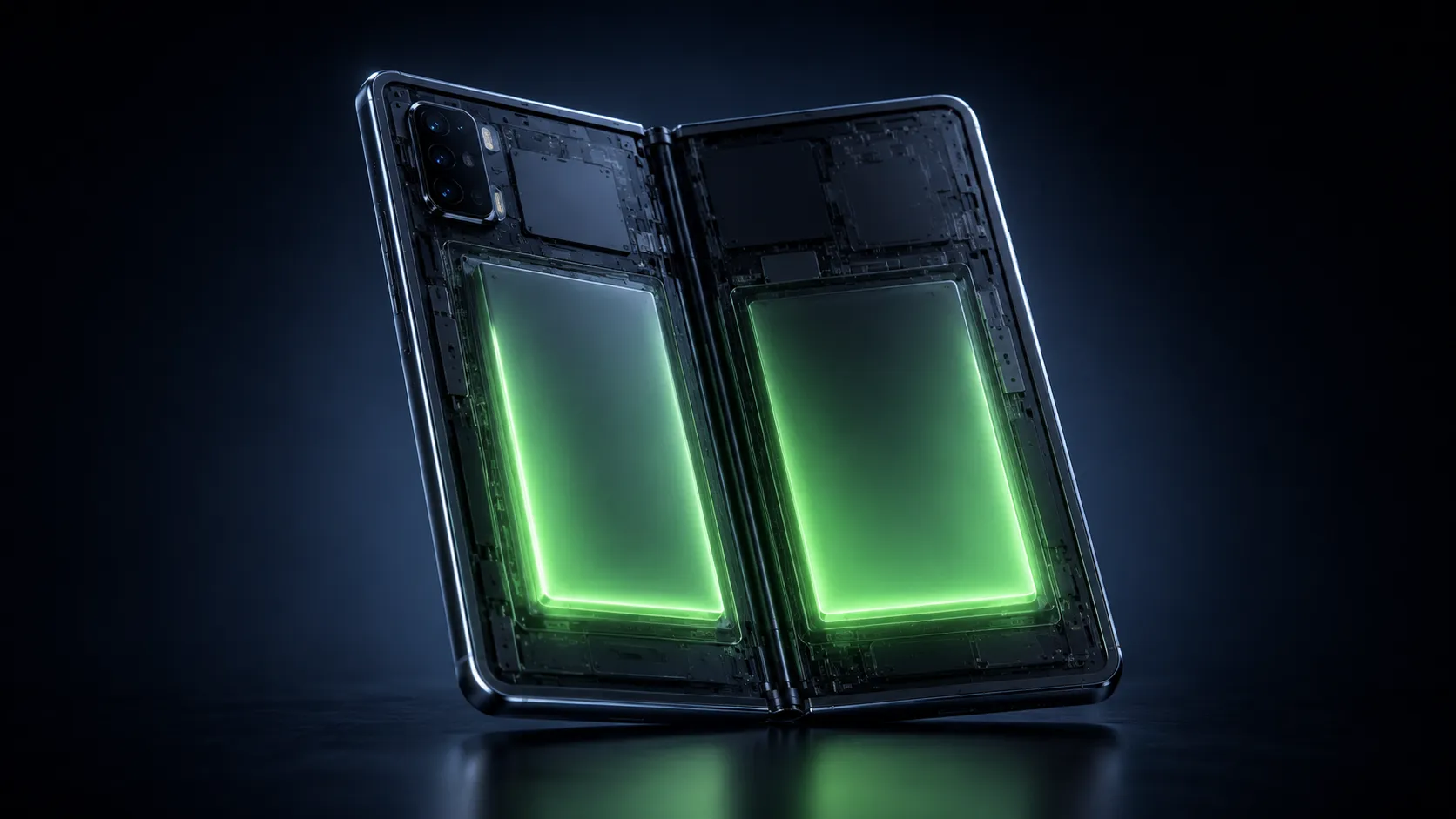
Leaked battery listings suggest the Galaxy Z Fold 8 could ship with an advertised 5,000mAh dual-cell battery, ending a five-generation capacity freeze that has dogged Samsung's book-style foldable since 2021. The Galaxy Z Fold 8 battery upgrade would mark real progress for the line. It would also leave Samsung roughly 1,660mAh behind where Honor already is.
Battery cell listings from Galaxy Club, covered by GSMArena and Android Authority in March 2026, put the Fold 8's two cells at 2,369mAh and 2,485mAh, combining to a rated 4,854mAh. That figure will likely appear on marketing materials as 5,000mAh typical, following the same convention Samsung used for the Galaxy S26 Ultra, which carried a near-identical rated capacity.
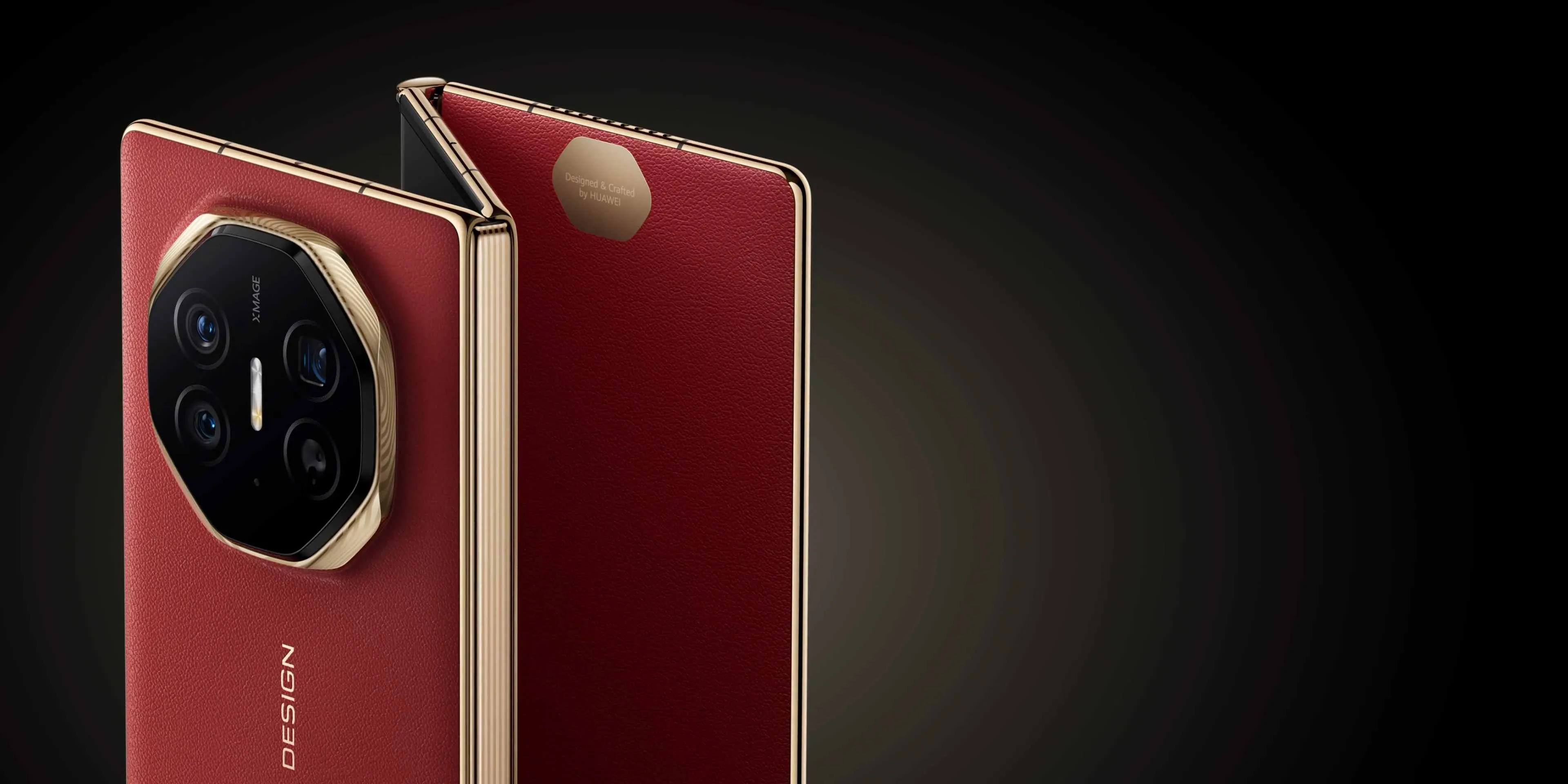
The benchmark the leak lands against: Honor unveiled the Magic V6 at MWC 2026 with a 6,660mAh silicon-carbon battery, the largest ever fitted in a foldable phone, according to The Verge. That device folds down to 8.75mm thick and, per Honor's TÜV Rheinland-certified claim, can run its unfolded display for 24 continuous hours.
What the Galaxy Z Fold 8 battery upgrade leak actually shows
The two-cell configuration is standard for the Fold line: one cell in each half of the device, per Android Authority. Rated capacity is measured under lab conditions; typical capacity is slightly higher. Sources use both figures for the same phone, which is why the 4,854mAh rated number and the 5,000mAh marketed number describe the same hardware.
What makes this jump notable is the stagnation it would end. The Galaxy Z Fold 3, Fold 4, Fold 5, Fold 6, and Fold 7 all shipped with the same 4,400mAh advertised capacity, as reported by GSMArena. The Fold 2 in 2020 actually had 4,500mAh before Samsung trimmed it for the following generation. Five consecutive generations held at the same number, and the Fold 2 that preceded them had more. The rumored Fold 8 would break that streak with roughly a 13-14% capacity increase, GSMArena reports.
For a foldable specifically, that gain carries more weight than the same mAh bump would on a standard slab. A large inner display simply demands more power than a conventional smartphone panel, so every increment of capacity does heavier lifting in this form factor. The caveat worth keeping in mind: all of this comes from leaked cell data, not a Samsung announcement. The 13-14% improvement figure assumes the leak is accurate, as 9to5Google notes.
On charging speed, the same leak cycle surfaced a reported shift to 45W wired charging, following Samsung's broader 2026 charging-speed increases, per 9to5Google. That would be a meaningful upgrade for a line that has lagged on charging speeds, though this detail is reported and unconfirmed. Samsung has not announced it.
The 1,660mAh gap: chemistry, not just cell size
The distance between 5,000mAh and 6,660mAh is not a matter of Samsung skimping on physical space. It comes down to anode chemistry.
Honor's Blade Battery uses a silicon-carbon anode with 25% silicon content, developed in partnership with battery maker ATL, according to Phandroid. Silicon anodes hold substantially more charge per unit of volume than the graphite used in conventional lithium-ion cells, which is precisely how Honor fits 6,660mAh into a device 8.75mm thick while still offering 80W wired and 66W wireless charging. More energy in less space, topped up faster. That combination is what silicon-carbon makes possible, and it explains why the gap is not just a matter of one company trying harder.
Phandroid reported that Honor's next-generation cell pushes silicon content to 32% and is designed to push future foldables past 7,000mAh. Honor claims energy density above 900 Wh/L for that cell, which exceeds the 643-750 Wh/L range cited for Tesla's 4680 battery cells, according to the same Phandroid report. The trajectory points toward a gap that widens before it narrows, unless Samsung moves toward comparable anode chemistry.
Samsung has been attacking the packaging problem from within conventional chemistry. Its clearest recent example came with the Galaxy Z Flip7, where Samsung's own documentation described improving battery energy density enough to add 300mAh while reducing battery thickness, Samsung Newsroom reported in July 2025. That is legitimate engineering work, not a trivial achievement. Current leaks on the Fold 8, though, focus on cell capacity rather than chemistry, leaving the question of any anode-level changes unanswered.
Galaxy Z Fold 8 thickness leak and what it means for the tradeoff
Leaked dimensions put the Fold 8 at 9mm folded and 4.5mm unfolded, per 9to5Google. That is 0.1mm thicker closed and 0.3mm thicker open than the Galaxy Z Fold7. Adding roughly 600mAh while barely changing the physical profile would be a meaningful engineering outcome. Samsung has shown it can improve battery packaging in its foldables, most clearly with the Galaxy Z Flip7. But the Fold 8 leak suggests a larger capacity gain for the Fold line itself, with only a slight change in thickness.
Price speculation in the same leak cycle also suggests Samsung may hold its current $2,000 price point. That is speculative at this stage, but relevant context for buyers weighing whether a larger battery justifies the flagship price against competitors.
The Fold 8 is expected to launch around July 2026, according to GSMArena. A "wide Fold" variant is also reportedly arriving on the same timeline with a 4,900mAh battery. That wider form factor is expected to compete with Apple's rumored iPhone Fold.
Where 5,000mAh actually lands in the 2026 foldable market
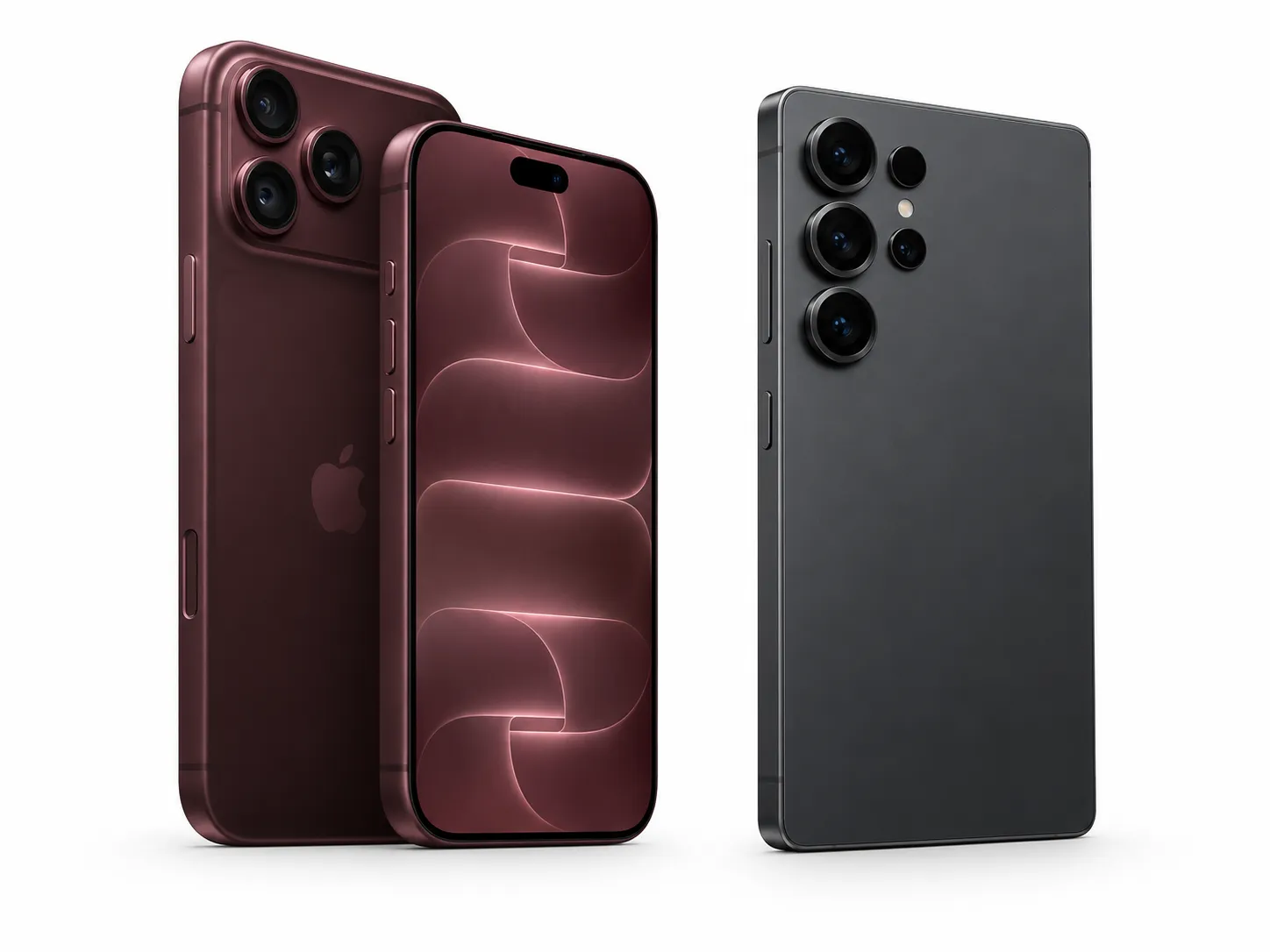
Samsung's biggest challenger on battery is not just Honor. As 9to5Google points out, the rest of the industry has moved past Samsung's historic capacity floor, and the comparison extends beyond silicon-carbon specialists. Google's Pixel 10 Pro Fold already ships with a 5,015mAh battery, marginally above Samsung's rumored figure, though in a bulkier, heavier chassis. Honor sits at 6,660mAh. Apple's reported iPhone Fold is rumored to carry 5,500mAh, according to Android Authority.
Taken together, the competitive picture is that 5,000mAh puts the Fold 8 in the same neighborhood as Google and somewhat below Apple's first entry, while Honor and Oppo operate in a different tier enabled by different chemistry. In other words, 5,000mAh would not make Samsung a battery leader in 2026, but it would at least move the Fold line past a long-standing limitation.
For existing Fold users who have lived with five years of flat capacity numbers, the upgrade addresses a long-standing complaint. Whether that improvement translates into a meaningful day-to-day difference will depend on how Samsung's efficiency and software stack perform alongside the larger cell, which leaked specs alone cannot answer. The fuller picture arrives when the device does, around July 2026.


Comments
Be the first, drop a comment!