





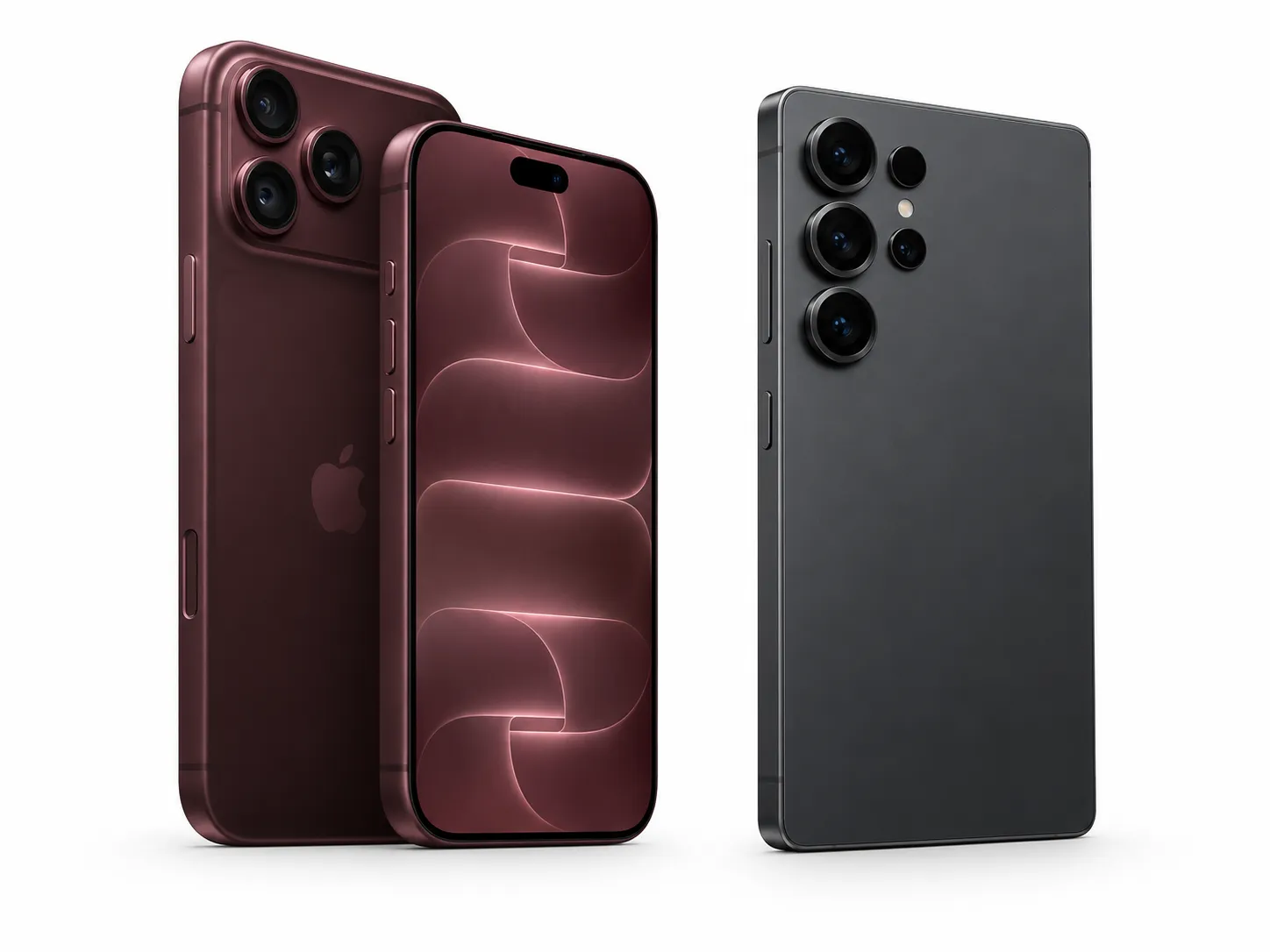
Apple pulled off something remarkable in Europe last year: the company delivered 36.9 million iPhones to the region, marking a 6% year-over-year increase and securing an unprecedented 27% market share, according to analytics firm Omdia. What makes this achievement particularly striking is the context—the broader European smartphone market actually contracted by 1% to 134.2 million units, as MacRumors reports. The decline was partly attributed to reduced consumer demand and new regulatory requirements around eco-design standards and mandatory USB-C connectivity, according to the same analysis.
This counter-cyclical performance required capturing share directly from competitors—Apple's 2.0 million unit increase came entirely from market redistribution, not expansion. The redistribution came primarily from mid-range manufacturers, whose combined European shipments fell while Apple simultaneously pushed upmarket with premium devices and downmarket with the iPhone 16e. Understanding how Apple executed this dual-direction strategy reveals important insights about the competitive landscape heading into 2026.
What drove Apple's record-breaking year?
The iPhone 16 lineup proved to be the workhorse behind Apple's European success. Strong sales came from the standard iPhone 16, the Pro Max variants of both the iPhone 16 and iPhone 17 series, and notably the more budget-conscious iPhone 16e, MacRumors reports. That last device played a particularly strategic role—it helped Apple capture buyers who were moving away from older models lacking USB-C ports as those devices were phased out under new European regulations, according to Omdia's findings.
Here's what made the timing so effective: the iPhone 17 series launched near the end of Q3, as Igor's Lab notes, creating a two-wave strategy. The iPhone 16e captured regulatory-driven upgrades during summer as older non-USB-C devices disappeared from shelves, while the iPhone 17 series addressed holiday premium demand. This sequencing allowed Apple to maintain momentum across both value-seeking and flagship-seeking segments throughout the critical second half of the year.
The fourth quarter numbers tell an even more compelling story. Apple captured **34% of the European market in Q4 2025 (13.4M shipments); share rose 1 percentage point year-over-year and shipments grew 6%, according to market data. Put simply: nearly one in three smartphones shipped in Europe during Q4 was an iPhone, the same source confirms. This surge was fueled primarily by robust demand in the premium segment and growing momentum in Eastern European markets, as reported by Igor's Lab.
That Eastern European expansion deserves closer attention. Apple successfully penetrated markets traditionally dominated by price-sensitive Android buyers, suggesting the company implemented localized financing options or carrier partnerships that made €800+ devices accessible in regions where average wages run 40-60% below Western European levels. This geographic diversification reduces Apple's dependence on saturated markets like Germany and France while opening substantial room for continued growth.
PRO TIP: If you're considering an iPhone purchase in 2026, Apple's premium margins provide buffer against component cost increases—expect flagship pricing to remain relatively stable compared to mid-range devices that may see sharper price jumps.
How did the competition stack up?
Samsung maintained its position as Europe's largest smartphone vendor by volume, shipping 46.6 million units throughout 2025, MacRumors reports. The South Korean manufacturer's shipments increased by 4% to secure a 29% market share, according to Igor's Lab.
But volume tells only part of the story. Samsung's 46.6 million units span all price tiers, while Apple's 36.9 million iPhones generate an estimated 60-70% of total European smartphone profit. This profit concentration creates compounding strategic advantages—Apple's higher per-unit margins fund substantially greater R&D spending and retail experience investments, creating ecosystem benefits Samsung struggles to match without sacrificing the mid-range volume that keeps its manufacturing costs competitive. The premium segment gap isn't just about current market share; it determines which company has the financial resources to define the next generation of smartphone innovation, the same analysis notes.
The mid-range battlefield showed more volatility. Xiaomi held third place with 21.8 million units and a 16% share, per Omdia's data, but actually saw shipments decline by 6% year-over-year, Igor's Lab reports. The 15T series apparently didn't replicate the success of its predecessor, according to market observers—a timing issue that proved costly. The series launched into a market where consumers were either trading up to premium devices or holding onto existing phones longer, creating a positioning gap that left Xiaomi exposed in the contracting middle ground between budget and flagship tiers.
Honor emerged as a notable winner, continuing its upward trajectory with an 18% growth rate, Igor's Lab notes. The company even cracked Europe's top five vendors for the first time, MacRumors confirms, though its 4% market share still trails significantly behind the leaders, according to the data. Honor's growth formula centers on delivering flagship-level camera systems and displays at mid-range prices—essentially bringing premium features to accessible price points. This strategy works only with tight supply chain control and lower marketing costs than established brands require, making Honor's ascent a test case for whether technical excellence alone can overcome brand disadvantage in mature markets.
Meanwhile, other players faced serious headwinds. Realme saw shipments drop 21% in Q4, Igor's Lab reports, and Oppo only officially returned to the German market at the beginning of 2026 after a prolonged limited presence, the same source indicates. These struggles highlight how the European smartphone landscape rewards consistency—you need not just competitive products, but sustained market presence and strategic positioning to maintain distribution relationships and consumer awareness.
What does this mean for the global picture?
Apple's European performance wasn't happening in isolation—it contributed significantly to the company's broader achievement of becoming the world's largest smartphone vendor by annual shipments in 2025, MacRumors notes. Europe represents roughly 15-20% of global premium smartphone revenue, meaning dominance here translates directly into the profit pool that funds ecosystem development, retail expansion, and platform investments worldwide.
The European market itself showed moderate stability, with Q4 shipments rising 2% compared to the same period in 2024, according to Igor's Lab. This development was driven primarily by strong demand in the premium segment and increasing momentum in parts of Eastern Europe, the same source reports.
What's particularly noteworthy: Apple achieved this record performance through strategic segmentation rather than premium-only positioning. The iPhone 16e created an accessible entry point that captured regulatory-driven upgrade demand, while Pro Max models secured the high-margin flagship category. This dual-tier approach allowed Apple to grow across price bands simultaneously—a balancing act that competitors struggled to replicate as they remained locked into either premium positioning (Samsung flagships) or value positioning (Chinese mid-range brands) without effectively bridging both segments.
Storm clouds on the horizon: the memory price crisis
While 2025 ended on a high note, significant challenges are emerging for 2026, Igor's Lab warns. Analysts are forecasting substantial increases in memory chip costs, particularly for RAM, with prices potentially climbing as much as 40% by Q2 2026, according to market forecasts. In some specific cases, cost increases as high as 300% have already been mentioned, the same source notes.
Entry-level and mid-range devices face the greatest exposure to these cost pressures, since profit margins are already thinner in those segments and passing price increases to consumers becomes more difficult, Igor's Lab explains. A budget smartphone manufacturer facing a 40% component cost increase confronts several strategic options, none of them appealing: absorb the cost and destroy already-thin margins, raise prices and risk losing price-sensitive customers, reduce memory configurations (8GB down to 6GB) and face criticism for product degradation, or negotiate volume guarantees with suppliers to lock in current pricing—an option available primarily to manufacturers with strong supplier relationships and purchasing power.
Manufacturers are now confronting these strategic decisions, according to industry analysis. Possible options include reducing memory configurations to maintain stable retail prices or implementing direct price increases on new models, the same report confirms. Some companies have already announced price increases, Igor's Lab notes.
If the memory crisis intensifies, it could trigger a noticeable decline in shipments during upcoming quarters and potentially push European market growth into negative territory, Igor's Lab cautions. While the premium segment appears relatively insulated so far, budget devices in particular could face significant pressure, according to the analysis.
Apple's premium positioning provides meaningful insulation from these pressures. The company's typical gross margins of 40-50% on iPhones mean a 40% component cost increase might translate to only a 5-7% retail price adjustment—a far more manageable consumer impact than the 15-20% increases budget manufacturers would need to implement to maintain profitability. This margin cushion represents more than just financial flexibility; it's a strategic moat that becomes particularly valuable during component shortages.
PRO TIP: Budget smartphone buyers should watch for memory configuration downgrades (8GB→6GB) in upcoming launches or consider purchasing before Q2 2026 when price increases are expected to take full effect across mid-range devices.
What to watch in 2026
The 2026 European smartphone market will test whether premium brand equity can overcome macroeconomic headwinds—a question with implications extending far beyond quarterly sales figures. Cost management becomes the defining factor because it determines which manufacturers can maintain product roadmaps versus those forced into reactive positioning, essentially separating companies with strategic optionality from those in survival mode, Igor's Lab suggests.
The memory price crisis could fundamentally reshape the competitive landscape in unexpected ways. Historical data from previous component shortages—like the 2011 Thailand flooding that disrupted hard drive production or the 2017 NAND shortage—shows premium brand market share typically increases 2-4 percentage points when mid-range pricing compresses toward flagship levels. Apple could see similar dynamics if budget phones breach the €400-500 threshold, as consumers who might have considered cheaper alternatives decide that paying the Apple premium makes more sense when the price gap narrows from €600 to €300-400.
The European market showed stable development in 2025 with Apple clearly dominating alongside solid growth from Samsung and Honor, according to year-end analysis, but structural pressures from sharply rising memory prices are mounting, the same source warns. This stability masks underlying fragility—regulatory compliance costs are now sunk, upgrade cycles have lengthened to 3+ years in mature markets, and memory prices threaten to eliminate the value proposition of budget devices entirely.
The key question for 2026: can Apple maintain its momentum when component costs squeeze the entire industry? Watch three specific indicators for early signals: First, Q1 2026 pricing announcements from mid-tier manufacturers will reveal how aggressively they're passing costs to consumers. Second, memory configuration changes in upcoming launches (particularly moves from 8GB to 6GB in the €300-400 segment) will show whether manufacturers are sacrificing specifications to hold price points. Third, carrier subsidy adjustments in key markets like Germany and France will indicate whether distribution partners are willing to absorb some pricing pressure to maintain volume.
Apple benefited from smart product positioning, regulatory tailwinds from USB-C requirements, and strong premium segment demand in 2025, according to market data. The company's 6% growth in a contracting market while capturing a record 27% share, as Omdia documented, demonstrated execution excellence. But 2026 will reveal whether Apple's scale and purchasing power provide advantages in securing memory chips at better prices than smaller competitors—and whether European consumers maintain their willingness to pay premium prices even as economic headwinds persist.
From the current market dynamics, 2026 is shaping up to be as much about survival and adaptation as growth. Companies with strong brands, loyal customers, and healthy margins are best positioned to weather the component cost storm—and potentially emerge with even stronger market positions if budget competitors stumble.


Comments
Be the first, drop a comment!