





Xiaomi 18 Pro Series: What's Confirmed and What Isn't
Xiaomi launched the 18 Pro and 18 Pro Max in China on September 23, 2026, and the headline feature across the Xiaomi 18 Pro series is a hardware-level privacy display that switches on for a single app, a single notification, or one pane of a split screen. Both phones also bring back the rear display from last year's 17 Pro, now rebuilt around Xiaomi's Xiao AI assistant (GSMArena, yesterday).
Both phones are on sale now in China, starting at CNY 5,999 (about $895) for the 18 Pro and CNY 6,999 (about $1,045) for the 18 Pro Max in 12GB/256GB trim (GSMArena; TechRadar, yesterday). GSMArena and The Verge report that Xiaomi said a global launch will follow later this year, though TechRadar's own hands-on account describes the phone shipping "globally" next year instead, so even outlets covering the launch don't agree on timing, and it's worth tracking since last year's 17 Pro series never left China (The Verge; TechRadar, yesterday).
How the Xiaomi 18 Pro privacy display works
Xiaomi's privacy display restricts viewing angles at the hardware level, cutting off legibility past roughly 60 degrees off-axis, a concept similar to Samsung's Galaxy S26 Ultra Privacy Display (TechRadar; The Verge, yesterday). Where Xiaomi's version goes further is scope: it can be applied to one specific app, an individual notification, a floating window, or a single pane in split-screen mode, rather than locking down the entire panel (The Verge, yesterday). Location-based triggers can turn it on at work and off at home, with smart detection for places like airports or elevators, and the selfie camera can flag a potential onlooker and suggest switching it on. A dedicated side AI button also doubles as a global privacy-mode shortcut (GSMArena, yesterday).
None of that has actually been tested outside a controlled demo. TechRadar's reporter handled a unit at Snapdragon Summit but couldn't unlock it to try Smart Privacy Display at all, so the 60-degree cutoff, any brightness trade-off, and whether the rest of the screen truly stays unaffected while privacy mode runs come from Xiaomi's and The Verge's reporting on the launch, not from hands-on testing (TechRadar; The Verge, yesterday). Calling this a Samsung-beating privacy display describes announced feature scope, not a verified result.
Xiaomi 18 Pro rear screen: what has been tested
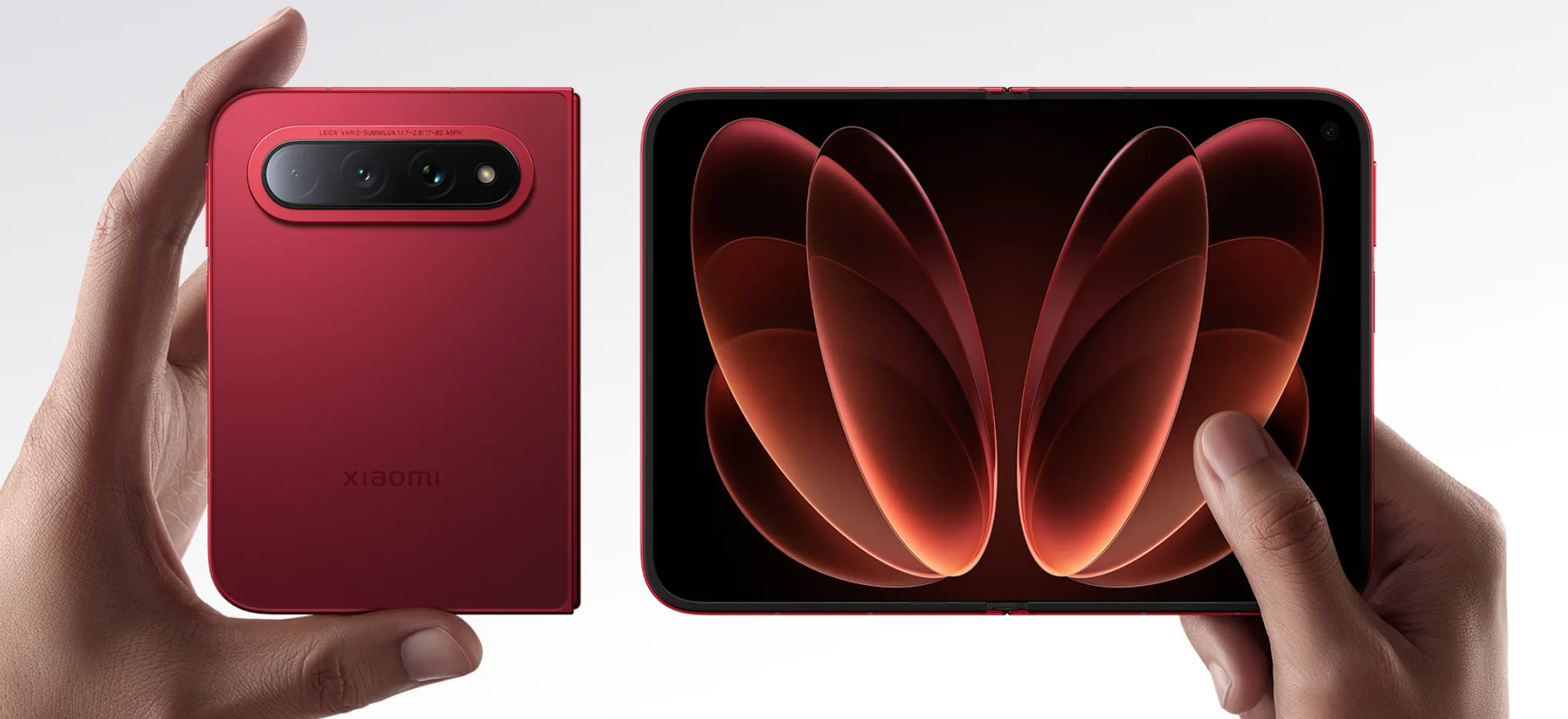
The one part of the rear screen with a firsthand account is the simplest one. TechRadar's reporter used it as a selfie viewfinder for the 200MP main camera, activating it with a wave gesture or a volume-button press (TechRadar, yesterday). The panel itself measures 2.66 inches on the 18 Pro and 2.86 inches with a 120Hz refresh rate on the Pro Max (TechRadar, yesterday).
Everything else is still a company claim. Xiaomi says users can build custom mini apps for the rear screen with the Xiao AI assistant, demoing a hydration reminder, an egg timer, and recipe suggestions, on top of more than 100 preloaded cards covering productivity, health, and travel (GSMArena; Sina Tech, yesterday). None of the current reporting includes independent testing of how reliably those AI-generated cards actually work, or whether the processing runs on-device or in the cloud. Whether this software carries over to international HyperOS builds is unknown; Xiaomi hasn't said either way, so treat it as unconfirmed rather than assume it's exclusive to the China build.
Xiaomi 18 Pro vs 18 Pro Max: specs that matter
Screen size and battery capacity are the clearest gap between the two phones. The 18 Pro has a 6.4-inch display and a 7,000mAh battery, while the Pro Max steps up to 6.9 inches and 8,500mAh; both use 32%-silicon-content cells with 100W wired and 50W wireless charging (The Verge; GSMArena, yesterday).
The main camera sensor differs on paper. The Pro uses the Light Fusion 960, while the Pro Max swaps in the 960L with LOFIC support, which Sina Tech's launch coverage describes as extending dynamic range in high-contrast scenes (Sina Tech, yesterday). GSMArena, however, describes the triple-lens setups on both phones as identical, so the real-world gap between the two sensors still needs independent camera testing before it should factor into a purchase decision (GSMArena; The Verge, yesterday).
Chipsets differ slightly too, with a Snapdragon 8 Elite Gen 6 on the Pro versus the Elite Extreme Gen 6 on the Pro Max. The Verge notes the real-world performance gap between the two chips is minor, which suggests the CNY 1,000 price difference between the models comes more from battery and display size than raw processing power (The Verge, yesterday).
The published specifications make size, battery, and rear-screen dimensions the clearest differences between the two phones, while any camera or chipset advantage remains untested. A transparent red option, sold as the Xiaomi 18 Pro Special Edition on both models, sits at the top 16GB/1TB storage tier and costs CNY 1,000 more than the standard 16GB/1TB configuration on each phone; it's a cosmetic add-on layered onto the same hardware split, not a third tier of features (Sina Tech, yesterday).
What's confirmed for global buyers, and what isn't
Xiaomi has confirmed that international availability is coming. GSMArena and The Verge both report Xiaomi said a global launch will follow later this year, a notable shift since The Verge points out the 17 Pro series never reached markets outside China at all (GSMArena; The Verge, yesterday). TechRadar's own hands-on report conflicts with that timing, describing the phone shipping "globally" next year rather than this year, so the exact schedule is disputed even among outlets covering the same announcement (TechRadar, yesterday).
The Verge specifically states that at least one 18 Pro phone will launch internationally, which leaves open whether both the Pro and Pro Max make the trip or just one of them (The Verge, yesterday). No source has said which regions get it, what international pricing looks like, or whether the privacy-display automation, the rear-screen card library, and Xiao AI mini-app generation will ship in global HyperOS builds at launch.
For now, the Xiaomi 18 Pro series is a China purchase. Pricing, specs, and colorways are locked in there, while an international release date, model selection, and software parity for the privacy display and rear screen remain open questions. Anyone tempted to import a unit before an official regional launch should check supported network bands for their carrier, confirm what warranty or repair coverage applies outside China, and verify whether Google services, language support, and the AI features demoed at launch actually run normally on an imported phone. Buyers outside China are better off waiting for Xiaomi's own international announcement than treating an import listing as a preview of the eventual global version.




Comments
Be the first, drop a comment!