





![for Phone Ultra Case Fold Techwoven Green for iPhone | [Compatible with MagSafe] [Premium Tech Woven Fabric] [Drop Protection] Shockproof Skin-Friendly](https://m.media-amazon.com/images/I/81VnAYL7hsL._AC_UY218_.jpg)
iPhone Ultra vs Samsung Galaxy Z Fold 8: Which to Buy Now?
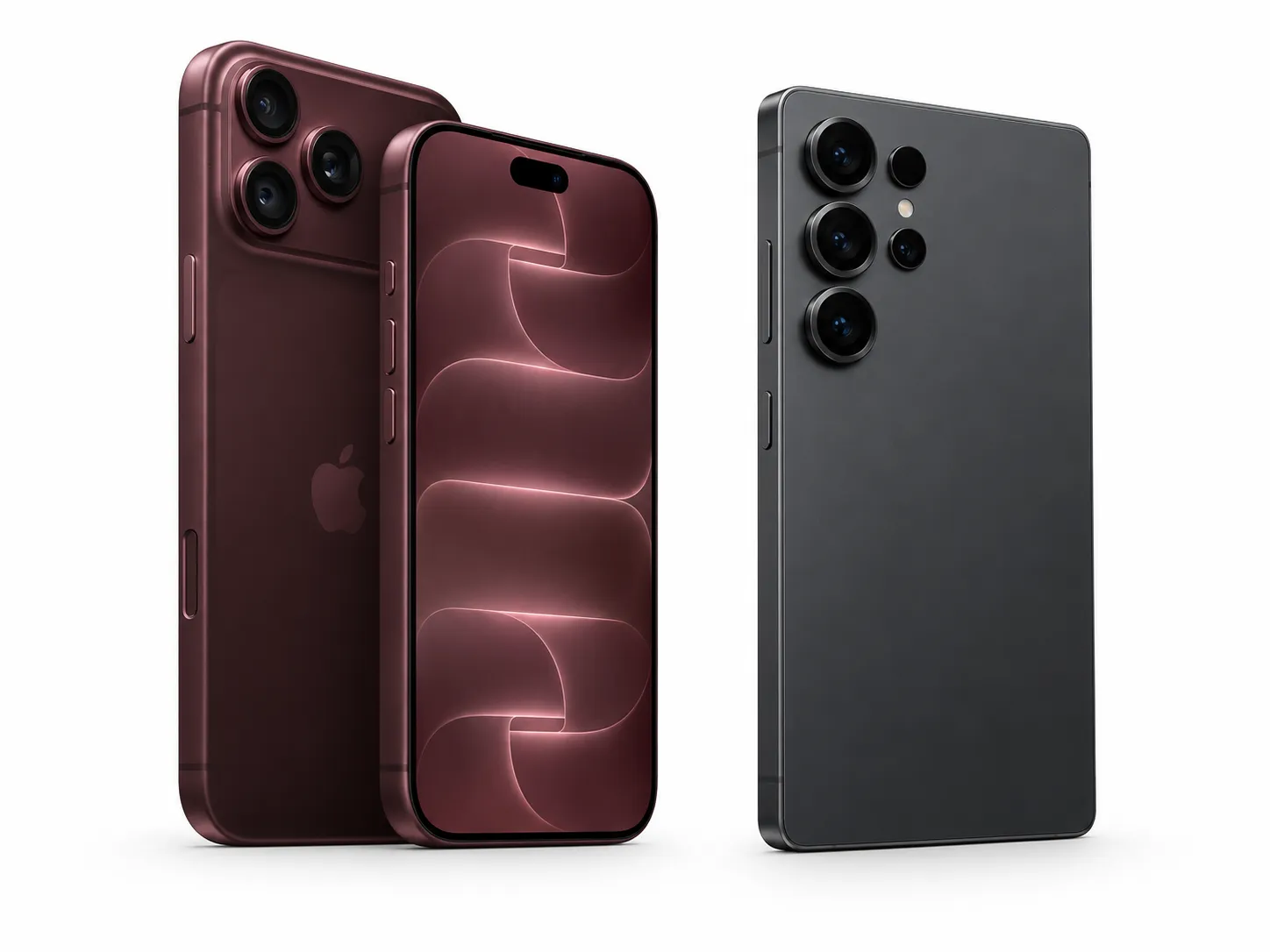
Samsung's Galaxy Z Fold 8 has been in customers' hands for weeks. Apple's foldable iPhone is still a rumor until next week's keynote. That gap is the whole story behind any iPhone Ultra vs Samsung Galaxy Z Fold 8 comparison you'll read right now: one phone has a price, a shipping unit, and an independent teardown behind it, and the other exists only in leaks, analyst notes, and a supply chain rumor mill.
If you need a big-screen foldable today, only one of these phones can actually be bought. If you're weighing whether to wait for Apple instead, the honest answer is that almost every number tied to the iPhone Ultra, price, release date, repair cost, camera specs, is still unconfirmed. This piece separates what Samsung has locked in from what Apple hasn't said yet, including Bloomberg's Mark Gurman's claim that Apple's foldable software could work "from day one" in a category Android has spent nearly a decade refining (Tom's Guide).
iPhone Ultra vs Samsung Galaxy Z Fold 8 price and availability
Samsung unveiled the Fold 8 in July, and pricing landed at $1,899 for the 256GB model, $2,099 for 512GB, and $2,499 for 1TB in the US (Android Central). That's not just an announcement sitting on a press page. iFixit's teardown worked on a retail unit, and reports of five million preorders suggest a lot of buyers already have one in their pocket, not on a wish list (iFixit).
The iPhone Ultra sits in a very different place. Apple is expected to reveal it alongside the iPhone 18 Pro and Pro Max at its September 9 event, with pricing projected somewhere between $2,000 and $2,500. Apple hasn't confirmed either the name or the number; that range comes from reporting, not an Apple spec sheet (Android Central).
Ship timing is where the rumors actually disagree with each other. Weibo leaker Fixed Focus Digital says supply will be "extremely limited" at launch but sees no sign of a delay past September, and a July report from Cailian News Agency cites Apple supply chain sources denying any postponement. Ming-Chi Kuo and sources at Macworld describe a different pattern altogether, closer to the original iPhone X: announced in September, but not actually shipping until later in the fall. Nikkei Asia went further earlier this year, reporting a possible slip into 2027, a claim Gurman pushed back on, saying the device remained "on track" for September (9to5Mac). Even Android Central's own reporting flags that the Ultra might not ship the same week as the iPhone 18 Pro line, and it's unclear whether every region gets it at launch (Android Central).
For buyers, that means treating the Ultra's price, storage tiers, and ship date as placeholders until the keynote. Anyone who wants a foldable in hand this month has exactly one real option, and it's the one Samsung already sells.
How the hardware actually compares on paper
Neither phone wins outright on specs, at least based on what's leaked so far for Apple's side. The Fold 8 has a confirmed 5.5-inch cover display and 7.6-inch inner display, is 4.5mm thick when unfolded, and carries IP48 dust and water resistance, a rating Samsung itself warns doesn't fully protect the hinge from fine debris (Android Central).
Leaked iPhone Ultra dimensions land close to that: a 5.5-inch cover panel, a slightly larger 7.8-inch inner display, and the same 4.5mm unfolded thickness. Its battery is rumored at 4,883mAh, just a touch above the Fold 8's 4,800mAh dual-cell pack. Apple's ingress protection rating for the Ultra hasn't leaked at all, so there's no way yet to say whether it matches, beats, or falls short of Samsung's IP48.
Camera specs tell a similar story. Samsung went with two 50MP sensors on the Fold 8, a main and a wide-angle, with no dedicated telephoto lens. Leaks describe the Ultra using two 48MP sensors in a similar main-plus-wide layout, also without a tele lens (Android Central). Neither phone is pulling ahead here; they're both making the same trade-off between foldable thinness and a full zoom camera array.
One leaked detail is a bigger departure for Apple than for Samsung: reports point to Touch ID built into the power button as the Ultra's main way to unlock, rather than Face ID. That would put Apple's foldable closer to how many Android foldables already handle biometrics, and it's a real design shift if it holds up, since Face ID has been Apple's default for years (Android Central).
The software bet: can iOS 27 catch up on day one?
This is the argument Apple is reportedly leaning on hardest, and it's worth separating from the hardware specs entirely. Gurman's framing is direct: Android foldables have spent close to a decade getting their app experience "in the correct shape," and Apple could arrive with that groundwork already done (Tom's Guide).
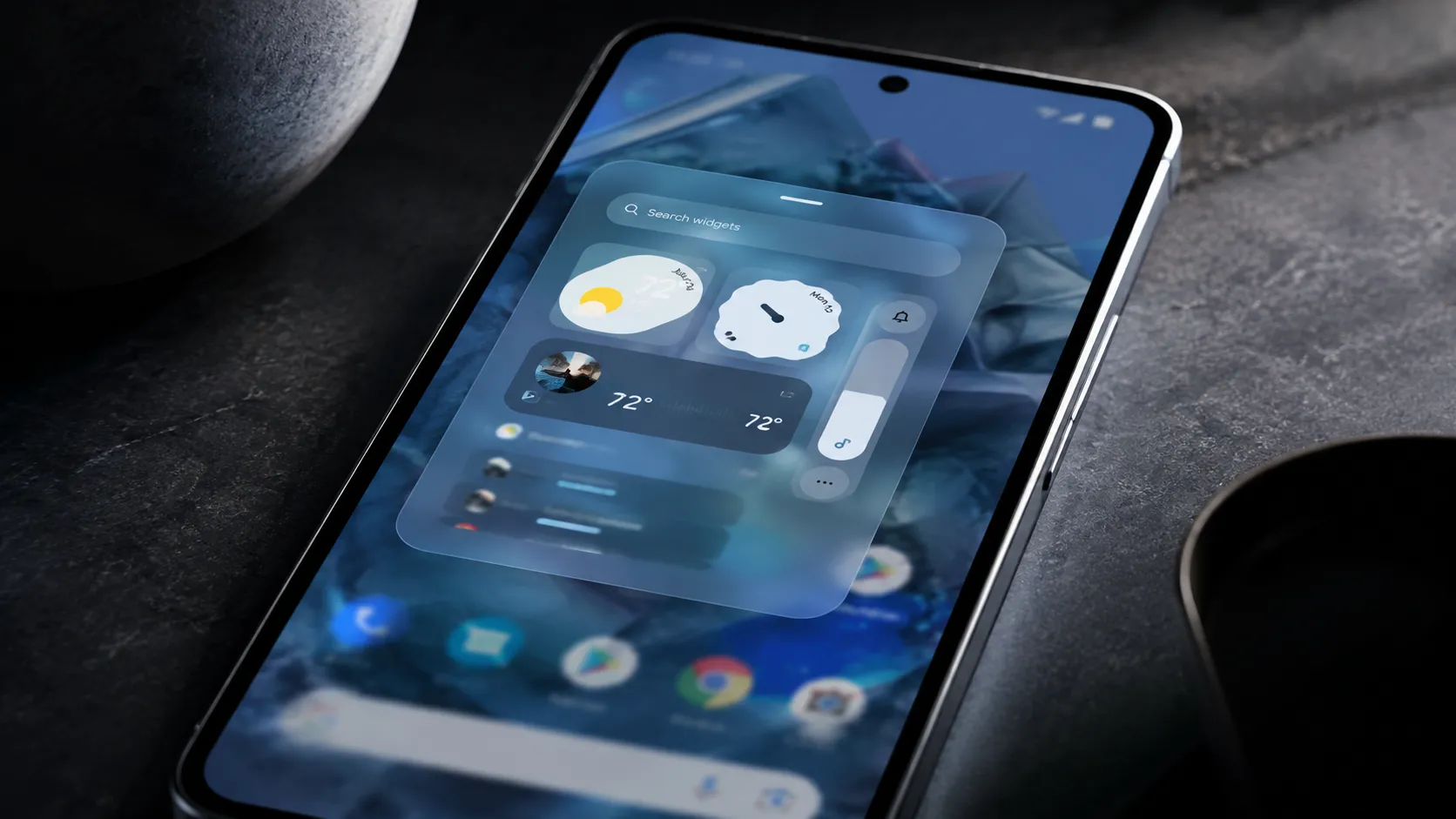
What Apple actually has to match is not hypothetical. Taskbar navigation, floating windows, and split-screen multitasking have been standard on Samsung's foldables for roughly two years, refined across multiple Fold generations with real developer support behind them (Android Central).
Android Central's reporting says iOS 27 is expected to bring its own version of a taskbar, floating windows, and multitasking tools to the Ultra, calling it a clear priority for the update (Android Central). That's reporting on what Apple appears to be building, not an Apple-confirmed feature list, and it's worth holding that distinction until Apple actually demos it. Gurman adds that Apple's marketing angle skips generic "it folds" messaging entirely, positioning the Ultra around specific uses: web browsing on the bigger screen, the inner display doubling as a larger camera viewfinder, and video playback as the headline selling point (Tom's Guide).
None of this has been independently tested. There's no hands-on data yet on how iOS 27 handles app continuity across the two displays, how third-party developers have optimized for the aspect ratio jump, or whether multitasking actually feels as mature as it does on a Fold 8 that's had years of iteration. After September 9, check independent reviews specifically for multitasking limits and app-scaling behavior before assuming a "day one" software experience beats Samsung's several-generations-deep one.
There's also a switching cost that specs and software claims don't capture. Buyers already deep in one company's apps, accessories, and account ecosystem should weigh that separately from which foldable looks sharper on a spec sheet this year, since leaving that ecosystem behind often costs more in daily friction than any hardware trade-off does.
Repair and durability: what's proven versus what's projected
Samsung's risks here are documented, even if not fully quantified. iFixit gave the Fold 8 a provisional 4 out of 10 for repairability, pointing to a hard-to-reach inner display and a hinge that Samsung continues to treat as one replacement assembly with the screen, rather than as separate serviceable parts (iFixit).
The more concerning finding came from iFixit's dust-and-sand exposure test. After working sand into the hinge, the mechanism started making loud crunching and grinding noises and stopped opening normally. That's a real limitation of the IP48 rating, which only guards against solid particles 1mm or larger, not a demonstrated failure rate for how the phone behaves under normal daily use. It's a documented dust-exposure limitation in a controlled test, not proof that every Fold 8 owner will run into the same problem (iFixit).
Samsung did make one clear improvement worth crediting: a modular USB-C port that can be replaced on its own cable rather than being soldered into a larger board, plus battery cells that pack 8.8% more capacity than the Fold 7's (iFixit).
On cost, Samsung's numbers are already public. An out-of-warranty inner display repair on the Fold 8 runs $579, up from $449 on the Fold 7, a jump that reflects the new Flex Titanium reinforcement inside the panel. Repair specialist Ricky Panesar of iCorrect told Forbes he expects the equivalent repair on Apple's foldable to run closer to $1,155, since Apple is expected to source its panels from Samsung Display and pay a supplier margin Samsung itself doesn't (Notebookcheck). That's an industry forecast relayed through Forbes, not a price Apple has confirmed.
Panesar also expects AppleCare+ per-incident fees, currently $29 for screen damage and $99 for other accidental damage, to climb toward roughly $100 for foldable repairs, though Apple hasn't announced any foldable-specific coverage terms at all (Notebookcheck). Until Apple publishes real AppleCare+ terms for the Ultra, that number stays a projection from one repair shop, not a plan detail buyers can budget against yet.
What to actually do before buying either one
The Fold 8 is the only phone in this comparison you can hold today, with a real price, a torn-down unit, and known trade-offs. The Ultra is still a projected $2,000 to $2,500 device with contested ship timing and repair costs that no one at Apple has confirmed.
Before spending money on either, check these specifics:
- If you need a large-screen foldable now and can live with Samsung's documented hinge and dust limitations, the Fold 8 at $1,899, $2,099, or $2,499 is a usable, tested choice today.
- If staying in Apple's ecosystem matters more than getting a foldable immediately, wait for the September 9 keynote to confirm actual pricing, storage tiers, and whether the Ultra ships that month or slips into fall like Kuo and Macworld's sources suggest.
- Don't preorder based on leaked thinness, leaked battery size, or Gurman's software prediction. Wait for hands-on reviews that actually test iOS 27's multitasking, the camera setup against Samsung's dual 50MP array, and how the hinge holds up outside a controlled teardown.
- Confirm AppleCare+ terms for the Ultra directly from Apple once announced, rather than budgeting around Panesar's $1,155 repair estimate or his projected $100 incident fee.
Samsung's foldable earns its place by being the only one with numbers you can verify right now. Apple's earns nothing yet, because there's nothing to verify. That changes on September 9, and not a day before.



Comments
Be the first, drop a comment!