





iPhone Duo vs Xiaomi 18 Fold: Price, Specs & Availability
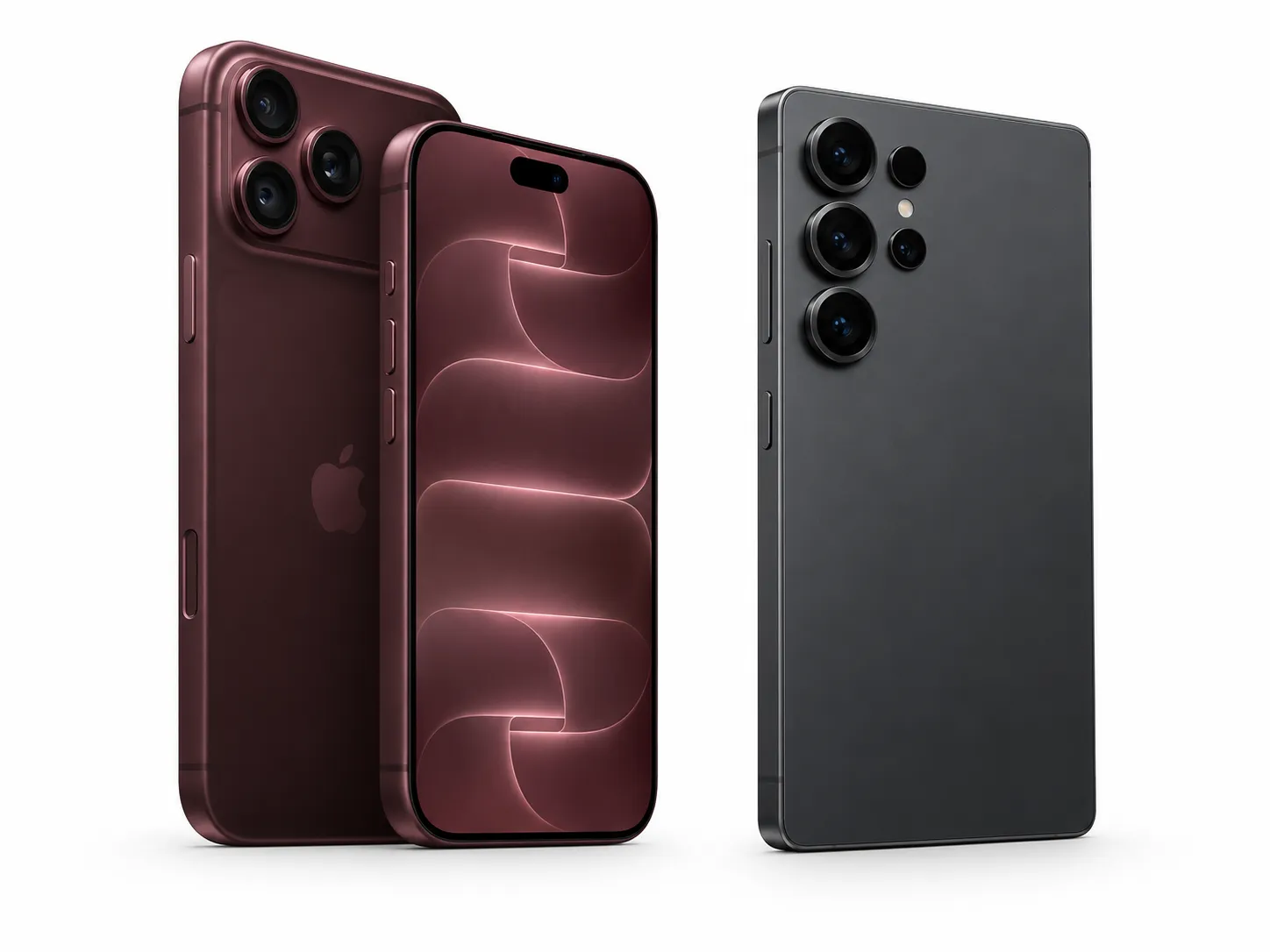
Apple and Xiaomi introduced their first passport-style foldables within two days of each other, and anyone running an iPhone Duo vs Xiaomi 18 Fold comparison right now will notice how closely the spec sheets line up. Both phones use the same basic shape, a 7.6-inch inner display paired with a 5.4-inch outer display, both running at 120Hz (Engadget, today). That convergence makes this less a story about who copied whom and more a question of what each company prioritized once it settled on the same form factor.
Neither phone is currently purchasable through official channels outside China: the Xiaomi 18 Fold is China-only, and the iPhone Duo is still waiting on its October 23 launch. The Duo starts at $1,999 in the US, with preorders opening October 16 (Apple Newsroom, last month). The 18 Fold starts around 10,999 yuan, roughly $1,640 (Engadget, today). Every spec below comes from manufacturer claims or Engadget's own reporting on those claims. The sources reviewed here don't include independent reviews or testing of either device, so treat the numbers accordingly.
iPhone Duo vs Xiaomi 18 Fold specs at a glance
| Category | iPhone Duo | Xiaomi 18 Fold |
|---|---|---|
| Starting price | $1,999 (US) (Apple) | ~10,999 yuan, ~$1,640 (Engadget) |
| Availability | Preorders Oct. 16, on sale Oct. 23 in initial markets (Apple) | China only, no US carrier certification (Engadget) |
| Inner display | 7.6-inch, 120Hz, nano-texture coating (Apple) | 7.6-inch, 120Hz (Engadget) |
| Outer display | 5.4-inch, 120Hz (Apple) | 5.4-inch, 120Hz (Engadget) |
| Peak brightness | 3,000 nits (Apple) | 4,000 nits, per Xiaomi's claim (Engadget) |
| Weight | 254g (Engadget) | 219g (Engadget) |
| Build/durability | Titanium frame, Ceramic Shield, IP68 (Apple) | Aluminum frame, Shield Glass 3.0, no disclosed IP rating (Engadget) |
| Charging | 60W wired, 35W MagSafe wireless (Apple) | 67W wired, 50W wireless, as reported (Engadget) |
| Cameras | Dual 48MP, main plus ultrawide, no dedicated telephoto (Apple; Engadget) | 200MP main, 50MP ultrawide, 50MP optical-zoom lens (Engadget) |
| Software status | iOS 27.1, Split View, Siri AI beta, Apple Pencil later in 2026 (Apple) | Not detailed in available reporting |
Who can actually buy and use either one
Run a Xiaomi 18 Fold vs iPhone Duo comparison from the buyer's side instead of the spec sheet, and the picture looks lopsided in a different way than the headline numbers suggest. The Duo goes on sale in more than 70 countries and regions on October 23, including the US, UK, Australia, Japan, and China, with an additional 28 countries and regions following October 30. It's eSIM-only worldwide and supported by more than 500 carriers (Apple Newsroom, last month). That's a wide rollout, but the Duo has not started shipping yet. Preorders don't open until October 16.
The 18 Fold is already sold, just not everywhere. It's officially available only in China, and Xiaomi doesn't sell it through US retail or carrier channels, which means it isn't carrier-certified for US networks (Engadget, today). That's a China-only status as of now, not a confirmed permanent decision to skip other markets, so a wider rollout later isn't ruled out by anything in the reporting. For readers in China, both phones will have an official retail path once the Duo arrives later this month. Everyone else faces an asymmetric choice: the Duo has a fixed launch date in their market, while the 18 Fold has no announced official availability outside China.
Importing is the only route to a Xiaomi 18 Fold outside China, and that route comes with real unknowns rather than guaranteed answers. A gray-market unit typically means buying unlocked, with no built-in warranty coverage or update path tied to your region. Before paying import prices, confirm warranty terms, software update support, 5G band compatibility, and the phone's actual SIM configuration with the seller directly, rather than assuming it works like a locally sold device. The available reporting doesn't spell out Xiaomi's import or service policies either way, so these are things to verify case by case, not facts this comparison can settle. For readers in the Duo's 70-plus launch markets, the Duo is the only officially announced option between these two phones right now, not because the 18 Fold is worse, but because only one of them has a supported path to their pocket.
Design and durability: a daily-carry trade-off
Apple leans on materials language for the Duo. The frame is grade 5 titanium, the back uses Ceramic Shield, and the front uses Ceramic Shield 2, which Apple says offers three times better scratch resistance than the prior generation. A nano-textured custom polymer layer sits over the inner display to cut glare and reduce the visibility of the crease, and the package carries an IP68 rating for water and dust resistance (Apple Newsroom, last month).
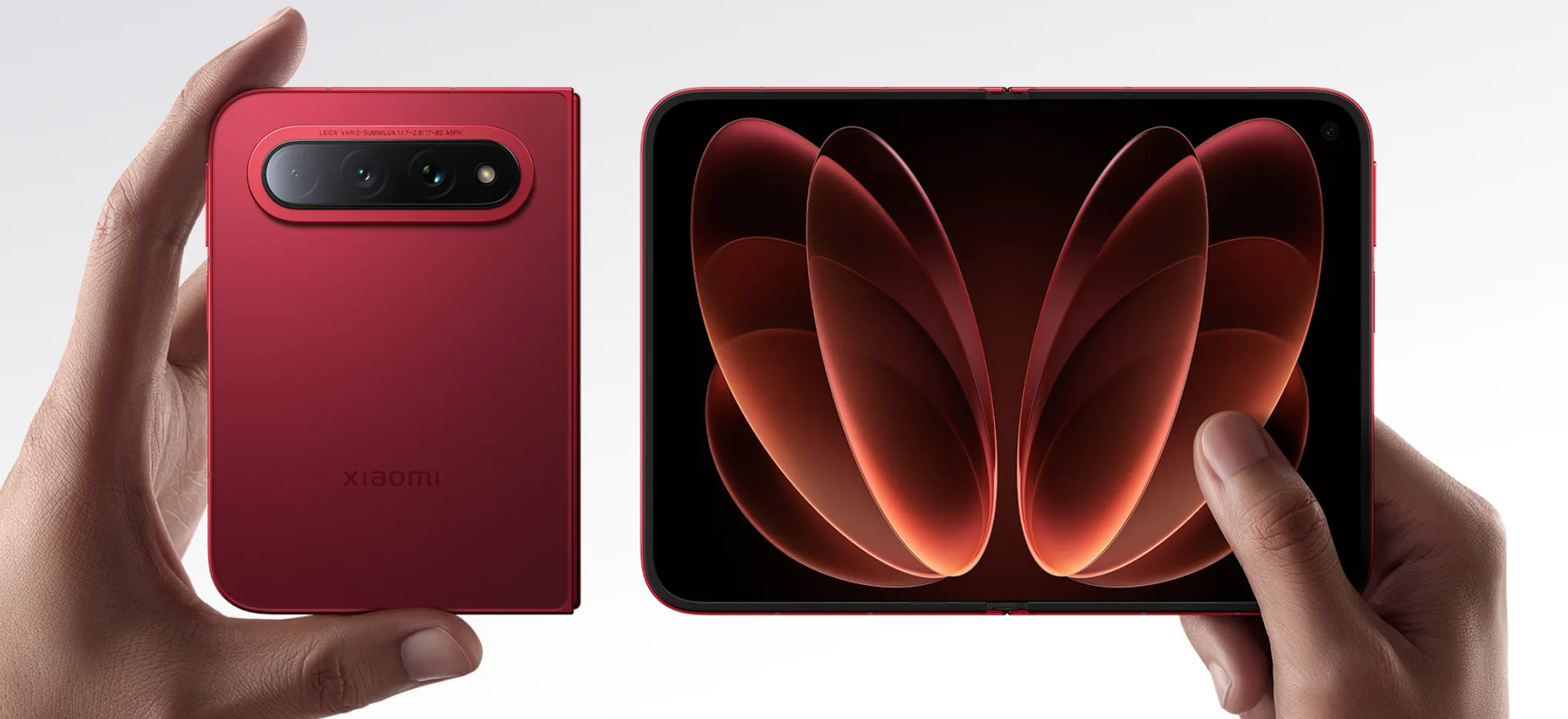
Xiaomi took a different path. The 18 Fold uses an aluminum frame with Shield Glass 3.0, and the company didn't disclose an IP rating, something Engadget flags as worth watching since durability is a major concern for foldable buyers (Engadget, today). Buyers who care about splash or dust protection don't have a number to check against for the Xiaomi phone, a real gap compared to Apple's documented rating.
Weight tells a different story in Xiaomi's favor. The 18 Fold comes in at 219 grams, 35 grams lighter than the Duo's 254 grams (Engadget, today). A difference that size is likely to matter most to buyers sensitive to pocket weight or one-handed use, even if it doesn't show up in a durability spec. The sources reviewed here don't include independent hinge-cycle or drop testing for either phone, so the durability picture right now comes down to what each company is willing to disclose rather than what's actually been measured.
Performance and battery: which numbers actually compare
Xiaomi's numbers read aggressively on paper. The company claims 4,000 nits of peak brightness against Apple's 3,000, and Engadget reports 16GB of RAM, a 6,000mAh silicon-carbon battery, and charging up to 67W wired and 50W wireless, all built around Xiaomi's 3nm XRING O3 chip (Engadget, today). The brightness figure is explicitly a Xiaomi claim; the RAM, battery, and charging numbers come from Engadget's reporting rather than a direct quote, but none of them have been independently measured in the sources reviewed here.
Apple's pitch, by its own description, centers on efficiency rather than raw output. The A20 Pro runs on a 2-nanometer process, which Apple says delivers up to 35 percent better sustained performance than the iPhone 17 Pro, aided by a vapor chamber and a dual-battery architecture split across both halves of the device (Apple Newsroom, last month). Apple also claims up to 24 hours of mixed-display use, 31 hours of inner-display video playback, and 44 hours on the outer display, with a 50 percent charge in around 20 minutes wired or 30 minutes wireless. The Duo tops out at 60W wired and 35W MagSafe wireless, both slower than Xiaomi's reported figures (Apple Newsroom, last month).
Side by side, Xiaomi emphasizes capacity and raw wattage, while Apple emphasizes sustained-performance and battery-life claims rather than capacity figures. That's a difference in what each company chose to publish, not proof of which phone actually lasts longer or charges faster day to day. Peak brightness and charging wattage tend to shift once thermal throttling, display calibration, and real battery chemistry enter the picture, and nothing in the sources reviewed here includes independent benchmarks or battery rundown tests for either phone.
Cameras: zoom hardware versus video software
Camera hardware is where the two phones diverge most. Xiaomi's 18 Fold packs a 200MP main sensor alongside a 50MP ultrawide and a separate 50MP sensor dedicated to optical zoom (Engadget, today). The Duo has no dedicated telephoto camera. Apple describes its 2x option as "optical-quality," while Engadget reports that the phone lacks true optical zoom (Apple Newsroom, last month; Engadget, today). Anyone who shoots a lot of zoomed or distant photos should treat that as a real limitation for the Duo next to a phone with dedicated zoom hardware.
Apple's camera pitch leans toward video instead. The Duo supports 4K recording at 120fps in Dolby Vision, Cinematic effects that can be applied after the footage is already shot, and an Audio Mix feature that improves voice clarity and can isolate music from a recording. Apple also points to a folded-phone trick: prop the Duo up on its hinge and shoot time-lapse footage without a tripod (Apple Newsroom, last month).
Xiaomi has the stronger listed zoom hardware, and Apple's published material emphasizes video features and software tools over lens count. Megapixel counts and lens counts don't decide which phone actually takes better pictures. That judgment needs sample photos and video shot side by side by someone with no stake in either sale, and that comparison doesn't exist yet.
Software: confirmed for the Duo, undocumented for the 18 Fold
iOS 27 is built around the Duo's folding behavior specifically. Apple says content reacts as the phone opens, reorients when turned sideways, and switches displays automatically when flipped, and the update introduces Split View, letting two apps run side by side on an iPhone for the first time (Apple Newsroom, last month). The Duo ships with iOS 27.1. Apple Pencil support over USB-C is scheduled for later in 2026, after launch rather than at launch.
Siri AI's rollout is easy to overstate if you're not careful about dates. Apple says the beta began rolling out with iOS 27 in English last month, with support for French, Japanese, Korean, Portuguese, and Spanish planned for this month (Apple Newsroom, last month). Apple's own material doesn't confirm exactly where that language rollout stands as of this week, so treat the additional languages as pending rather than live. Either way, Siri AI on the Duo's larger inner display hasn't been tested by anyone outside Apple, since the hardware itself doesn't ship until October 23.
The 18 Fold's side of this section is mostly blank. The supplied reporting doesn't describe Xiaomi's multitasking layout, foldable-specific software, or AI features at all. That's a gap in what's been reported, not evidence that Xiaomi lacks comparable tools. Readers who care about foldable-tailored software should treat it as an open question until Xiaomi's own materials or an independent review fill it in.
Which one actually makes sense right now
On paper, Xiaomi's listed specs look more aggressive across several categories: brightness, RAM, battery capacity, charging speed, and zoom camera hardware all favor the 18 Fold (Engadget, today). Apple's case rests on build materials, chip efficiency, and foldable-tailored software, but those remain manufacturer-reported numbers that haven't been independently verified in the sources reviewed here (Apple Newsroom, last month).
So which is the best passport-style foldable phone? It comes down to where you live:
- In China: the 18 Fold is a real purchase today through Xiaomi's official retail and service network, with several on-paper advantages and none of the import uncertainty.
- In one of the Duo's 70-plus launch markets: the Duo is the only one of these two phones with an announced official sales path where Xiaomi has no official availability, but there's nothing to buy yet. Preorders open October 16, sales start October 23.
- Everywhere else: treat both spec sheets as provisional. Confirm local availability and carrier support, and wait for independent reviews before importing either phone based on manufacturer numbers alone.




Comments
Be the first, drop a comment!