





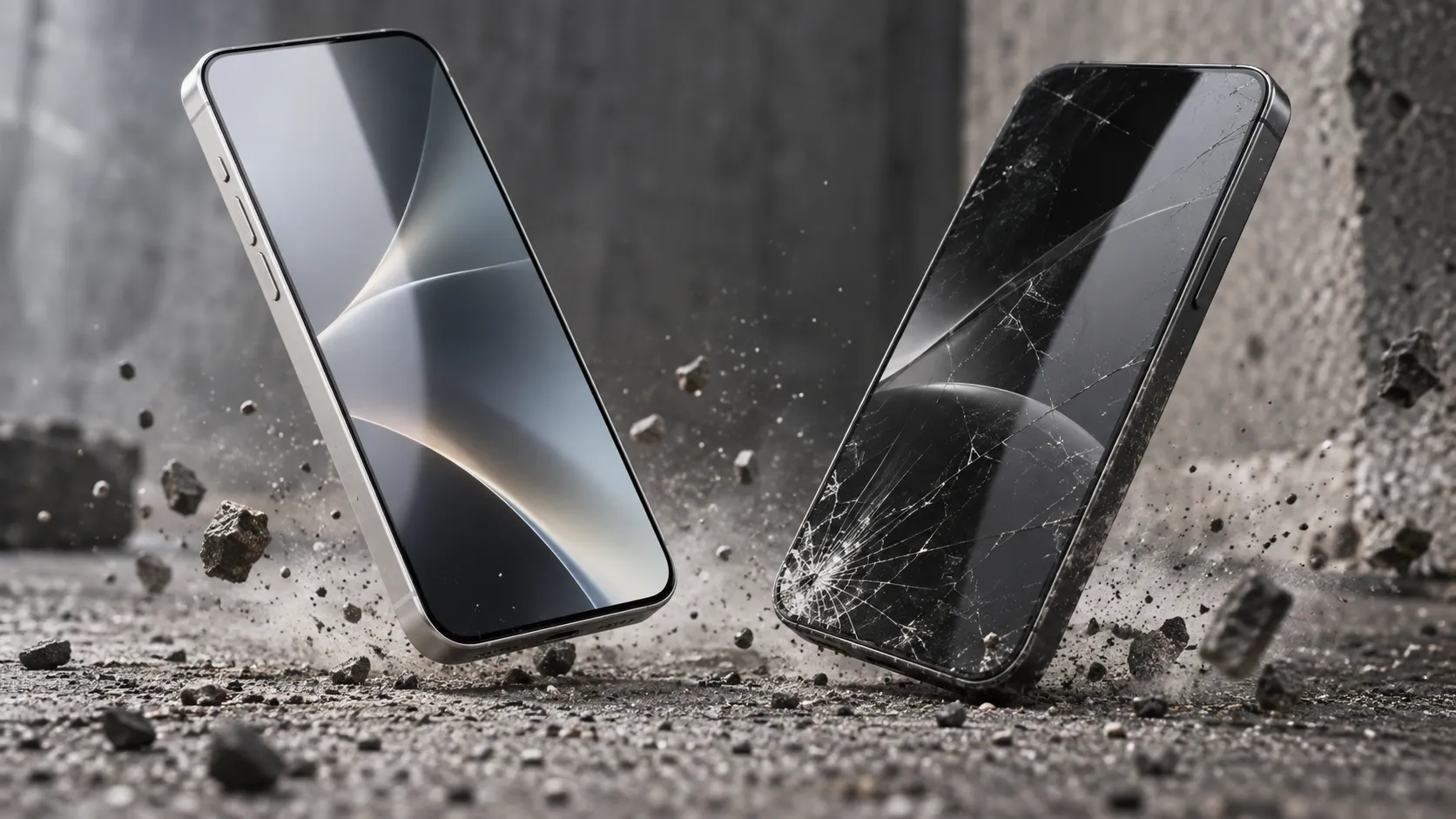
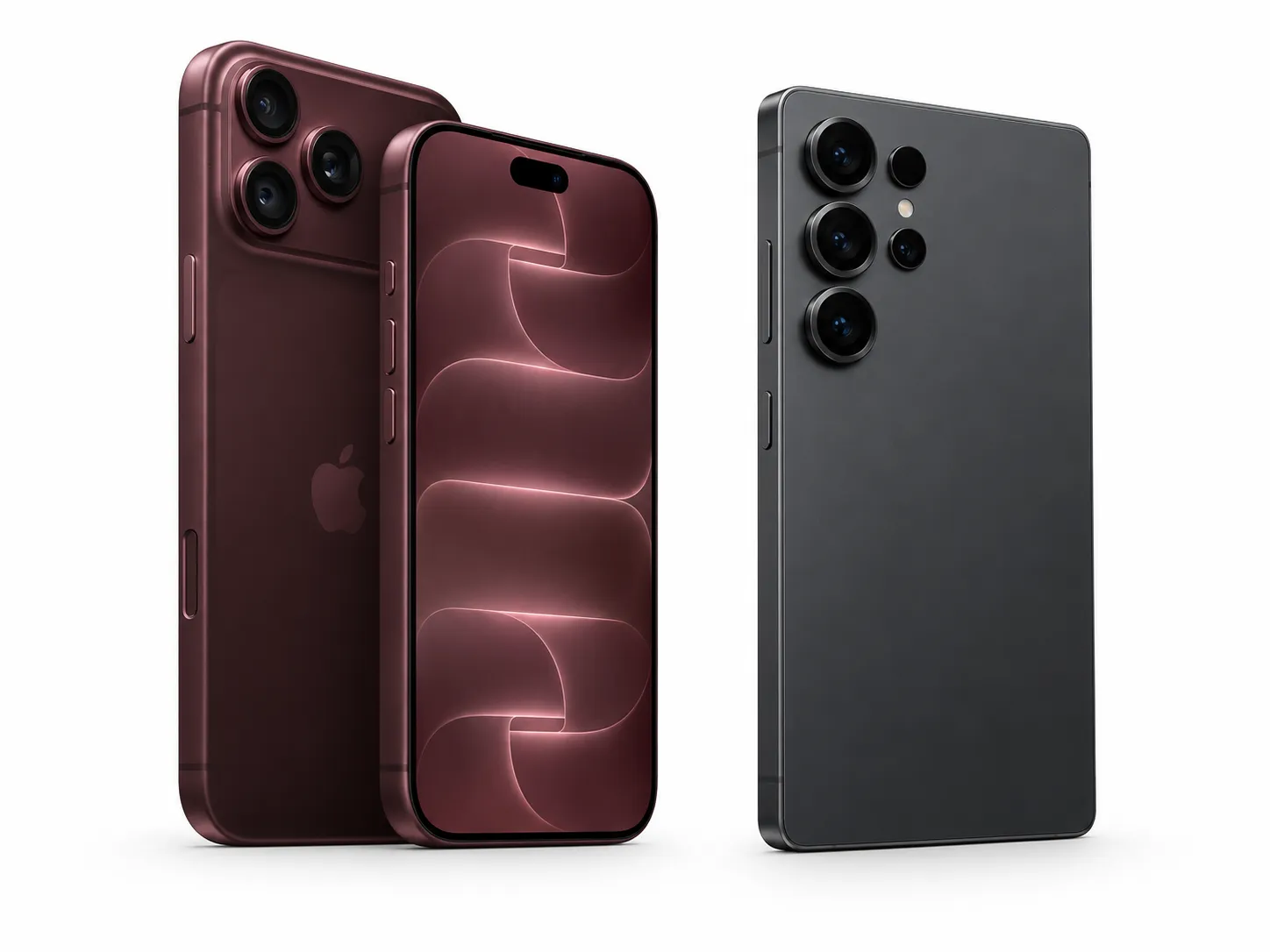
The iPhone 18 Pro Max and Galaxy S26 Ultra have now been through the same controlled drop test, giving buyers a much cleaner comparison than the separate durability tests available immediately after Apple's phone launched.
PhoneBuff dropped both phones six times using the same mechanical rig, surface, heights, and orientations. The iPhone 18 Pro Max finished with 56 points out of 60, compared with 53 for the Galaxy S26 Ultra.
That gives Apple's phone a narrow advantage under PhoneBuff's scoring system, but not a universal durability win. Both phones suffered visible damage, both eventually cracked at the front or back, and the test used one sample of each model.
The phones also occupy almost exactly the same price tier. The iPhone 18 Pro Max starts at $1,299 for 256GB, while the Galaxy S26 Ultra launched at $1,299.99 for 256GB. Both use 6.9-inch displays, although the Galaxy is considerably lighter and thinner.
How the iPhone 18 Pro Max vs Galaxy S26 Ultra drop test worked
PhoneBuff used a mechanical drop rig designed to keep the test conditions as consistent as possible.
Each phone went through six drops:
Back-first from 1 meter
Corner-first from 1 meter
Face-first from 1 meter
Back-first from 1.5 meters
Corner-first from 1.5 meters
Face-first from 1.5 meters
The phones landed on a surface covered with 120-grit sandpaper rather than bare concrete.
After each round, PhoneBuff ran a 15-point functionality inspection covering hardware and sensors including charging, speakers, buttons, GPS, and biometrics.
That makes this a much stronger head-to-head comparison than two unrelated durability videos. It still isn't a laboratory durability rating. One unit of each phone went through one sequence of impacts, and a slightly different landing angle can produce a different result.
What happened in the 1-meter drops
The first round sent both phones down on their backs from 1 meter.
Both suffered rear damage, but the Galaxy S26 Ultra came away with more extensive cracking across its glass back. The iPhone 18 Pro Max has a smaller exposed glass section within its aluminum unibody design, limiting how much rear glass was available to break.
The corner drop was closer.
Both aluminum frames picked up impact damage. The iPhone's corner showed more deformation around the display edge, while the Galaxy S26 Ultra came through that round with less visible structural damage.
The biggest difference appeared in the first face-down drop.
The iPhone 18 Pro Max's Ceramic Shield 2 front remained intact apart from relatively minor surface damage. The Galaxy S26 Ultra's Gorilla Armor 2 front glass cracked.
The impact also affected the Galaxy's ultrasonic fingerprint sensor, which stopped working properly after the screen damage. Face ID on the iPhone remained functional.
That round created much of the eventual three-point gap between the phones.
What changed when the height increased to 1.5 meters
PhoneBuff then repeated the back, corner, and face drops from 1.5 meters.
The higher back drop worsened existing damage on both phones, particularly the Galaxy S26 Ultra's already-cracked rear glass. The iPhone remained less visibly damaged across its back.
The second corner impact again exposed different weak points. The iPhone accumulated additional damage around its frame and display edge, while the Galaxy showed comparatively little new structural damage in that area.
Neither phone escaped the final face-down drop.
At 1.5 meters, the iPhone 18 Pro Max's front glass finally cracked. The Galaxy's screen, which had already cracked during the 1-meter face drop, sustained further damage.
Both phones remained operational after the full sequence, although the Galaxy's under-display fingerprint reader had already been impaired.
PhoneBuff's final score was:
iPhone 18 Pro Max: 56/60
Galaxy S26 Ultra: 53/60
That makes the iPhone the higher-scoring phone in this specific test, by three points.
Why 56-53 doesn't settle durability outright
A matched test is much more useful than comparing unrelated videos, but the result still needs limits around it.
PhoneBuff tested one iPhone and one Galaxy. That doesn't measure unit-to-unit manufacturing variation or show how a different copy would respond to a slightly different impact.
The test surface matters too. PhoneBuff used 120-grit sandpaper, which gives consistent abrasion and impact conditions but isn't identical to tile, asphalt, wood, carpet, or a real concrete sidewalk.
The phones also differ physically.
Samsung lists the Galaxy S26 Ultra at 214 grams and 7.9mm thick. Apple lists the iPhone 18 Pro Max at 249 grams and 8.75mm thick.
Their construction differs as well. Samsung uses an Armor Aluminum frame with Gorilla Armor 2 on the front and Gorilla Glass Victus 2 on the rear. Apple uses an aluminum unibody design with Ceramic Shield 2 at the front and Ceramic Shield on the back.
Those differences influence how impact energy travels through each phone, but the test doesn't isolate any one material or design decision as the reason for the final score.
The result therefore supports a narrow conclusion: this iPhone 18 Pro Max survived PhoneBuff's six-drop sequence slightly better under the channel's scoring system.
It doesn't prove every iPhone 18 Pro Max will survive a fall that breaks every Galaxy S26 Ultra.
The iPhone's scratch and bend results add different durability context
JerryRigEverything has also subjected Apple's new Pro models to its usual scratch, heat, and bend testing.
The Ceramic Shield 2 display began showing scratches at Mohs level 7, with deeper grooves at level 8. That's one level later than the level 6 scratches and level 7 grooves commonly seen on smartphone glass, according to GSMArena.
The display also survived roughly 25 seconds of direct flame without permanent visible damage, and the aluminum chassis resisted the bend test.
Those results strengthen the picture of Apple's current front glass and chassis, but they measure different failure modes from a drop.
Scratch resistance measures how easily a hard material marks the glass. Bend testing applies sustained structural force. Neither predicts exactly what happens when a 249-gram phone lands face-first from 1.5 meters.
PhoneBuff's matched drop test is the more relevant evidence for accidental fall resistance.
What buyers should take from the test
For the iPhone 18 Pro Max, the strongest result was its first face-down impact. Its display survived the 1-meter drop that cracked the Galaxy's front glass and affected Samsung's fingerprint sensor.
But the iPhone's screen did crack when the height increased to 1.5 meters, and its frame accumulated more visible deformation around some corner impacts.
For the Galaxy S26 Ultra, the frame handled some corner impacts well, but the extensive rear-glass damage and first face-down screen failure cost it points. The fingerprint-reader failure is particularly relevant because it turned visible screen damage into a functional problem.
Neither phone emerged unscathed.
The Galaxy S26 Ultra weighs 214 grams and measures 7.9mm thick, while the iPhone 18 Pro Max weighs 249 grams and measures 8.75mm. Both have 6.9-inch displays, according to Engadget's comparison.
If drop resistance is a deciding factor, PhoneBuff's test now provides an actual head-to-head data point: the iPhone 18 Pro Max scored three points higher.
That result is more useful than borrowing a scratch or bend result from one phone and comparing it with a drop test of the other. It still shouldn't replace a protective case or accidental-damage coverage.
A single controlled drop test can reveal weak points. It can't guarantee what happens when either $1,300 phone meets your particular floor.


Comments
Be the first, drop a comment!