



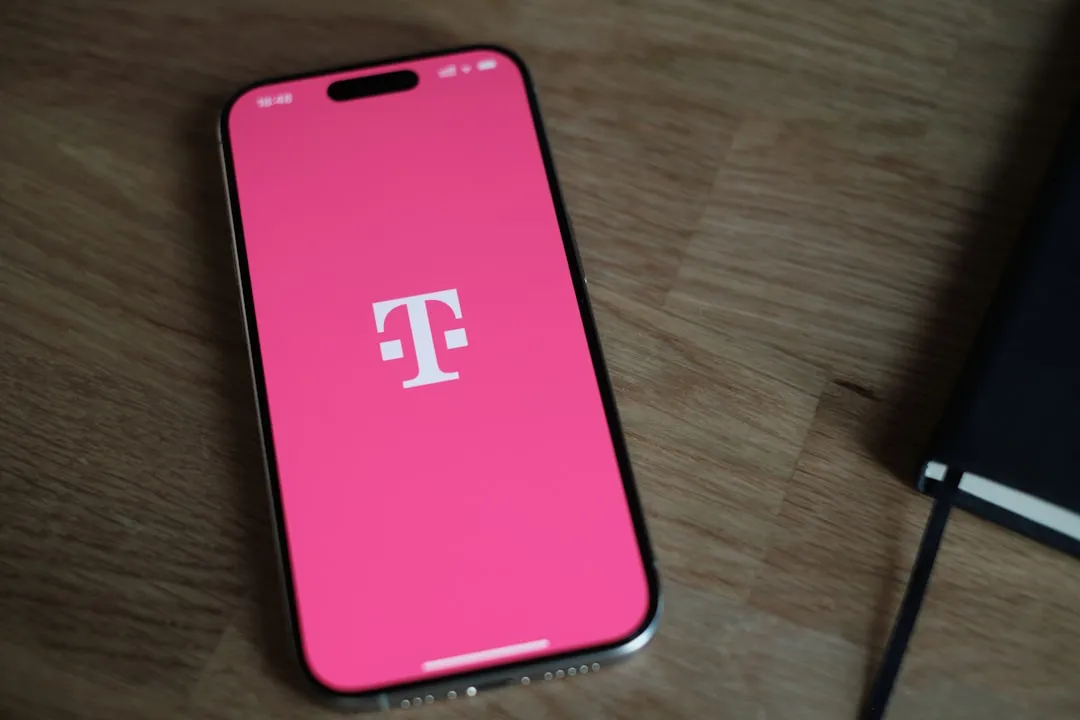
The wireless industry's battle for customers just got a lot more interesting. T-Mobile recently launched its "15 Minutes to Better" campaign, promising to revolutionize how customers switch carriers through its AI-powered Easy Switch tool in the T-Life app. This digital pathway allows potential switchers to complete the entire process in just 15 minutes, according to Verdict. The tool scans account details from current AT&T or Verizon services and suggests tailored T-Mobile plans, addressing a process that previously took three hours in-store, Mobile World Live reports. This dramatic efficiency gain represents exactly the kind of disruption that threatens established market dynamics, which explains why this move has sparked fierce pushback from competitors who see it as a direct threat to their customer base.
Why T-Mobile's switching tool is shaking up the industry
Here's what you need to know: T-Mobile's Easy Switch represents more than just a convenience upgrade—it's a strategic weapon in the carrier wars. The AI-driven tool launched December 1st and handles everything from retrieving account information to identifying suitable plans and services, as detailed by Verdict.
What makes this particularly compelling is the flexibility it offers. Unlike the traditional "switch now or lose your deal" pressure tactics, customers can defer their switcher discount for up to 90 days, giving them time to make informed device decisions without pressure, T-Mobile announced. The company sweetens the deal with same-day delivery via DoorDash when customers do decide on a new phone, creating an end-to-end digital experience that bypasses traditional retail friction entirely, according to Android Headlines.
The numbers behind this push reveal why T-Mobile sees switching friction as a massive market opportunity. T-Mobile's research shows that over 65% of Americans find switching carriers a hassle, and more than 34 million Americans switch providers annually, wasting over three hours on average in an outdated process—that's over 100 million hours of collective customer frustration annually, T-Mobile's research reveals. This represents exactly the kind of pain point T-Mobile can now monetize through superior user experience.
What gives T-Mobile a crucial edge in this battle is its existing digital foundation. The T-Life app has racked up over 90 million downloads with 23 million monthly active users, Verdict reports. This creates a pre-established pathway to reach competitors' customers without requiring new app adoption or user education—a significant barrier removal that AT&T and Verizon can't easily replicate.
Verizon fires back with security and service concerns
Verizon isn't taking T-Mobile's challenge lying down. The carrier has launched a pointed counterattack, claiming T-Mobile's rapid switching process is riddled with security flaws and compromises the customer experience. Bottom line: Verizon argues that T-Mobile prioritizes speed over safety in its pursuit of immediate revenue capture, Phone Arena reports.
Instead, Verizon promotes what it calls a "premium, managed, and precise switching experience" that includes additional security layers like Number Transfer PIN requirements and IMEI verification. The company isn't just talking about security—they're also differentiating their entire service delivery approach. Verizon touts its Pro On the Go delivery service, which covers a wider area than DoorDash and uses trained experts rather than general delivery drivers, according to the same Phone Arena report.
What's particularly interesting is Verizon's philosophy on device upgrades. While T-Mobile gives customers 90 days to decide on a new phone, Verizon prefers that customers upgrade immediately because that's when the highest discounts are available. This philosophy directly counters T-Mobile's speed-first approach, positioning patience and thoroughness as premium service attributes rather than outdated friction. Their position is clear: most customers don't mind waiting a few hours for a phone, and what matters more is that it's set up correctly from the start.
AT&T's competitive response strategy
While Verizon has been vocal about its opposition, AT&T has taken a more measured approach to countering T-Mobile's switching initiative. You might be wondering how the nation's second-largest carrier is responding—and the answer reveals a lot about AT&T's strategic positioning.
Both major carriers promote digital onboarding and eSIM activation capabilities, but they're now emphasizing the importance of their established infrastructure advantages, Find Articles notes. AT&T has historically maintained strong coverage rankings, holding the number one position alongside Verizon across the United States, Steel in the Air research shows.
The carrier offers comprehensive unlimited plans with full 5G access and usage allowances in Mexico and Canada, positioning itself as the reliability-focused alternative to T-Mobile's speed-focused approach, according to Dr.Fone analysis. AT&T's strategy appears focused on highlighting long-term value over short-term convenience—essentially saying "sure, you can switch fast, but wouldn't you rather switch to something better?"
What's particularly noteworthy is how AT&T leverages its discount programs for various groups like military personnel, veterans, educators, and employees of select companies. This approach emphasizes relationship-building and community connection rather than just technological innovation—essentially creating switching barriers through loyalty and group identity rather than process friction.
The real stakes in this switching war
Let's break it down: this isn't just about making carrier changes more convenient—it's about fundamentally reshaping customer acquisition in the wireless industry. T-Mobile's aggressive approach targets a significant pain point, and the numbers back up why this matters so much to everyone involved.
The competitive response from AT&T and Verizon reflects their recognition that traditional switching friction has been an invisible subsidy protecting their customer bases, as noted by NewsBreak. Industry analysts estimate that switching friction prevents approximately 15-20% of dissatisfied customers from actually changing carriers annually, representing billions in retained revenue that T-Mobile's streamlined approach could unlock.
What makes T-Mobile's position particularly strong is the existing momentum behind digital interactions. The company notes that 75% of upgrades are now processed through digital channels, proving customers are already comfortable with app-based wireless transactions, Verdict reports. This behavioral shift means the market was already primed for T-Mobile's digital-first switching approach—they're not changing customer behavior, they're capitalizing on it.
The key takeaway is that this battle reveals how much the switching process has historically favored incumbents. When changing carriers requires hours of in-store time, confusing plan comparisons, and immediate device decisions, customers naturally stick with what they know. T-Mobile's AI-driven approach removes these barriers systematically—and that's exactly what has AT&T and Verizon scrambling to respond.
What this means for wireless customers going forward
The carrier switching battle ultimately benefits consumers, regardless of which approach proves most successful. T-Mobile's innovation is forcing the entire industry to reconsider how they handle customer acquisition and retention, while competitor responses are highlighting important considerations around security and service quality.
Imagine this scenario: within the next few years, switching carriers could become as simple as changing streaming services. The wireless landscape has evolved significantly from the days of two-year contracts, with carriers now focusing on premium unlimited plans and enhanced perks, CNET analysis shows. Future enhancements to T-Mobile's Easy Switch will include multi-line account analysis capabilities, planned for early 2026, Mobile World Live reports.
As this competitive dynamic plays out over the coming months, the implications extend far beyond just switching processes. When carriers can no longer rely on switching friction to retain customers, they're forced to compete on actual service quality, network performance, and value—which is exactly how competitive markets should work. This shift toward merit-based competition will likely accelerate innovation across all aspects of wireless service delivery.
This competitive dynamic also means carriers will need to focus more on actual service quality and value rather than relying on switching friction to retain customers. When customers can easily compare plans and switch in minutes, carriers have to compete on the merits of their networks, pricing, and service quality. As this battle plays out over the coming months, customers can expect continued improvements in switching processes, better service offerings, and more transparent pricing across all major carriers—making it easier than ever to find the wireless plan that truly fits their needs.












Comments
Be the first, drop a comment!