



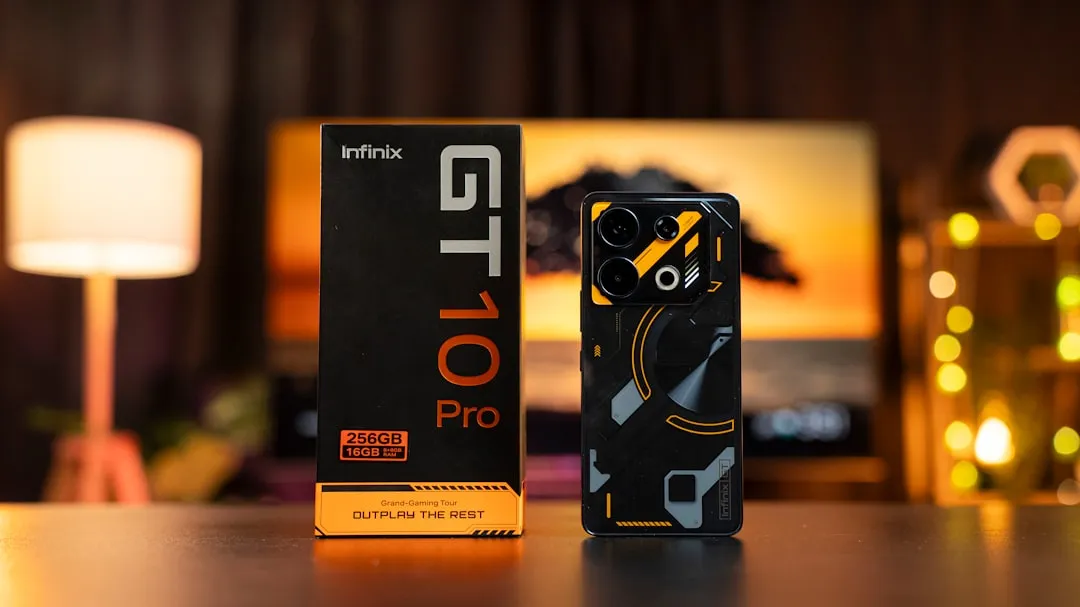
When you think about budget smartphones, the first thing that usually comes to mind isn't "record-breaking design." Most entry-level devices prioritize function over form, often resulting in chunky, uninspiring designs that get the job done but won't turn any heads. But Infinix just flipped that script entirely with the Hot 60 Pro+, a device that proves you don't need to spend flagship money to get cutting-edge engineering.
The company launched this ultra-thin device in August, creating what's officially recognized by Guinness World Records as the world's thinnest 3D curved display smartphone. At just 5.95mm thick with a massive 5,160mAh battery, this isn't just another budget phone—it's a statement about what's possible when engineering meets ambition at the $200 price point. The Hot 60 Pro+ directly challenges the industry assumption that thin designs require premium prices or battery sacrifices.
Engineering the impossible: How Infinix crammed a 5,160mAh battery into 5.95mm
Here's where things get really interesting from a technical standpoint. Most manufacturers would tell you that achieving extreme thinness means sacrificing battery capacity—it's just physics, right? Well, Infinix decided to rewrite the rules entirely, and the solution reveals fascinating insights into smartphone manufacturing constraints.
The Hot 60 Pro+ houses a custom, non-silicon battery with 810 Wh/L energy density that stores a full 5,160mAh inside a 4.04mm cell. To put this in perspective, that's more battery capacity than many phones twice as thick—which directly necessitated the revolutionary architecture approach that followed.
The secret sauce lies in what Infinix calls "Maximized Structured Space" architecture. The internal structure was completely reworked with more than 1,100 components rearranged in a flatter configuration, essentially reimagining how smartphone internals can be organized. This wasn't just component reshuffling—it represented a fundamental rethinking of smartphone engineering priorities, where thinness became the primary constraint driving all other design decisions.
Even the back panel demonstrates this obsessive attention to millimeter-level optimization. The ultra-thin fiberglass back panel measures just 0.36mm thick while maintaining structural integrity, contributing directly to the overall thickness reduction without compromising durability. This level of precision suggests manufacturing techniques typically reserved for far more expensive devices.
The achievement becomes even more impressive when you consider that the device supports 45W fast charging, meaning the charging circuitry and heat management systems were also optimized for the ultra-thin form factor. This integration reveals how every system had to be reconsidered for this thickness target, creating ripple effects throughout the entire design process.
Display excellence that punches above its weight class
The screen technology deserves special attention because it directly enables the record-breaking curved design achievement. The device features a 6.78-inch AMOLED 3D-curved display with 144Hz refresh rate and 1.5K resolution, specs that wouldn't look out of place on a flagship device costing three times as much.
The real standout specification is the display's peak brightness of up to 4,500 nits, which represents genuine flagship-tier performance that directly addresses the biggest practical concern with curved displays—outdoor visibility. Most people don't realize how technically challenging it is to achieve these brightness levels while maintaining the structural integrity needed for extreme thinness.
Infinix claims this is the world's slimmest 3D curved design, and when you combine that achievement with Corning Gorilla Glass 7i protection, you're getting premium materials and construction at an entry-level price point. This represents a significant market positioning shift—using flagship-grade protection glass demonstrates Infinix's commitment to not compromising on durability despite the extreme thinness.
The variety in available colorways including Coral Tides, Misty Violet, Moco Cyber Green, Sonic Yellow, Titanium Silver, and Sleek Black further signals that this isn't just a technical showcase—it's a full product line designed to compete across different consumer preferences, much like premium device strategies.
Performance and features: Getting the fundamentals right
The internal specifications reveal how Infinix balanced cutting-edge design with practical performance needs. The device runs on MediaTek's Helio G200 chipset built on a 6nm process, paired with 8GB of RAM that's expandable up to 16GB through software. The 6nm process node is particularly important here—it directly enables the power efficiency needed to make the thin battery design practical for all-day use.
Storage options include 128GB and 256GB UFS 2.2, which provides the fast app loading and file transfers that modern users expect, while fitting within the space constraints of the ultra-thin design.
The camera setup demonstrates another area where budget constraints didn't compromise quality. The device features a 50MP Sony IMX882 main sensor paired with a 13MP front camera. That Sony sensor choice is particularly noteworthy—it's genuine flagship sensor territory, reinforcing the theme that premium components can exist at budget price points when engineering priorities are correctly aligned.
The software approach also reflects this philosophy of not cutting corners. The device launches with Android 15 and XOS 15.1, ensuring users get the latest features and security updates immediately, rather than waiting for budget device software cycles.
Practical features like IP65 water resistance and dual JBL stereo speakers demonstrate how the engineering focus extended beyond just achieving thinness—it encompassed creating a complete premium experience within the ultra-thin constraint.
What this means for the budget smartphone landscape
The Infinix Hot 60 Pro+ represents something genuinely significant in the smartphone world. At just $200, this device fundamentally challenges industry assumptions about engineering costs, manufacturing scale economics, and the relationship between price and innovation.
The broader implications become clear when you consider the manufacturing and supply chain innovations required to deliver this engineering at scale. The device is designed to appeal to budget-conscious buyers without compromising on style or essentials, which suggests that advanced manufacturing techniques previously exclusive to premium devices are becoming democratized across the industry.
This creates fascinating competitive pressure throughout the smartphone market. When a budget manufacturer demonstrates that flagship-tier engineering is achievable at entry-level prices, it forces premium manufacturers to justify their pricing through software ecosystems, brand value, and incremental feature improvements rather than core engineering capabilities.
For consumers, the Hot 60 Pro+ signals a broader trend toward engineering parity across price segments. The traditional trade-offs between budget constraints and premium features are being eroded by manufacturing innovation and component cost reductions. This democratization suggests that future budget devices will increasingly compete on execution and refinement rather than basic capability gaps.
The device also provides a glimpse into how design priorities are shifting industry-wide. By proving that extreme thinness is achievable without traditional compromise patterns, Infinix has essentially created a new competitive benchmark that will likely influence design decisions across multiple price segments and manufacturers.













Comments
Be the first, drop a comment!